What Are Sliding Tandems on a Trailer? A CDL A Driver’s Guide to Safe, Legal Weight Distribution

For any CDL A driver at Barr‑Nunn Transportation, understanding sliding tandems on a trailer is essential. This often-overlooked skill can mean the difference between hitting the road legally or facing hefty fines and delays at the scale. In this guide, we’ll break down:

  • What sliding tandems are and how they work
  • Why they matter for safety, compliance, and efficiency
  • Step-by-step instructions tailored for truckers
  • How much weight moves per hole, and how to calculate adjustments
  • Best practices to stay legal and protect your CSA record

What Exactly Are “Sliding Tandems”?

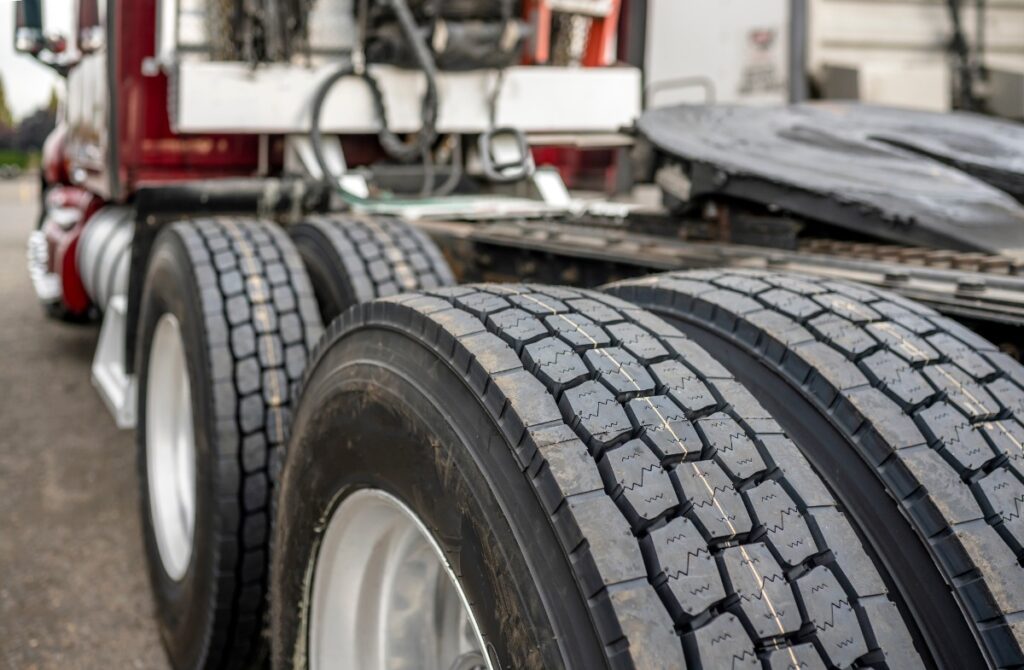
Sliding tandems refer to the movable rear axle group (usually tandem axles) on a semi-trailer that you can shift forward or backward along slider rails. These rails, mounted under the trailer frame, allow you to adjust weight distribution between your tractor’s drive axles and the trailer axles. A locking pin mechanism keeps the axle group securely in place once positioned.

Why Sliding Tandems Is a Critical Trucking Skill

Legal Compliance

Overweight axle groups can trigger citations, out‑of‑service orders, and expensive penalties. Moving tandems lets drivers shift weight to stay within limits; for example, the 34,000‑lb max for tandem axles and 80,000‑lb gross vehicle weight.

Balanced Handling & Safety

Properly distributed weight improves steering, braking, and reduces the risk of rollovers—especially during lane changes or in bad weather.

Fuel Efficiency & Equipment Longevity

Balanced loads reduce wear on suspension, tires, and drivetrain, plus optimize fuel economy.

How Much Weight Is Shifted Per Hole?

Typically, the slider rail holes are spaced to shift about 250 lbs per hole (common in standard trailers), though some systems use 400 lbs per hole, depending on spacing.

Example:
If your drive axles are overloaded by 800 lbs and your trailer uses 400‑lb hole spacing, you’d need to slide forward 2 holes to shift 800 lbs onto the trailer.

Step‑by‑Step Guide: How to Slide Tandems Safely

Here’s a step‑by‑step process adapted for Barr‑Nunn drivers based on industry best practices:

  1. Park on a level, solid surface. Avoid gravel or ice.
  2. Straighten your rig. Tractor and trailer must be aligned.
  3. Set the parking brakes on both units.
  4. Maximize air pressure.
  5. Lock the power divider (if equipped). Enhances traction.
  6. Activate Trailer Hold / Spring Brake Override (or use trailer brake valve).
  7. Release the slider handle. Pull or lift the mechanism to disengage locking pins, then secure the handle in the retainer.
  8. Mark your target hole so you know where you’re headed.
  9. Move the rig slowly:
    • Reverse to slide tandems forward (this shifts weight to the trailer axles).
    • Drive forward to slide tandems backward (shifts weight to drive axles).
  10. Re‑engage locking handle when near the target hole, then rock in Drive/Reverse to ensure pins seat correctly.
  11. Visually confirm the pins are fully seated and the handle is locked.
  12. Disengage Trailer Hold & unlock power divider.
  13. Re‑check brakes and alignment.
  14. Re‑weigh if possible to confirm compliance.
  15. Document tandem position and any weight adjustments. This helps track patterns and avoid recurring issues.

Calculating How Far to Slide: A Quick Formula

  1. Weigh your axles (drive vs. tandem).
  2. Identify the over‑axle (where the excess weight lies).
  3. Slide toward the problem axle:
    • If drive axles are overweight, slide tandems forward.
    • If trailer axles are overweight, slide tandems backward.
  4. Compute required holes:

Overweight lbs ÷ lbs per hole ≈ # holes to move

Sample: If your trailer axles are overweight by 1,050 lbs and per-hole shift is 250 lbs, you’ll need to slide 4.2, rounded to 4 or 5 holes backward.

Best Practices for Barr‑Nunn Drivers

  • Know the rules state by state. Some states have tighter front‑kingpin to tandem limits (Bridge Formula). Use the strictest rule on your route.
  • Use onboard air‑suspension pressure gauges to estimate axle loads when CAT scales aren’t nearby.
  • Slide tandems on a level, clean surface. It’s safer and easier.
  • Lubricate rails and keep mechanisms clean—rust or grit can jam the system.
  • Train regularly, especially refreshers on older trailers or unfamiliar setups.
  • Document each tandem adjustment and outcome—helps in audit or CSA score reviews.

Why This Matters to You

  • Helps avoid fines and scale delays—fewer roadblocks, more on‑time moves.
  • Preserves CSA safety score—key for continued access to high‑value freight lanes.
  • Improves fuel economy and reduces equipment wear—direct benefits to driver earnings and maintenance budgets.
  • Promotes safe handling—especially during heavy hauls, tight maneuvers, or bad weather.

Closing Thoughts

Sliding tandems is more than just a mechanical trick; it’s critical to staying safe, legal, and efficient on the road. For CDL A drivers at Barr‑Nunn, this know‑how ensures smoother runs, less scale downtime, and healthier CSA scores. Keep your gear well‑maintained, your processes sharp, and your documentation clean, and you’ll keep rolling miles ahead of the pack.

Final Tips for Sliding Tandems

  • Sliding adjusts the weight balance on tractor vs. trailer.
  • Shift toward the axle that’s overloaded.
  • Typical shift ≈ 250 lbs per hole (some at 400 lbs).
  • Always work on a solid, level surface with brakes locked.
  • Finish by rocking the rig, securing pins, and verifying visually.
  • Know Bridge Formula limits and chart them route‑wise.
  • Clean, lubricate, train—repeat.
  • Stay sharp, stay safe, and keep those tandems legal out there.

Tornado Weather Tips for Truck Drivers

Summer brings tornadoes across large swaths of the country, especially in the U.S. central plains. For truck drivers, tornadoes pose a real threat. Knowing what to do when driving in a tornado can save your life. If you’re ever in a semi-truck in a tornado, keeping a cool head and taking fast action can make all the difference.

Pay Attention to Weather Reports

Weather conditions can change quickly, but weather reporters often state in advance when conditions will be right for a tornado. Paying attention to weather reports the night before setting out on a drive can help you prepare. Once on the road, follow weather reports on the radio. Some weather apps follow tornado activity and will give warnings when a tornado warning is active in your area.

Know which counties you’ll be driving through, as tornado watches and warnings are often specific to the county. A tornado watch is an alert to signify when conditions are right for tornado activity.

  • A tornado watch tells people in a specific area to get ready to take shelter from a tornado.
  • A tornado warning is an urgent notice issued to instruct people to take shelter immediately.

If you think that weather conditions are unsafe for driving, call your leader. If you’re not safe on the road, stay in a sheltered area.

Study the Travel Plan In Advance

If you’re expecting poor weather conditions, study your travel plan before leaving. Note the county names and cities or towns along your route, as well as operating centers, businesses, or truck stops where you may be able to take shelter if needed. Keep these areas of shelter in mind as you’re on the road.

Watch for Signs of Tornadoes

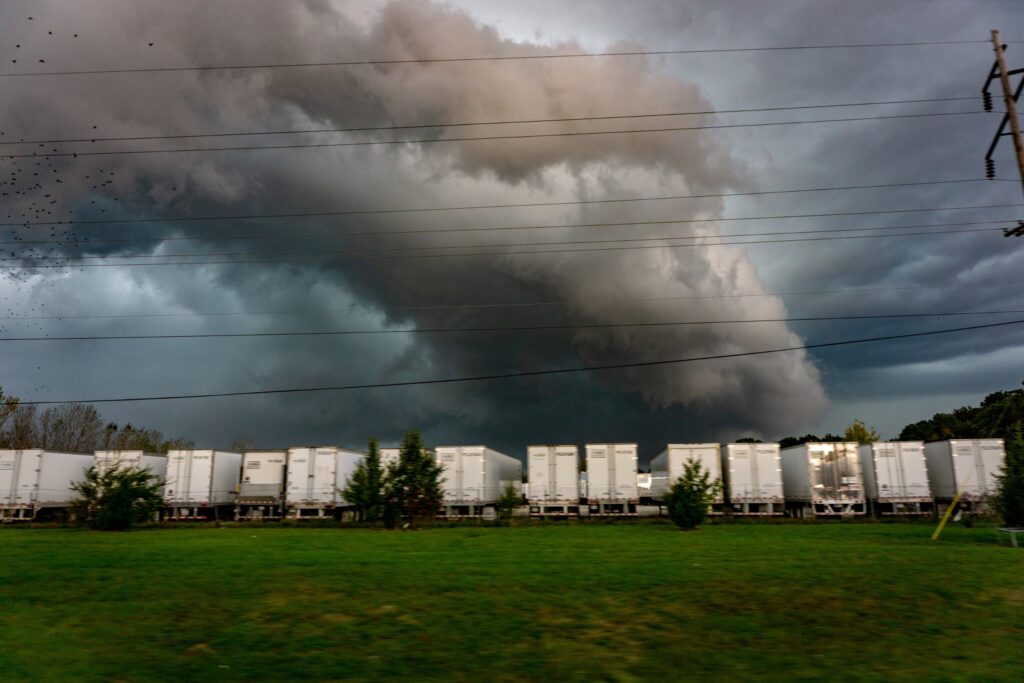
Tornadoes happen when warm, humid air clashes with cold air. People who have lived through tornadoes often describe the sky as dark and greenish. A tornado may bring hail, but the powerful updraft will prevent rain from falling in the area around the tornado.

Before a tornado strikes, the wind may die down, birds and other animals may become quiet or leave the area, and a wall cloud (spinning cloud that becomes the foundation for a tornado) may become visible. Tornadoes are said to be very loud and produce a roaring sound similar to a freight train or waterfall. Communities in the area may activate sirens that indicate a tornado is present.

Take Shelter In A Building If Possible

If you can, take shelter in a building. Basements and storm shelters are best, but in the absence of a basement, find shelter in a windowless space like a bathroom or hallway.

It’s a common myth that overpasses are good places to find shelter during tornadoes. This is not true. Overpasses create a wind tunnel effect that can exacerbate the danger of a tornado.

Know What To Do On the Road

If you are in your semi-truck during a tornado, conventional advice is to leave your truck, get as far away from it (and other vehicles) as you safely can, then lie in a ditch, culvert, or as low a spot as you can find. Lay low and if possible, cover yourself with a blanket or coat.

Tornadoes can pick up vehicles, so staying in your rig may not be safe. If you must stay in your truck, keep your seat belt on, cover yourself with a coat or blanket, and sink low into your chair to get as far away from your window as possible.

Do not try to outrun the tornado. Tornadoes can move at speeds up to 70 miles per hour and may follow an erratic trajectory. A tornado that appears far from your rig may change course and come your way quickly. Additionally, hail may reduce your visibility, and other drivers on the road may become hazards.

Communicate With Your Lead

Maintain regular communication with your lead when driving in poor weather conditions. Your lead is a resource that can help you make decisions to make your journey safer.

Tornado Frequently Asked Questions

How much weight can a tornado pick up?
Tornadoes have been known to lift equipment and vehicles that weigh tens of thousands of pounds. One tornado in Texas is said to have lifted machinery weighing over 30,000 pounds.

How fast can a tornado move?
Tornadoes have been recorded at up to 70 miles per hour.

Can a tornado pick up a semi-truck?
Yes, a tornado can pick up a semi-truck.

Where is “Tornado Alley”?
Tornado Alley is a loosely defined area that can include parts of Oklahoma, Texas, Kansas, Colorado, New Mexico, Missouri, Nebraska, and Iowa.

What emergency supplies should I keep in my truck?
Some examples of helpful items to keep on hand include: a thick blanket, a first aid kit, a flashlight, and batteries. Keep heavy-duty gloves on hand for moving debris after a tornado.

Why is it better to shelter in a ditch than stay in the truck?
Tornadoes can pick up semi-trucks. Lying in a ditch is not as safe as going into a building, but it can give you some shelter from flying debris.

Have a Safe, Enjoyable Summer

Knowing what to do if a tornado occurs while driving can help you have a safe, enjoyable summer. The team at Barr-Nunn is here to support you as you drive safely throughout this summer. Contact us to learn more about our truck driving jobs.

Sources:

https://www.weather.gov/lmk/tornadoesfaq
http://www.tornadoproject.com/cellar/tttttt.htm
https://www.co.monroe.mi.us/Faq.aspx?QID=95
https://emsaok.gov/resource-library/summer-safety-tips/warning-signs-that-a-tornado-may-develop/
https://www.disastercenter.com/guide/tornado.html
https://georgiawildlife.com/out-my-backdoor-can-birds-predict-severe-weather
https://www.nationalgeographic.com/environment/article/tornado-alley-shift-east