What Are Sliding Tandems on a Trailer? A CDL A Driver’s Guide to Safe, Legal Weight Distribution

For any CDL A driver at Barr‑Nunn Transportation, understanding sliding tandems on a trailer is essential. This often-overlooked skill can mean the difference between hitting the road legally or facing hefty fines and delays at the scale. In this guide, we’ll break down:

  • What sliding tandems are and how they work
  • Why they matter for safety, compliance, and efficiency
  • Step-by-step instructions tailored for truckers
  • How much weight moves per hole, and how to calculate adjustments
  • Best practices to stay legal and protect your CSA record

What Exactly Are “Sliding Tandems”?

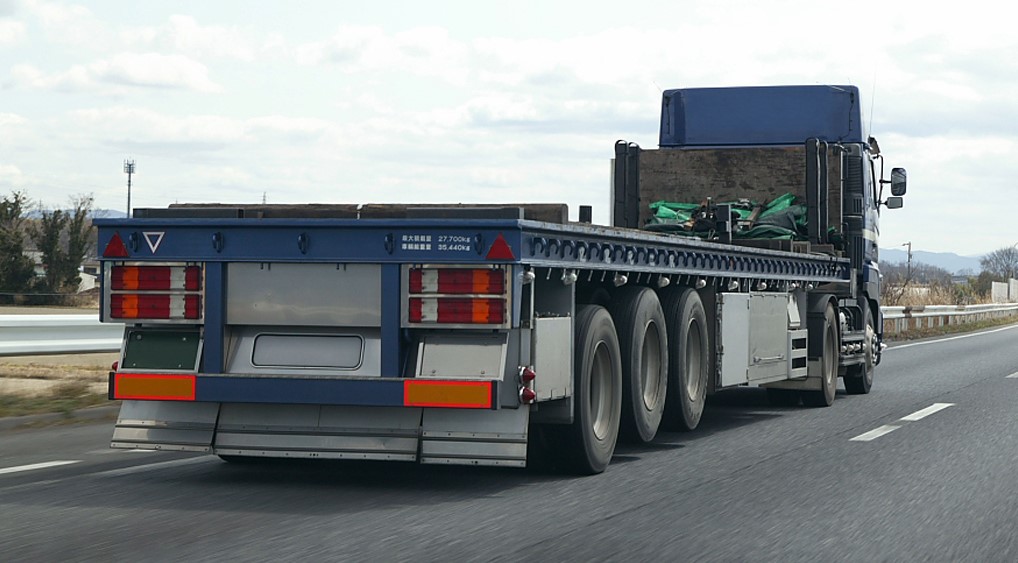
Sliding tandems refer to the movable rear axle group (usually tandem axles) on a semi-trailer that you can shift forward or backward along slider rails. These rails, mounted under the trailer frame, allow you to adjust weight distribution between your tractor’s drive axles and the trailer axles. A locking pin mechanism keeps the axle group securely in place once positioned.

Why Sliding Tandems Is a Critical Trucking Skill

Legal Compliance

Overweight axle groups can trigger citations, out‑of‑service orders, and expensive penalties. Moving tandems lets drivers shift weight to stay within limits; for example, the 34,000‑lb max for tandem axles and 80,000‑lb gross vehicle weight.

Balanced Handling & Safety

Properly distributed weight improves steering, braking, and reduces the risk of rollovers—especially during lane changes or in bad weather.

Fuel Efficiency & Equipment Longevity

Balanced loads reduce wear on suspension, tires, and drivetrain, plus optimize fuel economy.

How Much Weight Is Shifted Per Hole?

Typically, the slider rail holes are spaced to shift about 250 lbs per hole (common in standard trailers), though some systems use 400 lbs per hole, depending on spacing.

Example:
If your drive axles are overloaded by 800 lbs and your trailer uses 400‑lb hole spacing, you’d need to slide forward 2 holes to shift 800 lbs onto the trailer.

Step‑by‑Step Guide: How to Slide Tandems Safely

Here’s a step‑by‑step process adapted for Barr‑Nunn drivers based on industry best practices:

  1. Park on a level, solid surface. Avoid gravel or ice.
  2. Straighten your rig. Tractor and trailer must be aligned.
  3. Set the parking brakes on both units.
  4. Maximize air pressure.
  5. Lock the power divider (if equipped). Enhances traction.
  6. Activate Trailer Hold / Spring Brake Override (or use trailer brake valve).
  7. Release the slider handle. Pull or lift the mechanism to disengage locking pins, then secure the handle in the retainer.
  8. Mark your target hole so you know where you’re headed.
  9. Move the rig slowly:
    • Reverse to slide tandems forward (this shifts weight to the trailer axles).
    • Drive forward to slide tandems backward (shifts weight to drive axles).
  10. Re‑engage locking handle when near the target hole, then rock in Drive/Reverse to ensure pins seat correctly.
  11. Visually confirm the pins are fully seated and the handle is locked.
  12. Disengage Trailer Hold & unlock power divider.
  13. Re‑check brakes and alignment.
  14. Re‑weigh if possible to confirm compliance.
  15. Document tandem position and any weight adjustments. This helps track patterns and avoid recurring issues.

Calculating How Far to Slide: A Quick Formula

  1. Weigh your axles (drive vs. tandem).
  2. Identify the over‑axle (where the excess weight lies).
  3. Slide toward the problem axle:
    • If drive axles are overweight, slide tandems forward.
    • If trailer axles are overweight, slide tandems backward.
  4. Compute required holes:

Overweight lbs ÷ lbs per hole ≈ # holes to move

Sample: If your trailer axles are overweight by 1,050 lbs and per-hole shift is 250 lbs, you’ll need to slide 4.2, rounded to 4 or 5 holes backward.

Best Practices for Barr‑Nunn Drivers

  • Know the rules state by state. Some states have tighter front‑kingpin to tandem limits (Bridge Formula). Use the strictest rule on your route.
  • Use onboard air‑suspension pressure gauges to estimate axle loads when CAT scales aren’t nearby.
  • Slide tandems on a level, clean surface. It’s safer and easier.
  • Lubricate rails and keep mechanisms clean—rust or grit can jam the system.
  • Train regularly, especially refreshers on older trailers or unfamiliar setups.
  • Document each tandem adjustment and outcome—helps in audit or CSA score reviews.

Why This Matters to You

  • Helps avoid fines and scale delays—fewer roadblocks, more on‑time moves.
  • Preserves CSA safety score—key for continued access to high‑value freight lanes.
  • Improves fuel economy and reduces equipment wear—direct benefits to driver earnings and maintenance budgets.
  • Promotes safe handling—especially during heavy hauls, tight maneuvers, or bad weather.

Closing Thoughts

Sliding tandems is more than just a mechanical trick; it’s critical to staying safe, legal, and efficient on the road. For CDL A drivers at Barr‑Nunn, this know‑how ensures smoother runs, less scale downtime, and healthier CSA scores. Keep your gear well‑maintained, your processes sharp, and your documentation clean, and you’ll keep rolling miles ahead of the pack.

Final Tips for Sliding Tandems

  • Sliding adjusts the weight balance on tractor vs. trailer.
  • Shift toward the axle that’s overloaded.
  • Typical shift ≈ 250 lbs per hole (some at 400 lbs).
  • Always work on a solid, level surface with brakes locked.
  • Finish by rocking the rig, securing pins, and verifying visually.
  • Know Bridge Formula limits and chart them route‑wise.
  • Clean, lubricate, train—repeat.
  • Stay sharp, stay safe, and keep those tandems legal out there.

Weigh Station Basics for All Truck Drivers

Rolling Through the Scales: A Truck Driver’s Guide to Weigh-Station Basics

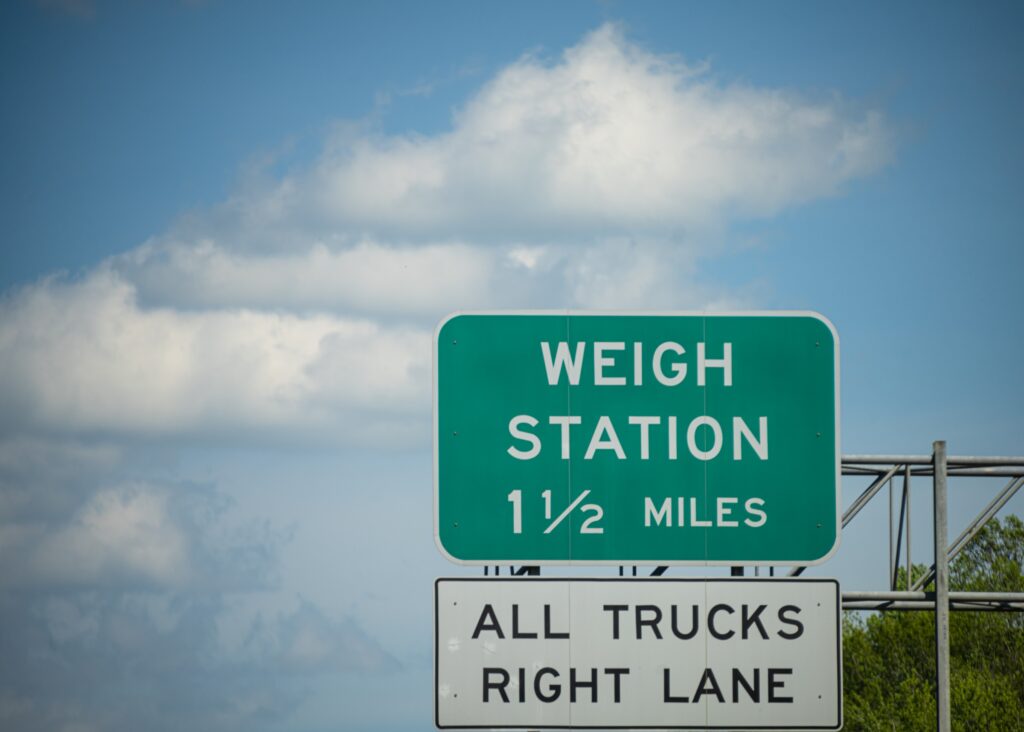
Highway weigh stations may look like small roadside stops, but they play an outsized role in keeping America’s freight moving safely and legally. Whether you’re new to the industry or a seasoned Barr-Nunn professional looking for a refresher, understanding how these checkpoints work—and how to breeze through them—can save time, money, and Compliance, Safety & Accountability (CSA) headaches. Here is a deep dive into everything you need to know before the next green “OPEN” light appears on the horizon.

What exactly is a weigh station?

At its core, a weigh station is a Department of Transportation (DOT) or state-run checkpoint that verifies a commercial vehicle’s weight and basic compliance paperwork. Most are tucked just off the mainline at state borders—often branded “ports of entry”—so officials can enforce each state’s unique weight rules. Nationally, there are now well over 1,000 of these facilities spread across U.S. highways.

While every station looks a bit different, they share a mission: to protect public infrastructure and motorists by keeping overweight or unsafe trucks off the road. As you’ll see below, that goal ripples into inspections, fines, and even tax collection.

Why do regulators care so much about weight?

Picture an 80,000-pound tractor-trailer rumbling over a bridge designed for lighter loads. Excess stress accelerates wear, shortens pavement life, and, in worst cases, creates catastrophic failures. DOT data show that an overweight truck generates exponentially more damage than a passenger car. Beyond infrastructure, too much weight raises the odds of tire blow-outs, longer stopping distances, and rollovers.

Many states also tie fuel-tax reconciliation or freight weight-based taxes to scale readings, which means weigh stations double as revenue checkpoints.

Bottom line: legal weight protects both budgets and lives.

The legal lines you can’t cross

Federal law caps a vehicle’s gross combination weight at 80,000 lbs, a single-axle at 20,000 lbs and a tandem axle at 34,000 lbs. Most states require any commercial vehicle over 10,000 lbs GVWR to stop when a station is open. If you skip the ramp without permission, expect steep fines, possible out-of-service orders, and a ding on your CSA score.

Where and when will you encounter a scale?

  • State Borders: The classic spot. Expect an inspection crossing from, say, Iowa into Missouri.
  • Freight Chokepoints: Near major distribution hubs where loads shift rapidly.
  • Pop-Up Operations: Portable scales let troopers enforce regulations on secondary highways without permanent facilities.
  • Inside Certain Yards: Shippers with sensitive freight or security concerns sometimes weigh outbound trucks on site.

Most stations post advance signs telling you whether they’re open or closed. Apps such as Truckers Path or your Barr-Nunn ELD can give real-time status, too, but trust the flashing roadside indicator above all.

What happens on the scale?

Initial Weigh-In

  • Static scales: You roll onto a platform and stop until the marshal waves you on.
  • Weigh-in-Motion (WIM): Sensors measure axle weight as you roll slowly across the pad, potentially eliminating a full stop if all numbers look good.

Paper Check & Visual Walk-Around

Officers may verify registration, IFTA decals, electronic logs, and bill of lading to ensure the load matches legal paperwork.

DOT Inspection Levels 1-6

Anything from a quick brake-light glance to a bumper-to-brake-lining inspection of driver credentials, hours-of-service compliance, and vehicle condition can occur.

Outcome

  • Clear: You’re back on the ramp in minutes.
  • Violation: Expect a fine, possible off-load instructions, or an OOS order until repairs/lightening are complete.

Looking to skip the line? Welcome to bypass technology

If your CSA profile and weight look squeaky-clean, you might receive a radio-frequency or app-based bypass signal (a “green light”) before the off-ramp. Services such as Drivewyze PreClear analyze WIM data, carrier safety scores, and registration in real-time to decide whether you can stay on the mainline. The payoff is huge: less idling, faster deliveries, and happier drivers.

Barr-Nunn partners with leading bypass providers to maximize driver efficiency, so make sure your onboard unit and credentials are always current. Even with a bypass subscription, though, remember officers can call any truck in for a random inspection, so professionalism matters.

Fines, fees, and other consequences of non-compliance

Penalties vary by state but can easily exceed $1,000 for skipping an open station or coming in overweight. Repeat offenses jeopardize your CDL and lead to higher insurance premiums. Excessive violations also tank a carrier’s safety rating, limiting load opportunities and hindering bonus programs. Simply put, a five-minute detour beats a five-figure payout every time.

Smart strategies for Barr-Nunn drivers

TaskWhy It MattersQuick Tip
Scale before you sailCatch distribution errors at the shipperUse in-yard CAT or platform scales whenever possible
Secure the loadShifting cargo can change axle weightsRe-check straps & tandems after the first 50 miles
Mind your paperworkOfficers love matching BOL weight to scale readoutsKeep digital and paper copies organized by trip
Track HOS impactA Level 1 inspection can eat 45 minutes of drive timeBuild a 1-hour buffer into tight schedules
Stay courteousProfessional demeanor speeds inspectionsEye contact, yes sir/ma’am, and clear answers go a long way

The Barr-Nunn advantage

Our fleet specs—including lightweight, late-model tractors and rigorous preventive-maintenance intervals—help drivers glide through the scales. Pair that with score-card bonuses for clean inspections and Barr-Nunn’s investment in nationwide bypass services, and you’ve got a recipe for fewer headaches and bigger paychecks. If you encounter an unusual situation, like a portable pop-up, mixed commodity load, or axle issues, reach out to Fleet Support before rolling the dice. We’ll find a safe, legal solution so you can keep moving.

Key takeaways

  • Stop when open if you’re over 10,000 lbs: It’s the law.
  • Know the magic numbers: 20,000 (single axle), 34,000 (tandem), 80,000 (gross).
  • Expect more than a scale: Officers can check logs, brakes, lights, and securement.
  • Use technology: Pre-trip scales, WIM, and bypass services are productivity boosters, not shortcuts.
  • Professionalism pays: A clean inspection protects your CSA score and your wallet.

Weigh stations aren’t going away, but with the right preparation, they don’t have to slow you down. Keep these fundamentals in mind, lean on Barr-Nunn’s safety resources, and you’ll spend less time on the ramp and more miles earning. Drive safe, stay legal, and keep those wheels turning. See you down the road!

Additional Resources
https://drivewyze.com/blog/weigh-station-basics-everything-you-need-to-know/

What are Deadhead Miles in Trucking?

What are Deadhead Miles?

In the trucking industry, “deadhead miles” refer to miles driven without any cargo or freight. This can happen when a truck driver delivers a load to a destination and then has to return to the point of origin without any cargo. These types of miles can have a significant impact on the profitability of trucking companies, as they lead to increased fuel costs and decreased revenue.

Impact of Deadhead Miles on Trucking Companies

The impact of deadhead miles on trucking companies can be significant. For example, if a truck driver must drive 100 miles to deliver a load and then drive another 100 miles back to the point of origin without any cargo, this results in financial loss.

This not only means that the trucker is not earning any revenue for those miles, but it also increases the cost of fuel and other expenses for the trucking company. These additional costs can eat into the overall profitability of the company.

Strategies for Minimizing Deadhead Miles

One strategy for minimizing deadhead miles is for trucking companies to find return loads. This means that after a truck delivers a load, the company works to find another load that needs to be transported back to the point of origin.

Another strategy is the utilization of load-matching technology, which allows trucking companies to connect with other companies that need loads transported and can help to reduce the number of empty miles driven.

Relationship between Deadhead Miles and Capacity Utilization

The ramifications of deadhead miles extend beyond their immediate fuel and operational costs; they significantly impede a trucking company’s overall capacity utilization and operational efficiency. Empty miles represent lost revenue-generating opportunities, disrupting the seamless functioning of the trucking enterprise. The inability to maximize capacity during these unproductive journeys directly hampers the company’s profitability and financial health.

Moreover, the domino effect of deadhead miles reverberates through the supply chain, introducing delays and logistical challenges. A trucking company’s capability to meet delivery timelines and optimize its fleet’s productivity hinges on mitigating these empty miles through strategic measures such as load optimization, route planning, and the incorporation of cutting-edge technology solutions.

Deadhead Miles in the Context of the Larger Trucking Industry

Deadhead miles, a pervasive challenge in the trucking industry, significantly impact supply chain logistics and contribute to the sector’s inefficiencies. These miles represent unproductive routes, where trucks travel without carrying a load, leading to increased fuel consumption and emissions. The ripple effect on supply chain logistics is profound, as it results in higher operational costs and extended delivery times.

The economic implications are substantial, with the trucking industry grappling with financial strain due to fuel expenses and reduced overall productivity. Addressing this issue becomes paramount for stakeholders, necessitating the adoption of innovative solutions like load-matching technology to optimize routes, reduce deadhead miles, and ultimately enhance the overall efficiency of the trucking ecosystem.

Technology and Digital Innovation

Technological strides, particularly the integration of load-matching technology, emerge as a pivotal solution to enhance the efficiency of trucking operations. This innovation mitigates deadhead miles – the distance traveled by trucks without carrying a load – by optimizing routes and matching available cargo with suitable carriers. By leveraging data-driven algorithms and real-time connectivity, this digital evolution not only minimizes environmental impact but also streamlines logistics, fostering a more sustainable and cost-effective trucking ecosystem. Embracing such advances promises to revolutionize the industry, addressing challenges and ushering in a new era of heightened productivity and resource optimization.

People Also Ask

What are deadhead miles in trucking?
Deadhead miles refer to the distance a truck travels without carrying any cargo, typically occurring when returning to the point of origin after delivering a load.

How do deadhead miles affect trucking companies financially?
Deadhead miles increase operational costs due to fuel consumption and vehicle wear without generating revenue, thereby reducing overall profitability for trucking companies.

What strategies can minimize deadhead miles?
Trucking companies can reduce deadhead miles by securing return loads, utilizing load-matching technology, and optimizing route planning to ensure trucks are loaded in both directions.

Why is it important to reduce deadhead miles?
Reducing deadhead miles enhances a trucking company’s efficiency and profitability by lowering fuel costs, decreasing vehicle wear, and maximizing revenue-generating activities.

How does load-matching technology help in reducing deadhead miles?
Load-matching technology connects trucking companies with available freight that aligns with their routes, enabling them to find cargo for return trips and thereby minimize empty runs.

What is the relationship between deadhead miles and capacity utilization?
High deadhead miles indicate poor capacity utilization, as trucks are operating without cargo. Minimizing these miles ensures that vehicle capacity is effectively used, enhancing operational efficiency.

Takeaway

In conclusion, deadhead miles are an important issue in the trucking industry, as they lead to increased costs and decreased profitability for trucking companies. However, by implementing strategies such as finding return loads and utilizing load-matching technology, trucking companies can minimize the number of deadhead miles they drive.

If you’d like to learn more about how you can reduce deadhead miles and maximize profits, contact us today at barr-nunn.com.

We can also help you become a Barr-Nunn solo, team, or owner-operator truck driver. Call 888-999-7576.

Drive for Barr-Nunn Transportation! Search Driving Positions or Apply Now!

ELD Compliance in 2020: What You Need to Know

The Electric Logging Device (ELD) Rule was put into effect by the Federal Motor Carrier Safety Administration (FMCSA) on December 18, 2017. This mandate was softly enforced, giving the transportation industry time to become compliant by December 16, 2019. This is the date to ensure all trucks had a working electronic logging device (ELD). Below is more information on the upcoming changes regarding ELD compliance:

What is an Electronic Logging Device?

Before delving into what changes can be expected in 2020 with ELD compliance, it’s important to understand what ELD means. An ELD is a device that tracks service hours. It is designed to replace devices like an Electronic on-Board Recorder (EOBR) or an Automatic On-Board Recording Device (AOBRD). These devices track Record of Duty Statuses (RODs). ELDs must meet Federal Motor Carrier Safety Association standards to be considered in compliance with the ELD mandate.

ELD Compliance in 2020: What You Need to Know

ELD mandate compliance has been a gradual process as mentioned above. However, most motor carrier operations were ELD mandate compliant within the first months of the year 2018.  Operations that had previously used AOBRDs were given until December 16, 2019, to completely switch to an FMCSA approved ELD device. By 2020, ALL commercial motor vehicles are required to have an approved ELD installed to be considered compliant.

The Grace Period For Compliance is Slowly Ending

The grace period once given by officials to allow companies time to completely switch to ELDs is slowly ending. However, presently, there is still a bit of a grace period. Truck drivers who are pulled over for roadside inspections must have the following on board to avoid penalties.

Must Have Items to Avoid Penalties:

·       Instructions explaining the data transfer mechanism that is supported by ELD.

·       An instruction sheet that reports any ELD malfunctions.

·       A regulation-compliant, registered, certified ELD.

·       A user manual for the ELD.

·       Paper log sheets, serving as a back-up.

What Happens if Drivers Are Found Non-Compliant?

Drivers who are pulled over without the above items, without a grandfathered-in AOBRDs or who are not exempt from the mandate will be subject to a penalty in the form of a fine. This fine can be substantial, which could amount to thousands of dollars!

Upcoming Concerns and Issues About The ELD Mandate

Admittedly, adhering to the mandate and making the necessary changes to become ELD compliant is a massive undertaking. After all, there are thousands of trucks on the road at any given time in the United States. However, the safety improvement associated with the ELD mandate is expected to dramatically improve roadway conditions for both professional and pedestrian drivers. Consequently, the logistics of ELD implementation is worthwhile.

Problems That Could Creep Up in The Coming Months and Years

The following are some upcoming issues that might be problematic in the upcoming months and years relating to ELD compliance:

·       Crowded Rest Stops: ELD mandate determines the amount of rest hours a trucker should log. The need for them to log rest hours in order to be ELD compliant could lead to overcrowded rest stops.

·       More Fines And Tickets: Operators who continue to push back against the ELD mandate will face ever growing penalties, which means more tickets and fines. This problem will diminish as more and more operators become compliant.   

·       ELDs Aren’t Always Allowed: Some areas of the nation, like government contractor facilities, do not allow vehicles on property that have ELDs.

Additional Questions Answered About ELD Compliance

Who Must Comply With ELD Mandate?

The ELD mandate applies to most commercial motor vehicles. According to estimates, this represents over 3.5 million truckers. If drivers wonder if they will fall under the mandate and be required to comply, they should consider the fact that in most cases, if they currently keep a logbook, they will be required to follow the ELD rule.

Are Any Drivers or Companies Exempt From The Rule?

Yes, there are some types of trucks that do not have to comply with the ELD mandate. They are as follows:

·       Short-haul drivers. These drivers log no more than 8 days of driving during a 30-day period and currently maintain a Record of Duty Status (RODS).

·       Short-haul drivers who have and maintain RODS.

·       Tow-away drivers.

·       Any vehicles that have a pre-2000 model engine.

What Are The ELD Mandate Compliance Requirements?

The following are the requirements to be considered ELD compliant:

·       Carriers and drivers must keep all supporting documents (as mentioned above) for a stipulated period of time.

·       All ELDs should be shared with law enforcing authorities and safety officials.

·       ELDs should be certified.

·       ELDs should conform in both technology and design to FMCSA standards.

How to Know if a Specific Device is ELD Compliant?

According to the FMCSA, you can access the registered ELD devices that are compliant with the mandate. They are listed here. Owners and operators should be aware that ELD systems that are cellular based can be a risky proposition. If a driver happens to travel outside the boundary of good cell service, their cellular coverage can become spotty or nonexistent. This, in turn, can mean driving data won’t be synced properly. The FMCSA recommends an ELD system that relies on USB and Bluetooth connections to relay data between the engine and the drivers’ mobile apps to prevent this problem.

Can The Use of Mobile E-Logs Take the Place of ELDs?

No. The ELD mandate demands ELD to be connected to the engine of the vehicle. Therefore, even an E-log is not a sufficient substitution and will not be considered ELD compliant.

The ELD Compliance Mandate is Worthwhile

The implementation of a new ELD system into thousands of trucks nationwide can seem arduous. However, the safety benefits are substantial enough to make the ELD mandate worthwhile. In addition, even if drivers don’t want to embrace the change, they are legally required to do so as of mid-December 2019. Therefore, implementing the mandate sooner rather than later is advisable.


Looking for a truck driving job? Apply Now or Search Driving Positions.


You may also enjoy this article: Dashcams For Truckers: What You Need to Know