Tornado Weather Tips for Truck Drivers

Summer brings tornadoes across large swaths of the country, especially in the U.S. central plains. For truck drivers, tornadoes pose a real threat. Knowing what to do when driving in a tornado can save your life. If you’re ever in a semi-truck in a tornado, keeping a cool head and taking fast action can make all the difference.

Pay Attention to Weather Reports

Weather conditions can change quickly, but weather reporters often state in advance when conditions will be right for a tornado. Paying attention to weather reports the night before setting out on a drive can help you prepare. Once on the road, follow weather reports on the radio. Some weather apps follow tornado activity and will give warnings when a tornado warning is active in your area.

Know which counties you’ll be driving through, as tornado watches and warnings are often specific to the county. A tornado watch is an alert to signify when conditions are right for tornado activity.

  • A tornado watch tells people in a specific area to get ready to take shelter from a tornado.
  • A tornado warning is an urgent notice issued to instruct people to take shelter immediately.

If you think that weather conditions are unsafe for driving, call your leader. If you’re not safe on the road, stay in a sheltered area.

Study the Travel Plan In Advance

If you’re expecting poor weather conditions, study your travel plan before leaving. Note the county names and cities or towns along your route, as well as operating centers, businesses, or truck stops where you may be able to take shelter if needed. Keep these areas of shelter in mind as you’re on the road.

Watch for Signs of Tornadoes

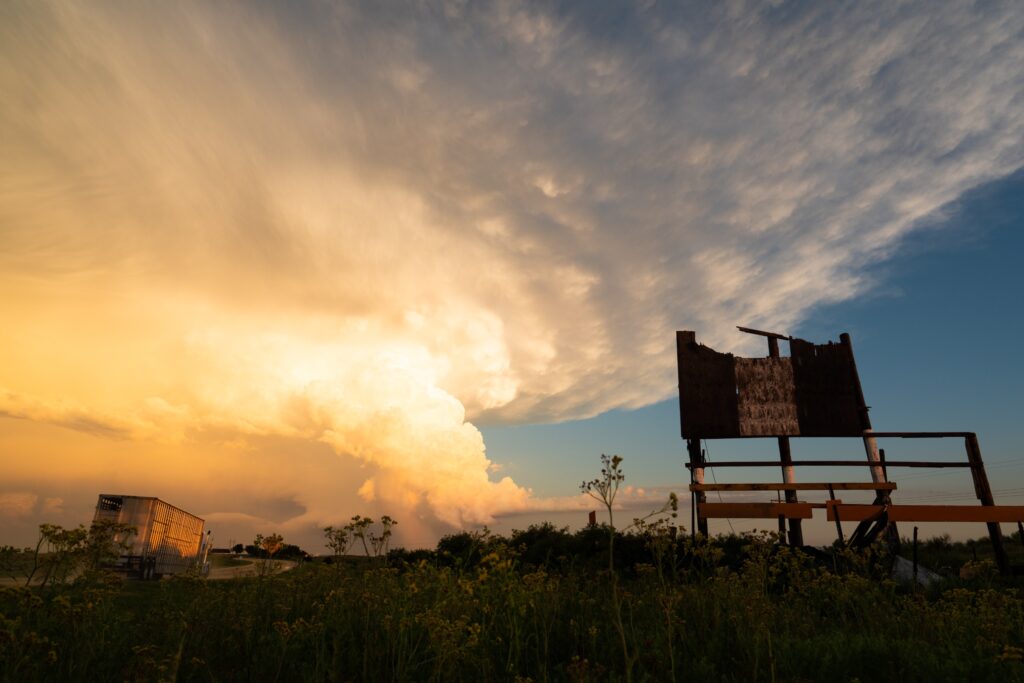
Tornadoes happen when warm, humid air clashes with cold air. People who have lived through tornadoes often describe the sky as dark and greenish. A tornado may bring hail, but the powerful updraft will prevent rain from falling in the area around the tornado.

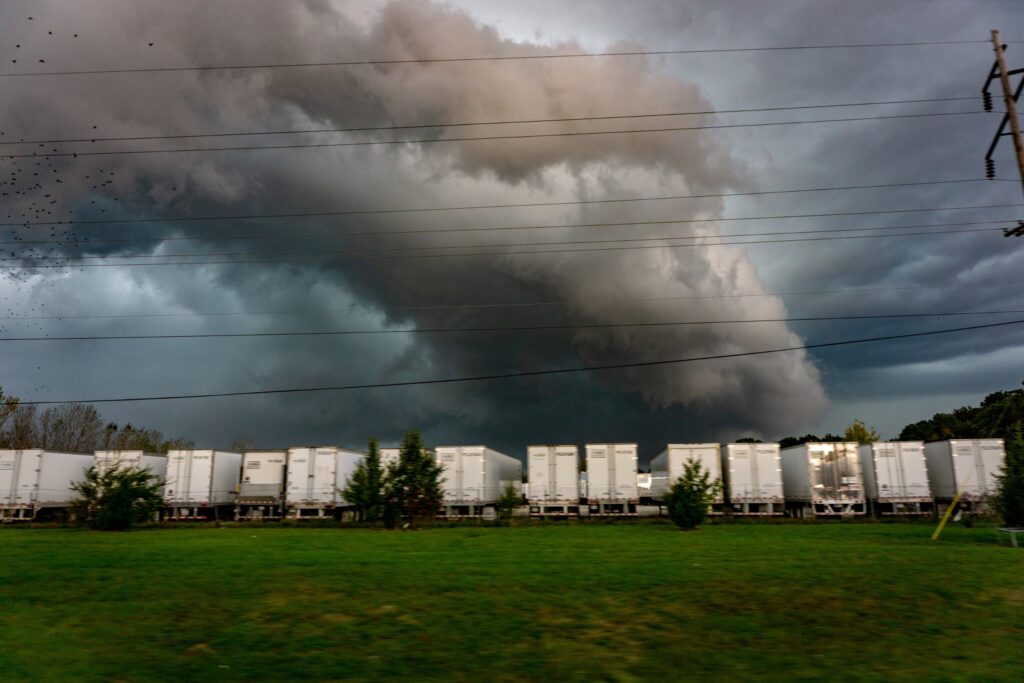
Before a tornado strikes, the wind may die down, birds and other animals may become quiet or leave the area, and a wall cloud (spinning cloud that becomes the foundation for a tornado) may become visible. Tornadoes are said to be very loud and produce a roaring sound similar to a freight train or waterfall. Communities in the area may activate sirens that indicate a tornado is present.

Take Shelter In A Building If Possible

If you can, take shelter in a building. Basements and storm shelters are best, but in the absence of a basement, find shelter in a windowless space like a bathroom or hallway.

It’s a common myth that overpasses are good places to find shelter during tornadoes. This is not true. Overpasses create a wind tunnel effect that can exacerbate the danger of a tornado.

Know What To Do On the Road

If you are in your semi-truck during a tornado, conventional advice is to leave your truck, get as far away from it (and other vehicles) as you safely can, then lie in a ditch, culvert, or as low a spot as you can find. Lay low and if possible, cover yourself with a blanket or coat.

Tornadoes can pick up vehicles, so staying in your rig may not be safe. If you must stay in your truck, keep your seat belt on, cover yourself with a coat or blanket, and sink low into your chair to get as far away from your window as possible.

Do not try to outrun the tornado. Tornadoes can move at speeds up to 70 miles per hour and may follow an erratic trajectory. A tornado that appears far from your rig may change course and come your way quickly. Additionally, hail may reduce your visibility, and other drivers on the road may become hazards.

Communicate With Your Lead

Maintain regular communication with your lead when driving in poor weather conditions. Your lead is a resource that can help you make decisions to make your journey safer.

Tornado Frequently Asked Questions

How much weight can a tornado pick up?
Tornadoes have been known to lift equipment and vehicles that weigh tens of thousands of pounds. One tornado in Texas is said to have lifted machinery weighing over 30,000 pounds.

How fast can a tornado move?
Tornadoes have been recorded at up to 70 miles per hour.

Can a tornado pick up a semi-truck?
Yes, a tornado can pick up a semi-truck.

Where is “Tornado Alley”?
Tornado Alley is a loosely defined area that can include parts of Oklahoma, Texas, Kansas, Colorado, New Mexico, Missouri, Nebraska, and Iowa.

What emergency supplies should I keep in my truck?
Some examples of helpful items to keep on hand include: a thick blanket, a first aid kit, a flashlight, and batteries. Keep heavy-duty gloves on hand for moving debris after a tornado.

Why is it better to shelter in a ditch than stay in the truck?
Tornadoes can pick up semi-trucks. Lying in a ditch is not as safe as going into a building, but it can give you some shelter from flying debris.

Have a Safe, Enjoyable Summer

Knowing what to do if a tornado occurs while driving can help you have a safe, enjoyable summer. The team at Barr-Nunn is here to support you as you drive safely throughout this summer. Contact us to learn more about our truck driving jobs.

Sources:

https://www.weather.gov/lmk/tornadoesfaq
http://www.tornadoproject.com/cellar/tttttt.htm
https://www.co.monroe.mi.us/Faq.aspx?QID=95
https://emsaok.gov/resource-library/summer-safety-tips/warning-signs-that-a-tornado-may-develop/
https://www.disastercenter.com/guide/tornado.html
https://georgiawildlife.com/out-my-backdoor-can-birds-predict-severe-weather
https://www.nationalgeographic.com/environment/article/tornado-alley-shift-east

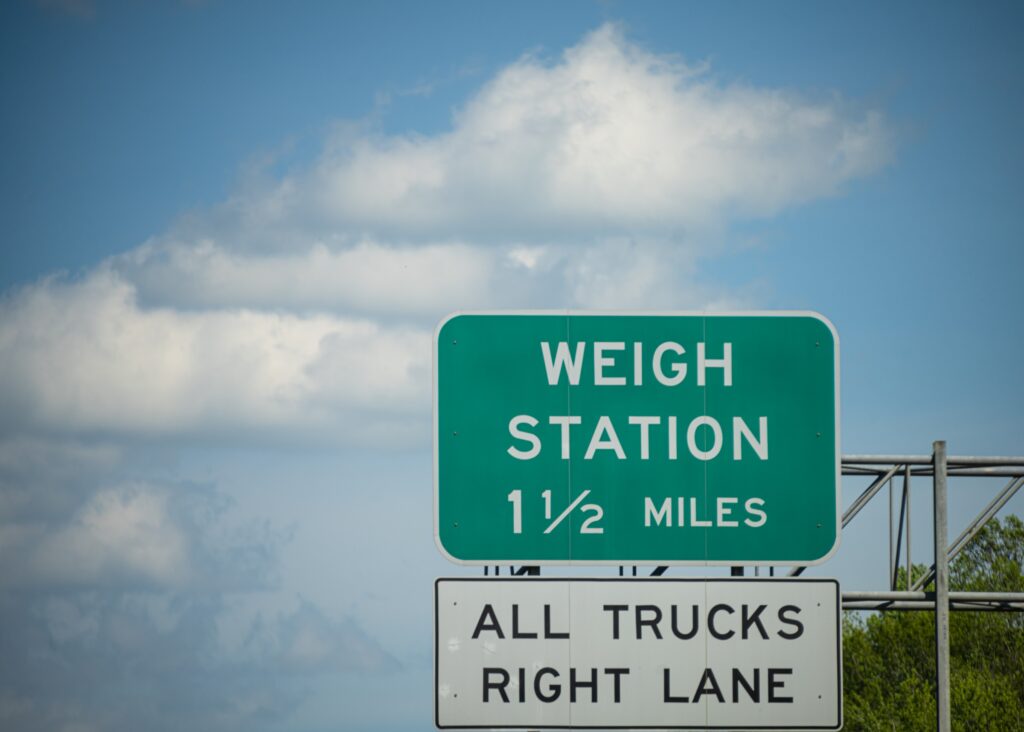
Weigh Station Basics for All Truck Drivers

Rolling Through the Scales: A Truck Driver’s Guide to Weigh-Station Basics

Highway weigh stations may look like small roadside stops, but they play an outsized role in keeping America’s freight moving safely and legally. Whether you’re new to the industry or a seasoned Barr-Nunn professional looking for a refresher, understanding how these checkpoints work—and how to breeze through them—can save time, money, and Compliance, Safety & Accountability (CSA) headaches. Here is a deep dive into everything you need to know before the next green “OPEN” light appears on the horizon.

What exactly is a weigh station?

At its core, a weigh station is a Department of Transportation (DOT) or state-run checkpoint that verifies a commercial vehicle’s weight and basic compliance paperwork. Most are tucked just off the mainline at state borders—often branded “ports of entry”—so officials can enforce each state’s unique weight rules. Nationally, there are now well over 1,000 of these facilities spread across U.S. highways.

While every station looks a bit different, they share a mission: to protect public infrastructure and motorists by keeping overweight or unsafe trucks off the road. As you’ll see below, that goal ripples into inspections, fines, and even tax collection.

Why do regulators care so much about weight?

Picture an 80,000-pound tractor-trailer rumbling over a bridge designed for lighter loads. Excess stress accelerates wear, shortens pavement life, and, in worst cases, creates catastrophic failures. DOT data show that an overweight truck generates exponentially more damage than a passenger car. Beyond infrastructure, too much weight raises the odds of tire blow-outs, longer stopping distances, and rollovers.

Many states also tie fuel-tax reconciliation or freight weight-based taxes to scale readings, which means weigh stations double as revenue checkpoints.

Bottom line: legal weight protects both budgets and lives.

The legal lines you can’t cross

Federal law caps a vehicle’s gross combination weight at 80,000 lbs, a single-axle at 20,000 lbs and a tandem axle at 34,000 lbs. Most states require any commercial vehicle over 10,000 lbs GVWR to stop when a station is open. If you skip the ramp without permission, expect steep fines, possible out-of-service orders, and a ding on your CSA score.

Where and when will you encounter a scale?

  • State Borders: The classic spot. Expect an inspection crossing from, say, Iowa into Missouri.
  • Freight Chokepoints: Near major distribution hubs where loads shift rapidly.
  • Pop-Up Operations: Portable scales let troopers enforce regulations on secondary highways without permanent facilities.
  • Inside Certain Yards: Shippers with sensitive freight or security concerns sometimes weigh outbound trucks on site.

Most stations post advance signs telling you whether they’re open or closed. Apps such as Truckers Path or your Barr-Nunn ELD can give real-time status, too, but trust the flashing roadside indicator above all.

What happens on the scale?

Initial Weigh-In

  • Static scales: You roll onto a platform and stop until the marshal waves you on.
  • Weigh-in-Motion (WIM): Sensors measure axle weight as you roll slowly across the pad, potentially eliminating a full stop if all numbers look good.

Paper Check & Visual Walk-Around

Officers may verify registration, IFTA decals, electronic logs, and bill of lading to ensure the load matches legal paperwork.

DOT Inspection Levels 1-6

Anything from a quick brake-light glance to a bumper-to-brake-lining inspection of driver credentials, hours-of-service compliance, and vehicle condition can occur.

Outcome

  • Clear: You’re back on the ramp in minutes.
  • Violation: Expect a fine, possible off-load instructions, or an OOS order until repairs/lightening are complete.

Looking to skip the line? Welcome to bypass technology

If your CSA profile and weight look squeaky-clean, you might receive a radio-frequency or app-based bypass signal (a “green light”) before the off-ramp. Services such as Drivewyze PreClear analyze WIM data, carrier safety scores, and registration in real-time to decide whether you can stay on the mainline. The payoff is huge: less idling, faster deliveries, and happier drivers.

Barr-Nunn partners with leading bypass providers to maximize driver efficiency, so make sure your onboard unit and credentials are always current. Even with a bypass subscription, though, remember officers can call any truck in for a random inspection, so professionalism matters.

Fines, fees, and other consequences of non-compliance

Penalties vary by state but can easily exceed $1,000 for skipping an open station or coming in overweight. Repeat offenses jeopardize your CDL and lead to higher insurance premiums. Excessive violations also tank a carrier’s safety rating, limiting load opportunities and hindering bonus programs. Simply put, a five-minute detour beats a five-figure payout every time.

Smart strategies for Barr-Nunn drivers

TaskWhy It MattersQuick Tip
Scale before you sailCatch distribution errors at the shipperUse in-yard CAT or platform scales whenever possible
Secure the loadShifting cargo can change axle weightsRe-check straps & tandems after the first 50 miles
Mind your paperworkOfficers love matching BOL weight to scale readoutsKeep digital and paper copies organized by trip
Track HOS impactA Level 1 inspection can eat 45 minutes of drive timeBuild a 1-hour buffer into tight schedules
Stay courteousProfessional demeanor speeds inspectionsEye contact, yes sir/ma’am, and clear answers go a long way

The Barr-Nunn advantage

Our fleet specs—including lightweight, late-model tractors and rigorous preventive-maintenance intervals—help drivers glide through the scales. Pair that with score-card bonuses for clean inspections and Barr-Nunn’s investment in nationwide bypass services, and you’ve got a recipe for fewer headaches and bigger paychecks. If you encounter an unusual situation, like a portable pop-up, mixed commodity load, or axle issues, reach out to Fleet Support before rolling the dice. We’ll find a safe, legal solution so you can keep moving.

Key takeaways

  • Stop when open if you’re over 10,000 lbs: It’s the law.
  • Know the magic numbers: 20,000 (single axle), 34,000 (tandem), 80,000 (gross).
  • Expect more than a scale: Officers can check logs, brakes, lights, and securement.
  • Use technology: Pre-trip scales, WIM, and bypass services are productivity boosters, not shortcuts.
  • Professionalism pays: A clean inspection protects your CSA score and your wallet.

Weigh stations aren’t going away, but with the right preparation, they don’t have to slow you down. Keep these fundamentals in mind, lean on Barr-Nunn’s safety resources, and you’ll spend less time on the ramp and more miles earning. Drive safe, stay legal, and keep those wheels turning. See you down the road!

Additional Resources
https://drivewyze.com/blog/weigh-station-basics-everything-you-need-to-know/

Tips for How to Avoid Distracted Driving for Truckers

Truck driver distracted driving can lead to accidents, injuries, and fatalities. If you’re a commercial truck driver, it’s important to take steps to avoid distracted driving.

As a truck driver, there are many things you can do to protect yourself and others on the road. Knowing the regulations and taking proactive steps to stay focused can help you have a successful and safe truck driving career.

Distracted Driving Causes Accidents

The FMCSA states that a significant percentage of commercial truck accidents are linked to driver distraction.

Most of us think of using a cell phone when we imagine distracted driving, but there are many ways drivers can become distracted. The top 10 truck driver distractions have been listed below:

  1. Reaching for an object
  2. Reading
  3. Adjusting/monitoring devices integral to the vehicle
  4. Removing/adjusting clothes
  5. Adjusting or using an electronic device (other than an electronic dispatching device)
  6. Reaching for a food or drink-related object
  7. Adjusting or using an electronic dispatching device
  8. External distraction
  9. Tobacco use
  10. Eating

Many of these distractions are within the control of the driver. To avoid being distracted while driving, consider the list above and take steps to avoid these distractions.

Never Use a Cell Phone

FMCSA has commissioned research that shows the odds of being involved crash, near-crash, or an unintentional deviation from your lane are 6 times greater when dialing a mobile phone.

To dial a phone, drivers must take their eyes off the road for almost 4 seconds, or longer. If your vehicle is traveling at a speed of 55 miles per hour, this means you may travel the length of a football field while not looking at the road. This is why the FMCSA prohibits the use of a cell phone while driving commercial vehicles.

What Does It Mean to Use a Cell Phone?

Here’s what qualifies as using a cell phone:

  • Dialing a number
  • Using the phone with one hand while driving with the other
  • Maneuvering your body to reach for a cell phone

Tips for Avoiding Cell Phone Use

As a driver, there are things you can do to avoid cell phone use while driving.

  • Never pick up your phone, even at stoplights.
  • Put your cell phone in “do not disturb” mode while driving.
  • Communicate with friends and family that you are unreachable when driving.
  • Consider turning off your cell phone while driving.

Avoid Other Distractions

Beyond cell phones, drivers may become distracted in other ways as well. Common distractions include using a GPS device, eating or drinking while driving, updating driver logs, and engaging in personal grooming activities. None of these activities is worth the potential cost, considering what’s at stake. Distracted driving can take lives.

Know the Consequences

In addition to causing accidents, there are other consequences of distracted driving.

  • Injuries and fatalities: The size and weight of commercial vehicles can cause serious damage to other vehicles on the road. When a large commercial vehicle is involved in an accident, people are often injured or killed.
  • Fines: Penalties for using hand-held mobile devices can lead to fines of up to $2,750 and up to $11,000 for employers that require drivers to use hand-held communications devices while driving.
  • Disqualification: If you’re a driver who receives multiple violations while using a hand-held mobile phone while driving, you may be disqualified by the FMCSA.

Be Aware of Regulations

The FMCSA promotes safe driving practices through awareness campaigns and regulations, especially regarding texting and mobile phone restrictions. Texting while driving is not allowed. Texting includes manually entering or reading text from an electronic device, even when emailing, instant messaging, and so on.

Drivers are also not allowed to hold a mobile phone to conduct a voice communication, nor may they dial by pressing more than a single button. Drivers are not allowed to even hold a phone or press more than one button while driving.

Want to know what else you can do to be a safe driver?

  • Be aware of all FMCSA regulations to avoid distracted driving.
  • Take regular driver training classes or pursue certifications to learn about new safety considerations and ways to stay safe.
  • Take advantage of safety incentives like the Barr-Nunn safety bonuses. Drivers who do things like maintain a clean driving record and adhere to safety laws can earn cash bonuses and paid time off.
  • Maintain a safe vehicle. Getting regular maintenance checks helps ensure that your truck is road-worthy.
  • Always follow the laws. FMCSA regulations aren’t the only laws that drivers have to follow. Know local and state laws that apply to you. Know the laws and follow them.

Avoid Penalties

Violations of distracted driving regulations can result in fines for drivers and carriers, as well as potential driver disqualification. Worst of all, it can lead to fatalities. Truck driver distracted driving just isn’t worth it. If you’re serious about safety, Barr-Nunn has opportunities for you. Contact us to learn more about our truck driving jobs.

Resources:

Tips for Staying Awake for Truck Drivers

How Do Truck Drivers Stay Awake During Long Haul Drives?

Long-distance drivers face unique challenges on the road, and staying alert is among the most critical. Long-distance driving fatigue not only impacts performance but also poses serious safety risks. To help you stay alert while driving, you should adopt proactive measures that promote both mental and physical well-being. Here are effective strategies every truck driver can use to combat fatigue and stay sharp.

Recognize the Signs of Fatigue

The first step in preventing fatigue is understanding its warning signs. Symptoms of long-distance driving fatigue include:

  • Varying speeds without realizing it
  • Slower reaction times
  • Frequent yawning
  • Difficulty focusing
  • Drifting between lanes

Recognizing these early signs allows you to take immediate action before fatigue compromises your safety.

Maintain a Consistent Sleep Schedule

Getting quality, uninterrupted sleep is essential for staying alert. Avoid irregular sleep patterns by sticking to a routine, even on the road. This consistency helps regulate your body’s internal clock, ensuring you are well-rested and ready for the demands of long-distance driving.

Eat Right and Stay Hydrated

What you eat and drink plays a significant role in your energy levels. To help you stay alert while driving, you should:

  • Eat light, frequent meals instead of heavy, calorie-dense meals that can make you feel sluggish.
  • Stay hydrated by drinking plenty of water. While caffeine can provide a quick energy boost, over-reliance may lead to crashes in energy levels.

Incorporate Physical Activity

Sitting for extended periods can drain your energy and lead to fatigue. Incorporating simple exercises and stretches during breaks can boost circulation and increase alertness. Even a quick walk around your truck can make a difference.

Engage Your Mind

Long stretches of highway can feel monotonous, making mental stimulation critical. Keep your mind active by:

Listening to engaging podcasts, audiobooks, or upbeat music.
Trying mental exercises or problem-solving games to stay focused.

Adjust Your Environment

A comfortable and well-ventilated cabin can make a world of difference. Here are some adjustments to enhance alertness:

  • Set the cabin temperature to a comfortable but slightly cool setting.
  • Open the windows periodically to let in fresh air.

Take Scheduled Breaks

Long-distance drivers benefit greatly from regular breaks. A short 15-minute break can work wonders for recharging your energy. Plan your route to include stops that allow you to stretch, move, and refocus.

Additional Tips to Stay Awake While Driving Long Distances

In addition to the strategies above, consider these extra tips:

  • Avoid heavy meals before driving, as they can make you feel drowsy.
  • Incorporate vitamins B and C into your diet to support energy levels.
  • Manage stress effectively, as high stress can drain energy and impact focus.

Stay Safe and Alert on the Road

For long-distance drivers, staying awake and alert isn’t just a matter of personal safety—it’s essential for everyone on the road. By adopting these strategies, you can confidently answer the question: how do truck drivers stay awake? Implement these habits to keep fatigue at bay, ensuring every journey is safe and successful.

Ready to take the next step in your trucking career? Barr-Nunn Transportation is here to support you with resources, tools, and a driver-first approach. Stay safe, stay alert, and keep rolling forward.

To learn more about Truck Driving options with a Certified Top-Pay Carrier, contact us at Barr-Nunn Transportation.

Drive for Barr-Nunn Transportation! Search Truck Driving Positions or Apply Now!

Strategies for Successful Team Trucking: Boost Efficiency, Communication, and Teamwork

Team trucking can be one of the most rewarding ways to work in the transportation industry, offering increased earning potential, reduced downtime, and the opportunity to share responsibilities. However, success in team trucking depends on strong communication, mutual respect, and effective planning. At Barr-Nunn Transportation, we understand the importance of fostering strong partnerships between team drivers. In this guide, we’ll share strategies for successful team trucking to help drivers optimize their collaboration and enjoy the many benefits of team driving.

The Benefits of Team Trucking

Team trucking offers unique advantages that make it appealing for many drivers. By working in pairs, team drivers can cover longer distances in shorter periods, allowing for expedited deliveries. This can lead to higher pay due to increased mileage and access to specialized, high-priority routes.

Beyond financial incentives, team trucking also provides built-in companionship on the road, helping drivers combat the isolation often experienced in solo trucking. With a partner to share responsibilities, drivers can also enjoy better work-life balance and reduced stress during trips.

Top Strategies for Successful Team Trucking

  1. Establish Clear Communication

Effective communication is the cornerstone of any successful partnership. Before hitting the road, discuss your driving styles, preferences, and expectations. Decide how you’ll handle critical tasks like navigation, refueling, and meal planning. Regularly check in with each other to ensure you’re on the same page and address any issues early to avoid misunderstandings.

  1. Set Shared Goals

Discuss your goals for the team, such as desired mileage, earnings, or trip schedules. Knowing that you’re working toward the same objectives can foster cooperation and prevent conflicts. Regularly review your progress to ensure you’re both satisfied with the partnership.

  1. Divide Responsibilities Fairly

Clearly define roles and responsibilities for each driver. For example, one driver might handle pre-trip inspections while the other manages paperwork or route planning. Rotating tasks periodically can keep things fair and prevent burnout.

  1. Prioritize Rest and Sleep

Team trucking allows one driver to rest while the other drives, but ensuring quality rest is essential. Agree on a sleep schedule that works for both of you, and invest in comfortable bedding to make the truck’s sleeper berth a restful space. A well-rested driver is safer, more alert, and better equipped to handle challenges on the road.

Navigating Challenges in Team Trucking

  1. Adapt to Each Other’s Driving Styles

Every driver has unique habits and preferences. Take time to understand each other’s approaches to driving, braking, and navigating. Being flexible and accommodating can prevent friction and make the partnership smoother.

  1. Manage Conflict Proactively

Disagreements are inevitable, but how you handle them matters. Address issues calmly and respectfully, focusing on solutions rather than assigning blame. If a conflict persists, consider bringing in a neutral third party, such as a Barr-Nunn Transportation fleet manager, to mediate.

  1. Plan Routes Together

Collaborative route planning ensures both drivers are comfortable with the journey ahead. Use GPS systems and trucking apps to identify the best routes, rest stops, and refueling stations. Agreeing on the plan upfront reduces stress and minimizes surprises.

  1. Be Respectful of Personal Space

Living in close quarters can be challenging, especially during long trips. Respect your partner’s need for privacy and downtime. Whether it’s allowing them to nap undisturbed or using headphones for personal entertainment, small gestures of respect can go a long way.

Building a Strong Team Dynamic

  1. Leverage Each Other’s Strengths

Every driver brings unique skills to the table. One might excel at night driving while the other prefers navigating urban areas. Play to each other’s strengths to maximize efficiency and make the most of your partnership.

  1. Practice Patience

Patience is essential in team trucking, especially when spending long hours together. Be understanding of each other’s quirks and remember that both of you are working toward the same goals.

  1. Keep Open Lines of Communication with Dispatch

A strong relationship with your dispatcher can make team trucking more efficient. Communicate clearly and consistently about your availability, progress, and any issues on the road. At Barr-Nunn Transportation, our dispatchers are trained to support team drivers and facilitate smooth operations.

Maximizing Efficiency as a Team

  1. Plan Rest Breaks Strategically

Coordinate rest breaks to ensure minimal downtime. For example, one driver can take a break while the other handles refueling or checks the truck’s tires and fluids. Efficiency in these small tasks adds up over the course of a trip.

  1. Use Technology to Your Advantage

Invest in tools like GPS systems, route planning apps, and electronic logging devices (ELDs) to streamline operations. Barr-Nunn Transportation equips its trucks with advanced technology to help drivers navigate efficiently and comply with regulations.

  1. Monitor Fuel Efficiency

Team drivers cover more miles, so fuel efficiency is crucial. Practice fuel-saving techniques, such as maintaining a steady speed, avoiding unnecessary idling, and planning routes with minimal traffic or elevation changes.

Staying Safe on the Road

  1. Stay Alert for Weather and Traffic Conditions

Driving conditions can change rapidly, so staying informed is key. Share updates about weather or traffic delays and be prepared to adjust your plans as needed. Safety should always be the top priority.

How Barr-Nunn Transportation Supports Team Drivers

At Barr-Nunn Transportation, we recognize the value of team trucking and strive to create an environment where team drivers thrive. Our trucks are equipped with amenities to enhance comfort and efficiency, including advanced navigation systems and TPMS (Tire Pressure Monitoring Systems). Additionally, we offer competitive team pay packages and bonus programs to reward high-performing teams.

Fleet managers at Barr-Nunn are also dedicated to supporting team drivers by addressing concerns promptly and providing resources to optimize your experience on the road. Whether it’s route planning assistance or maintenance support, we’re here to help you succeed.

Conclusion

Successful team trucking requires preparation, communication, and mutual respect. By implementing these strategies, team drivers can maximize efficiency, minimize stress, and enjoy the many benefits of working together. At Barr-Nunn Transportation, we’re committed to empowering our team drivers with the tools, support, and training needed to excel. With the right approach and a strong partnership, team trucking can be a fulfilling and profitable career path.

To learn more about Truck Driving options with a Certified Top-Pay Carrier, contact us at Barr-Nunn Transportation.

Drive for Barr-Nunn Transportation! Search Truck Driving Positions or Apply Now!

Tips for Truck Driving in Rain

Truck driving in the rain presents unique challenges that require skill, preparation, and caution. Reduced visibility, slippery roads, and hydroplaning risks mean truckers must adjust their driving techniques to maintain safety and control. At Barr-Nunn Transportation, we prioritize the safety of our drivers and fleet. Here are comprehensive tips for truck driving in rain to help truckers stay safe and efficient, even during inclement weather.

The Importance of Safety When Driving in Rain

Rainy conditions can significantly impact road safety for truck drivers. Heavy rain affects visibility, road grip, and braking distances, making it essential for drivers to adopt safe driving practices. For truckers, the stakes are high; the weight and size of a semi-truck mean that even small mistakes can have serious consequences. By following proven strategies, drivers can reduce risks and ensure both their safety and that of other road users.

Tips for Driving Safely in Rainy Conditions

1. Reduce Speed to Adapt to Wet Conditions

When roads are wet, friction between the tires and the road is reduced, increasing stopping distance. To compensate, drivers should lower their speed to match the conditions. Slowing down gives you more time to react and reduces the chances of hydroplaning.

2. Increase Following Distance

Maintaining a safe distance between your truck and the vehicle in front of you is crucial in rainy weather. Trucks require longer stopping distances, especially when the road is slippery. A safe rule of thumb is to double the following distance you would maintain in dry conditions.

3. Use Headlights and Keep Them Clean

Proper illumination is key to seeing and being seen during rain. Turn on your low-beam headlights to enhance visibility, but avoid using high beams as they can reflect off the rain and create glare. Additionally, ensure your headlights are clean and free of dirt to maximize their brightness.


Handling Visibility Challenges

4. Keep Windshield Wipers in Top Condition

Your windshield wipers play a vital role in maintaining visibility. Check them regularly to ensure they are in good condition. Replace wiper blades if they leave streaks or fail to clear the windshield effectively. Also, ensure the washer fluid reservoir is full to help clear mud or grime splashes.

5. Defog Your Windshield Properly

Rain often leads to fogged windows, reducing visibility. Use the defroster and air conditioning to keep windows clear and maintain a clear line of sight. A clean windshield, inside and out, will also reduce the chances of condensation.

6. Avoid Standing Water and Puddles

Deep puddles or standing water can lead to hydroplaning, a situation where tires lose contact with the road surface and skim on water. If you can’t avoid puddles, drive through them slowly and steadily to prevent water from splashing up into the engine or wheel wells.


Best Practices for Maintaining Traction in the Rain

7. Monitor Tire Tread and Pressure

Good tire tread is essential for displacing water and maintaining traction. Before heading out, check your tires to ensure they have sufficient tread depth and are inflated to the manufacturer’s recommended PSI. Proper tire pressure helps maintain contact with the road and reduces the risk of hydroplaning.

8. Avoid Sudden Movements

Quick steering corrections or sudden braking can cause skidding or loss of control. Drive smoothly and anticipate your movements well in advance. Gradual changes in speed and direction will help maintain traction and stability.

9. Know How to Handle Hydroplaning

Hydroplaning occurs when the tires lose grip on the wet surface and glide over the water. If you feel your truck hydroplaning, don’t panic. Gently take your foot off the accelerator, keep the steering wheel steady, and avoid making sudden movements. Do not slam on the brakes; allow the truck to regain traction naturally.


Adjusting Driving Techniques

10. Be Prepared for Wind Gusts

Rain is often accompanied by strong winds, which can make it difficult to control the truck, especially when it is not fully loaded. Keep a firm grip on the steering wheel and remain alert for sudden gusts, particularly when driving in open areas or on bridges.

11. Use Engine Braking Cautiously

While engine braking is a useful tool for managing speed on descents, it should be used carefully in wet conditions. Rapid deceleration can lead to wheel lock-up and skidding. Lightly tap the brake pedal to signal your intentions to drivers behind you when slowing down.

12. Stay in the Middle Lane When Possible

The outer lanes often accumulate more water due to poor drainage. Staying in the middle lane when safe and appropriate can minimize your exposure to standing water and reduce the risk of hydroplaning.


Additional Safety Tips for Rainy Weather

13. Watch for Spray from Other Vehicles

The spray generated by vehicles, especially large trucks, can reduce visibility for drivers behind. Be mindful of how your own truck affects visibility for others, and keep an eye out for vehicles that may be affected by your spray.

14. Take Breaks When Necessary

If the rain becomes too intense, don’t hesitate to pull over at a safe location and wait it out. Heavy downpours can create a “white-out” effect where visibility drops dramatically. Safety is more important than maintaining a strict schedule.

15. Use the Right Lane When Driving Slowly

If you need to drive significantly slower due to rain, stay in the right lane to allow faster traffic to pass on the left. This helps maintain the flow of traffic and reduces the risk of being rear-ended.

How Barr-Nunn Transportation Supports Drivers in Bad Weather

At Barr-Nunn Transportation, we understand the challenges our drivers face when driving in rain and adverse weather. We provide drivers with top-quality training that includes best practices for handling rain and other weather conditions. Our fleet is equipped with technology to enhance safety, including Tire Pressure Monitoring Systems (TPMS) that help drivers maintain optimal traction. By prioritizing safety and vehicle maintenance, Barr-Nunn ensures drivers are well-prepared to handle any challenge they encounter on the road.

Conclusion

Driving in rainy weather requires skill, caution, and preparation. By following these tips for truck driving in rain, drivers can enhance their safety and the safety of those around them. Maintaining reduced speed, practicing smooth driving techniques, and ensuring good visibility are key to staying safe during inclement weather. At Barr-Nunn Transportation, we’re committed to supporting our drivers with the tools and knowledge needed to navigate challenging conditions safely and efficiently.

SkyBitz Trailer Tracking and the Barr-Nunn Advantage: Enhancing Efficiency and Reducing Stress for Truck Drivers

In the trucking industry, time is money. Every minute spent searching for a trailer is a minute not spent on the road, and for truck drivers, these minutes can quickly add up to significant stress and lost revenue. Fortunately, technology is stepping in to alleviate these challenges, and one of the leading solutions is SkyBitz trailer tracking. Paired with the operational excellence of Barr-Nunn, this system is transforming the way drivers locate and manage their trailers, resulting in improved efficiency and reduced stress.

The Challenges of Traditional Trailer Management

Before diving into the benefits of SkyBitz, it’s important to understand the traditional challenges that truck drivers face. In a typical scenario, drivers might spend hours navigating large yards or multiple locations to find their assigned trailers. This process is not only time-consuming but also physically and mentally exhausting. Misplaced trailers, incorrect records, and lack of real-time information further exacerbate these issues, leading to delays and increased operational costs.

What is SkyBitz Trailer Tracking?

SkyBitz is a leading provider of remote asset tracking and information management solutions. Their trailer tracking system utilizes advanced GPS technology and cellular communication to provide real-time location data of trailers. This system is designed to offer seamless integration with existing fleet management systems, providing a comprehensive overview of all trailer assets.

How SkyBitz Works

The SkyBitz system equips trailers with GPS tracking devices that constantly relay location data to a centralized platform. This platform is accessible to both fleet managers and drivers via web or mobile applications. The real-time data allows users to pinpoint the exact location of any trailer within seconds, eliminating the need for physical searches.

The Barr-Nunn Advantage

Barr-Nunn, a respected name in the trucking industry, has integrated SkyBitz trailer tracking into their operations, providing a significant advantage to their drivers. Here’s how this integration benefits drivers:

1. Quick and Accurate Trailer Location

With SkyBitz, Barr-Nunn drivers can quickly locate their trailers without having to leave the cab of their truck. The real-time tracking data shows the precise location of each trailer, reducing search time from hours to mere minutes. This efficiency ensures that drivers spend more time on the road and less time searching for equipment.

2. Enhanced Operational Efficiency

The ability to quickly locate trailers means that Barr-Nunn can streamline their dispatch and routing processes. Drivers receive accurate and timely information, allowing them to plan their routes more effectively. This leads to fewer delays and improved on-time delivery rates, enhancing overall customer satisfaction.

3. Reduced Stress and Improved Safety

Searching for trailers in large yards or unfamiliar locations can be stressful and, at times, dangerous. By providing precise location data, SkyBitz reduces the physical and mental strain on drivers. They can confidently locate their trailers without the frustration of searching, leading to a safer and more relaxed working environment.

4. Improved Asset Utilization

SkyBitz also helps Barr-Nunn optimize their trailer utilization. By tracking the movement and usage patterns of each trailer, the company can make informed decisions about asset allocation and maintenance. This ensures that trailers are not sitting idle and are in the best possible condition for use.

5. Enhanced Communication

The integration of SkyBitz with Barr-Nunn’s fleet management system facilitates better communication between drivers and dispatchers. Any issues with trailer location can be quickly addressed, and drivers can receive real-time updates on trailer status, ensuring they are always in the loop.

Conclusion

The partnership between SkyBitz and Barr-Nunn is a game-changer for truck drivers. By leveraging advanced trailer tracking technology, Barr-Nunn provides its drivers with a powerful tool that enhances efficiency, reduces stress, and improves overall job satisfaction. For drivers, this means more time on the road, fewer headaches, and a safer, more productive working environment. As the trucking industry continues to evolve, innovations like SkyBitz trailer tracking are paving the way for a more efficient and driver-friendly future.

Tips for Night Driving: Mastering the Road When the Sun Goes Down

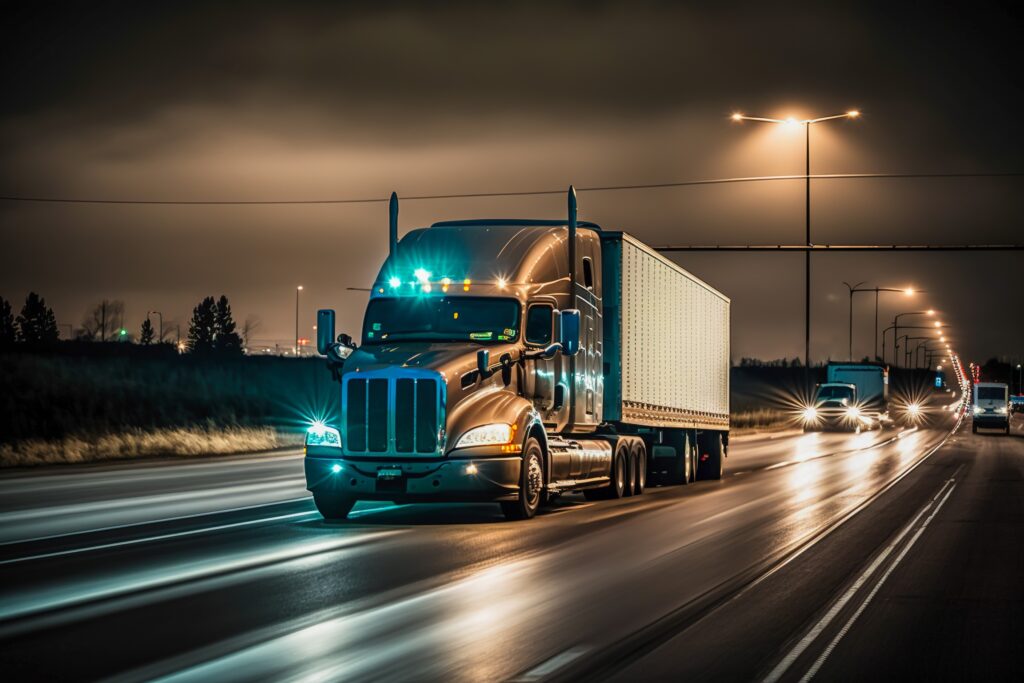
Operating a big rig on the road is challenging on its own, even in good weather conditions and during the day. However, adding the element of low light after darkness sets in for the night can increase the risk of accidents and other issues immensely. Therefore, as a professional driver, you should train for truck driving scenarios at night, so you can master the road when the sun goes down.

1. Be Ready to Lower Speed

As driving conditions change from daylight to night, it’s important to give yourself a little more time to react. A normal-sized vehicle needs over 300 feet to come to a stop when they are traveling at 65 mph. When you are talking about a loaded tractor-trailer though, the distance required to stop when traveling, that speed increases to nearly 525 feet. Therefore, when visibility goes down, as it does in the evening and night, it’s even more important to give yourself more time to react by lowering your speed.

2. Increase The Spacing Between Vehicles

Another way to create more space for your rig to slow down, change lanes, or react in some way at night is to increase the distance between your truck and the vehicle in front of you. Generally, you will want to give yourself one truck’s length of space for every 10 mph you are traveling. Therefore, at a speed of 60mph, you would want at least six truck lengths between you and the vehicle in front of you. This is even more important at night when you have less time to react due to lower visibility.

3. Check Headlights and Wipers

Headlights are vital safety components of your truck, giving you much-needed visibility in the dark. Therefore, when you know you are going to be traveling at night, be sure to check important safety functions like your truck’s lights and your wipers. This is usually part of your pre-check inspection list anyway, but if you know that you will be traveling throughout the night or in inclement weather, taking the extra step to ensure that your lights are working properly is a good idea.

4. Make Sure Your Windshield is Clean

One common problem when it comes to driving at night is the glare that it can create on your windshield or even on your mirrors. Therefore, to prepare for nighttime driving, make sure that your truck’s windshield is clean and free of grime as this will reduce the likelihood of you experiencing glare. Also, make sure your mirrors are free of smudges, so your visibility is as good as it can be, even at night.

5. Know That Your Natural Rhythm Will Likely Be Off

While not always the case, for most people, there will be a natural drop-off of alertness and energy levels as the day progresses, meaning that the late night into morning hours can be challenging for drivers. Make sure that you schedule breaks and time for sleep to avoid becoming over-tired. Caffeinated drinks can also help, but don’t drink those to excess as this can cause other issues. Generally, being in good physical shape and maintaining a good diet will increase your overall energy levels. Listen to podcasts to keep your mind engaged, roll down windows to feel the cool air or simply pull over and sleep some if you become too tired.

6. Be Aware of All Other Drivers

Just as your alertness is likely to be less in the late hours into the early morning for you as a professional driver, it is even more common for drivers who are not used to driving at night. Therefore, although traffic is generally lighter, the vehicles on the roadways are going to be more likely to have distracted, tired, or generally unalert drivers. Therefore, while being hyper-aware of the surrounding traffic is always good, it’s even more important to do this when driving at night.

7. Parking Availability Will Likely be Better

While there is a big competition for parking during the day, typically, when it comes to parking at night, this is not the case. In many situations, you will not have to worry about planning your route around parking availability or making dock plans ahead of time. This is one advantage of nighttime driving that makes it preferable for some drivers. If you are wondering about where to find good parking or gas, even at night, you can always utilize GasBuddy or TruckerPath.

8. Plan Ahead and Take Precautions

Nighttime deliveries can feel a little quieter, but it’s also a good opportunity to crank up your tunes and enjoy the peacefulness of the road. However, some drivers mention keeping an extra eye out in unfamiliar areas, especially during deliveries. Here are some tips to help you feel confident:

  • Plan your route beforehand: Utilize tools like Google Street View to familiarize yourself with delivery locations, especially in unfamiliar areas.
  • Stay alert and aware: Even during quieter night hours, staying alert is important.
  • Take precautions: If you need to exit your cab at night, consider parking in well-lit areas and letting someone know your estimated arrival time.

Master Truck Driving at Night

At Barr-Nunn Transportation, your safety is our top priority. We understand the unique challenges of nighttime driving, and we encourage you to utilize the tips outlined above. Taking these proactive steps can help you navigate the roads with greater confidence and minimize potential risks. Remember, even small adjustments to your routine can significantly enhance your nighttime driving experience.

To learn more about Truck Driving options with a Certified Top-Pay Carrier, contact us at Barr-Nunn Transportation.

Drive for Barr-Nunn Transportation! Search Truck Driving Positions or Apply Now!

A Guide to Staying Alert and Safe on Nighttime Hauls

The open road beckons 24/7, but nighttime hauls present a unique set of challenges for even the most seasoned truck driver. Reduced visibility, fatigue, and potentially fewer resources can make navigating those dark hours demanding. However, with the right approach and a commitment to safety, you can turn nighttime hauls into productive stretches on your journey. At Barr-Nunn Transportation, your well-being is our priority, so here’s a guide packed with tips to help you stay alert and safe on those nighttime drives.

Planning for Nighttime Success:

  • Pre-Trip Prep: Even before you climb into the cab, ensure you’re well-rested. Aim for a consistent sleep schedule, ideally getting 7-8 hours of quality sleep before a nighttime haul. Pack healthy snacks and a refreshing drink to keep your energy levels up throughout the night.
  • Route Familiarity: Plan your route meticulously beforehand. Utilize tools like GPS navigation with truck-specific features and utilize Google Street View to familiarize yourself with rest stops, fuel stations, and especially delivery locations. Knowing what to expect can alleviate stress and help you navigate unfamiliar areas more confidently.
  • Vehicle Maintenance: Double-check your truck’s lighting system, ensuring headlights, taillights, brake lights, and turn signals are all functioning properly. Clean any grime or dirt build-up on headlights to maximize visibility. Ensure all mirrors are adjusted for optimal nighttime visibility.

Optimizing Your Nighttime Drive:

  • Adjusting Your Cabin Environment: Dim your dashboard lights to reduce glare and eye strain. Opt for cooler cabin temperatures – studies show a cool environment can enhance alertness. Utilize blue light-filtering glasses to minimize the impact of harsh artificial light on your circadian rhythm.
  • Embracing the Power of Light: Maximize your use of headlights for optimal road visibility. Utilize fog lights when necessary in low-visibility conditions, but remember to be mindful of oncoming traffic. Consider investing in additional auxiliary lighting for improved peripheral visibility in dark areas.
  • Staying Alert and Focused: Combating fatigue is crucial. Plan regular breaks, even if you don’t feel tired. Get out of the cab, walk around, do some light stretches, and get some fresh air.
  • Engaging Your Senses: Combat monotony with stimulating activities. Play upbeat music, and listen to audiobooks or podcasts on engaging topics. Maintain proper hydration and munch on healthy snacks like fruits, nuts, or yogurt to keep your energy levels steady and your mind sharp.
  • Safety First: Be extra cautious of other drivers, especially those who might be drowsy or intoxicated. Maintain a safe following distance and avoid tailgating. Be particularly vigilant in unfamiliar areas and construction zones. If you experience excessive fatigue or feel unsafe to continue, don’t hesitate to pull over at a well-lit rest stop and take a break until you feel refreshed.

Building a Nighttime Support System:

  • Communicate Effectively: Stay in touch with dispatch and keep them updated on your progress, especially during nighttime hauls. Let them know your estimated arrival times and inform them of any potential delays or concerns you encounter on the road.
  • The Barr-Nunn Advantage: At Barr-Nunn Transportation, we understand the unique demands of nighttime driving. We encourage open communication with our dispatch team, and we’re always available to address any concerns or questions you might have while on the road.

By following these tips and prioritizing your well-being, you can transform nighttime hauls into productive stretches of your journey. Remember, at Barr-Nunn Transportation, your safety is paramount. Don’t hesitate to reach out to our team for any support you need as you conquer the night!

To learn more about Truck Driving options with a Certified Top-Pay Carrier, contact us at Barr-Nunn Transportation.

Drive for Barr-Nunn Transportation! Search Truck Driving Positions or Apply Now!

Hidden Gems on the Eastern U.S.A. Trucking Routes

Hey, seasoned road warriors! If you’re hauling with Barr-Nunn Transportation on the East Coast, get ready for a journey beyond the ordinary. We’re about to uncover the hidden gems along your trucking routes that will turn your routine trips into memorable adventures!

The Scenic Coastal Routes

Rolling Waves and Endless Horizons

Get your cameras ready! We’re diving into the breathtaking landscapes lining the Atlantic Ocean. From coastal cliffs to serene beaches, these scenic routes will make you appreciate the beauty of the open road.

  • I-64 to West Virginia: Traverse the scenic journey along I-64 to West Virginia, where rolling hills and lush green landscapes accompany your drive, providing glimpses of the Appalachian beauty that characterizes this route.
  • Blue Ridge Parkway, Virginia, and the Carolinas: Embark on the mesmerizing Blue Ridge Parkway as it winds through Virginia and the Carolinas, treating travelers to breathtaking vistas of the Blue Ridge Mountains, vibrant fall foliage, and opportunities to explore charming overlooks and hiking trails.
  • Ocean Drive, Newport, Rhode Island: Cruise along Newport’s Ocean Drive and experience the opulence of Gilded Age mansions, seaside cliffs, and panoramic ocean views, immersing yourself in the timeless charm of this coastal town.
  • Kancamagus Highway, New Hampshire: Take a journey through the heart of the White Mountains on the Kancamagus Highway, where winding roads lead to stunning overlooks, dense forests, and the beauty of New Hampshire’s natural landscapes, making it a must-drive for those seeking a scenic escape.

Stops and Attractions

Ever wanted to take a detour to a lighthouse or a quaint seaside town? We’ve got the deets on notable stops and attractions that will add a splash of excitement to your journey.

Balancing Act: Efficiency vs. Scenic Detours

We know time is money, but who says you can’t have both? Discover tips on balancing efficiency with those tempting detours. It’s all about making the most of your drive.

Historic Routes and Landmarks

Time-Travel on the Highway

Uncover the historical significance tucked away along your routes. From battlefields to iconic landmarks, history comes alive as you roll through these time-honored corridors.

Key Natural Landmarks

We’ve mapped out the must-see natural landmarks and points of interest for truckers who crave a dash of natural beauty with their cargo. Learn how to blend work with a cultural enrichment experience.

Work Hard, Culture Harder

Who says work can’t be fun? Dive into the local cultures and traditions you encounter on your routes. Your truck becomes a vessel for both goods and cultural appreciation.

Culinary Adventures on the Road

Beyond Fast Food: Local Cuisine Spotlight

Tired of the same old truck stop menu? We’re shining a light on the diverse and delicious local cuisines along the East Coast. Spice up your journey with flavors from around the region.

Trucker-Friendly Dining

Discover unique food stops that cater to truckers. From food trucks to hidden diners, find places where you can savor a good meal without worrying about parking space.

  1. Iron Skillet – Kenly, North Carolina
    Address: 923 Johnston Pkwy, Kenly, NC 27542
    Situated at the Kenly 95 Petro truck stop, Chrome Grill is popular among truckers for its classic American menu and trucker-friendly amenities.
  2. Whiskey Joe’s Bar & Grill – Tampa, Florida
    Address: 7720 W Courtney Campbell Causeway, Tampa, FL 33607
    Located near the Port of Tampa, Whiskey Joe’s offers a relaxed atmosphere, seafood, and waterfront views. It has parking suitable for trucks.
  3. Tamarack’s Best of West Virginia – Beckley, West Virginia
    Address: One Tamarack Park, Beckley, WV 25801
    Tamarack is a cultural center that includes a food court showcasing the best of West Virginia’s cuisine. It has truck parking and a variety of dining options.

Feast Your Way Across the East Coast

Trucking is not just a job; it’s a culinary adventure! Learn how to turn your meal breaks into a diverse culinary experience that reflects the flavors of each state you pass through.

Quaint Towns and Cozy Truck Stops

Charming Small Towns

Navigate your way through charming small towns that offer a break from the hustle and bustle. Experience local hospitality and discover the stories behind these hidden gems.

  • St. Michaels, Maryland
    • Nestled on Maryland’s Eastern Shore, St. Michaels is a picturesque town known for its historic charm, waterfront views, and maritime heritage. Visitors can explore the Chesapeake Bay Maritime Museum and enjoy the town’s quaint streets lined with shops and eateries.
  • Woodstock, Vermont
    • With its classic New England charm, Woodstock is a postcard-perfect town in Vermont. Visitors can stroll along the village green, explore the historic covered bridges, and experience the small-town warmth of this quintessential Vermont community.
  • Beaufort, South Carolina
    • Beaufort is a Southern gem known for its antebellum architecture, Spanish moss-draped oak trees, and historic charm. Take a walking tour of the historic district, enjoy waterfront views, and experience the laid-back hospitality of this Lowcountry town.
  • Jim Thorpe, Pennsylvania
    • Nestled in the Pocono Mountains, Jim Thorpe is a charming town with Victorian architecture, boutique shops, and scenic surroundings. Known for its outdoor recreational opportunities, visitors can explore the Lehigh Gorge Scenic Railway or hike along the nearby trails.
  • Mystic, Connecticut
    • Mystic exudes maritime charm with its historic seaport and aquarium. This New England town offers a blend of history, nautical heritage, and a quaint downtown. Explore the Mystic Seaport Museum, stroll along the river, and enjoy seafood at local eateries.

Cozy Truck Stops with Amenities

We know a comfy rest stop can make all the difference. Find out about cozy rest stops that go beyond the basics, providing amenities to make your breaks more enjoyable.

Community Connection

Become a part of the communities you traverse. Learn how community engagement can turn your pit stops into meaningful connections, fostering a sense of camaraderie on the road.

Conclusion

As you wrap up this guide, reflect on the richness of experiences awaiting you along the East Coast trucking routes. It’s not just about the destination; it’s about the journey itself.

Truckers, don’t just drive; embrace the adventure! We encourage you to go beyond the highways, explore the hidden gems, and make each trip a story worth telling.

As you hit the road again, remember that the East Coast is not just a series of routes; it’s a treasure trove waiting to be discovered. Happy trucking, and may your journeys be filled with hidden gems and memorable moments!

To learn more about Truck Driving options with a Certified Top-Pay Carrier, contact us at Barr-Nunn Transportation.

Drive for Barr-Nunn Transportation! Search Truck Driving Positions or Apply Now!