Guide to Truck Stop Etiquette

They don’t really teach you truck stop etiquette at truck driving school. Most drivers learn from other drivers. Practicing it aids in maintaining a safe, respectful environment for drivers and truck stop employees.

Plus, it’s just the right thing to do.

Truck Stop Parking Lot Tips

The parking lot is where it all starts and where a lot of the action takes place. Good truck stop etiquette starts the moment you pull into the lot.

  • Use your lights respectfully. Turn off your headlights when you enter the parking lot. Most truck stop parking lots are well-lit, so using your clearance lights is really all you need. Others can see you just fine. If someone is backing in to park or leaving, and you are waiting to get into a space, turn off your lights so that they can see better. Turn your lights off after you park. You can use marker lights to aid other drivers.
  • No jake braking. Just don’t. It is not funny. It’s pretty much a jerk move. People are trying to sleep and wind down.
  • Drive slowly and follow the flow of traffic. Driving slowly through the parking lot and following the flow of traffic is just safer than barreling through to your spot. There are going to be drivers walking across the parking lot, many of them tired or groggy after just waking up, and they need a safe place to walk. Slow down.
  • Use turn signals and lights to communicate with other drivers. This is just a common courtesy that is also a good safety measure. Plus, it’s respectful to the other drivers.
  • If you are bobtail, try to find a parking space where a trailer won’t fit. If you can find an end space, two bobtails can share. Try to avoid taking a full-size space. Leave it for the tractor-trailers.
  • Turn your music down. People are sleeping.
  • Don’t use the parking lot like your personal toilet. Sadly, this is much more common than you might think. Just go inside and use the toilet.
  • Don’t knock on other drivers’ doors. If you haven’t been invited, don’t do it unless there is an emergency.
  • Don’t mess with another driver’s truck – ever. Not cool at all. And it can get you in a lot of trouble. It happens, though, so always check your truck before you leave. A quick inspection of your fifth wheel (check the coupling nut), tie downs, etc., can save you a lot of headaches.
  • Park smart. If noise bothers you, don’t park near running reefers, conestogas, etc. They are not quiet because they must be running. If you do end up parking next to one, don’t complain about the noise.
  • Park respectfully. Back in, don’t nose in. Leave the driver next to you enough room to open their door. Don’t park too close.
  • If you have an animal, pick up after it. Don’t leave your animal’s waste in the parking lot for others to step in. Take the animal for a walk in a designated pet area or off the parking lot pavement.
  • Know where the back of your parking space is when parking. If you are in the front row and back in beyond the back of your space, you push the other rows back as well. This leaves the last row with no room to park or with less room to try to get into a parking space.
  • Be patient with people who are trying to park. Yelling, honking, and getting angry will never help the situation. It will only make things worse.
  • Don’t hit your air horn – or train horn. Not while backing up, not while riding through, and not while riding by. People are sleeping.
  • Don’t park in front of the scale. Get your weight ticket and move to a parking spot to get something to eat, get a shower, hit the head, or grab a coffee.
  • Don’t walk across the scales when someone is trying to weigh. Just don’t. Pay attention.

Truck Stop Fuel Line Tips

The fuel lines are a common source of frustration for many drivers because of inconsiderate drivers.

  • Pay attention and don’t spill fuel. When you spill fuel because you aren’t paying attention, you are leaving it for someone else to step in and stink up their truck with the smell of diesel.
  • Don’t park in the fuel line. Fuel up and move on to a parking spot. Don’t “run in” for anything while leaving your truck in the fuel line. Get out of the way so others to fuel up too.
  • Don’t block the fuel islands. After you fuel, don’t pull up just beyond the fuel island and park so that you are blocking it. You aren’t saving steps; you are creating a bottleneck and making yourself look like a jerk.
  • Empty any trash in the trash can, not on the ground. It’s simple. Don’t litter.
  • Use the windshield washing squeegee for glass and lights only. The squeegee is for your windshield, windows, headlights, mirrors, turn signals, and taillights. It’s for glass and lights, not to wash your whole cab.
  • Don’t wash your dishes at the fuel island, especially when other trucks are waiting. Take them in the shower with you.

Truck Stop Driver Lounge, Store, Restroom, and Shower Tips

Inside the truck stop, you will encounter the employees and other drivers. A little courtesy goes a long way.

  • Don’t take your frustrations out on the cashiers and workers. They are trying to do their job just like you are trying to do yours. Don’t abuse them because you are having a bad day.
  • Take your phone calls in private. No one wants to hear your private phone conversation. It is disruptive and inconsiderate. Take your calls in a private area where you won’t disturb others.
  • Wear headphones when watching videos on your phone. No one wants to hear your videos either. Use headphones.
  • Don’t leave a mess. Clean up after yourself. If you use the coffee area, bathroom, shower, driver lounge, or anywhere else in the truck stop, don’t leave a mess for someone else to pick up after you.
  • Flush the toilet. Please, just flush. And make sure it flushes. Grown people should not leave a bathroom looking like a disaster area.
  • Don’t leave a nasty mess. What doesn’t make it into the toilet needs to be wiped off the toilet. Other drivers are coming behind you. Have some courtesy.
  • Empty your “bottles” in the bathroom or shower and dispose of them. Many truckers use bottles when they can’t get to facilities. That is your business, but be respectful of where you dispose of your bottles. That type of waste is a biohazard. Empty your bottles in the toilet, the bathroom, or the shower area. Then throw away your bottles. Don’t leave them for some truck stop employee to have to pick up off the ground.

Interacting with Other Drivers

If you spend any time in truck stops, especially the driver areas, you will interact with other drivers. Just be courteous and friendly.

  • Don’t be shy about offering a helping hand. If you see someone who needs help, offer it.
  • Don’t talk about your load. You don’t know who you are talking to in truck stops, so it is best that you don’t talk about your freight. As a rule, drivers don’t do it because there are people who have very bad intentions. It is a serious safety risk.
  • Practice good hygiene. You are interacting with other drivers, the truck stop employees, and other customers. Shower regularly, brush your teeth, and use deodorant. You’ll be more pleasant to be around, and you’ll feel better, too.
  • Be kind. That’s really it, just be kind. Driving can be a lonely life. Many drivers are away from family and loved ones; they miss special days, and you never know what they are dealing with. Don’t make it worse. Make it better. A little kindness goes a long way.

Good Truck Stop Etiquette Separates the Experienced Hands from the Green Ones

Experienced drivers tend to be more inclined toward good truck stop etiquette. New drivers usually have to just catch on as they can because it isn’t taught in school. It is important. At its more basic level, it’s just sheer courtesy and consideration for others.

Those who don’t practice good truck stop etiquette give truckers a bad name. And it’s so unnecessary.

Do your part. Be respectful. Be kind. Above all, be considerate.

Truck Stop FAQs

How long can you park at a truck stop?

Different truck stops have different policies, but typically, it is around ten hours. Paying customers are often able to park longer. It is best to check the parking policy of the specific truck stop.

Can cars park overnight at truck stops?

Yes, cars can park overnight at truck stops, but not in the truck area. Most truck stops have a designated area for cars.

What is the “trucker do not stop list”?

The “trucker do not stop list” is a list of truck stops that truckers are advised to avoid because of concerns about safety. It is particularly geared toward drivers with high-value loads.

To learn more about Truck Driving options with a Certified Top-Pay Carrier, contact us at Barr-Nunn Transportation.

Drive for Barr-Nunn Transportation! Search Truck Driving Positions or Apply Now!

Best Shoes/Boots for Truckers

Truck drivers spend a lot of time on the road, but they also spend a lot of time out of their vehicles, loading and unloading — sometimes in tough environments. Having the right footwear for these environments is important for ensuring driver safety and comfort. Want to know what the best boots are for truckers? We can help you.

What Boots Truck Drivers Wear

The best shoes for truck drivers offer safety and protection on the job. Work boots are a standard part of dress for truck drivers, regardless of vehicle type or what the rig is hauling.

Features to look for include:

  • Leather uppers for durability, breathability, and comfort
  • Slip-resistant soles prevent slips and falls outside the rig
  • Waterproof features to keep your feet dry when it’s raining and wet
  • Composite toes to protect your feet from falling objects and punctures

Shoes to avoid on the job:

  • Tennis shoes
  • Flat-soled boots (like cowboy boots)
  • Flip-flops and open-toed shoes

Why Should You Wear Trucker Boots?

Loading and unloading a truck and performing vehicle maintenance require drivers to be steady on their feet. Sometimes drivers do this work on wet or polluted surfaces.

  • Support the Feet: Work boots support the feet, provide comfort on the job, and alleviate pain. Wearing good shoes can reduce pressure on the joints and help prevent problems like back pain.
  • Prevent Workplace Accidents: Non-slip soles help prevent accidents that could lead to damaged cargo and equipment.

Best Men’s Work Boots for Truck Drivers

Timberland PRO Men’s Direct Attach 6″ Soft Toe Insulated Waterproof

  • Source: Amazon
  • Cost: $154.95
  • Reviews: 4.6 stars out of 5

Features:

  • Waterproof leather boots with seam-sealed construction and Thermolite insulation keep feet dry and warm
  • Comfort Suspension technology reduces foot fatigue and supports the arch
  • Can be worn at home and on the job
  • Anti-fatigue soles provide comfort and protection
  • Moisture-wicking lining provides excellent odor control

People who wear these work boots find them comfortable and appropriate for all weather types. They hold up well, and they’re well-constructed.

Caterpillar Footwear Men’s Colorado Equip 6″ Waterproof Composite Toe Ankle Work Boot

  • Source: Amazon
  • Cost: $120
  • Reviews: 4.4 stars out of 5

Features:

  • Provides comfort throughout the day with a high-rebound midsole
  • Waterproof upper leather provides protection from water and punctures
  • Composite safety toe provides all-day protection for the wearer
  • No break-in required with the padded collar and rolled tongue
  • Feet stay secure and in place while the boot flexes to your body
  • Excellent traction and slip-resistance provided with the rubber outsole, reducing the risk of slips on the job

People who wear these boots find them comfortable and easy to wear throughout the day.

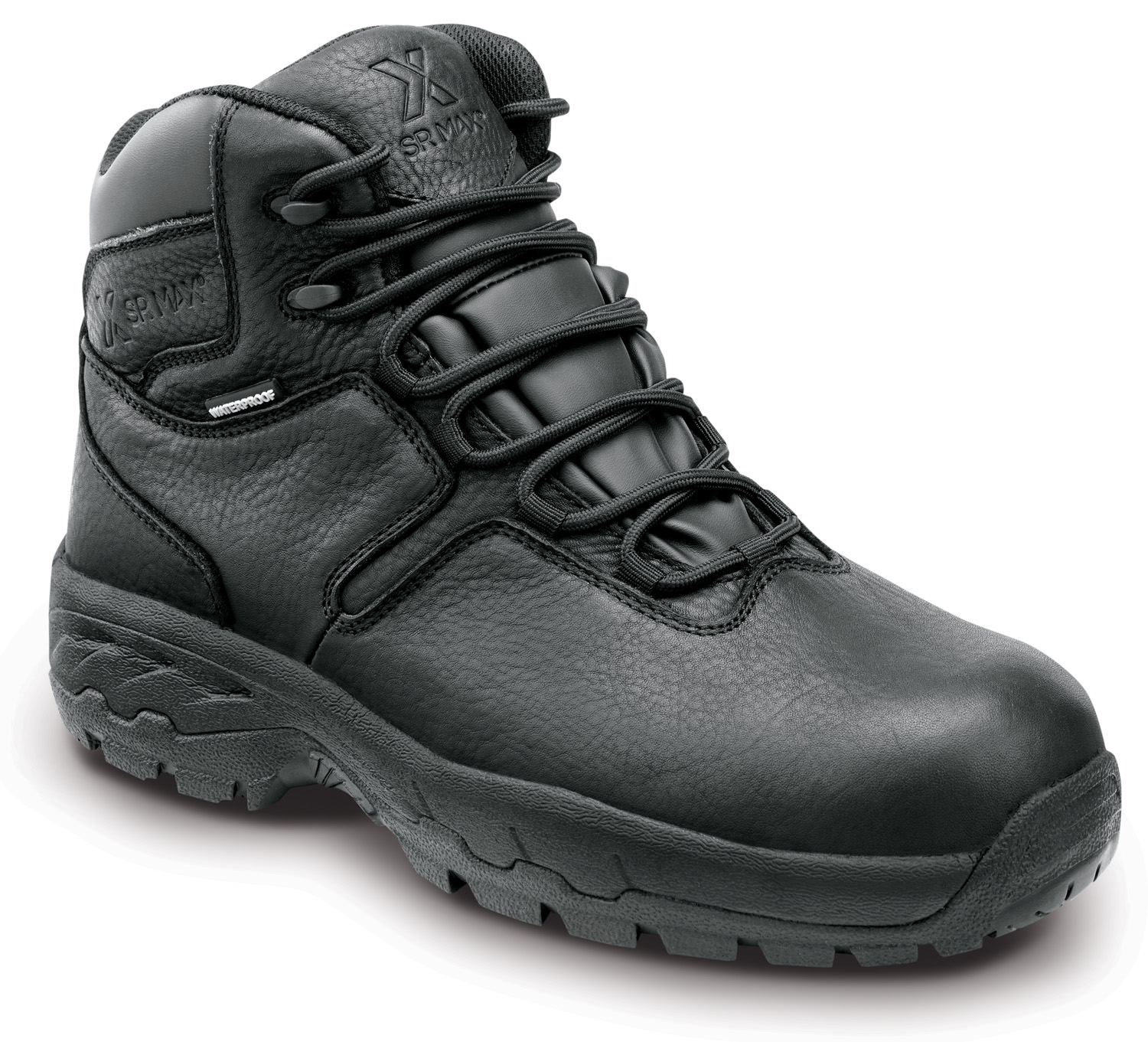
Men’s 6″ Black Denali MaxTRAX® Composite Toe Waterproof Boot

  • Source: SRMax
  • Cost: $134.99
  • Reviews: 4.5 stars out of 5

Features:

  • Waterproof, oiled leather upper for excellent durability and breathability
  • Waterproof construction keeps feet warm and dry
  • Outsole surface gives better traction, while the channels in the tread direct liquid away for excellent performance on dry, wet, and oily surfaces
  • Composite toes are lightweight while meeting ASTM standards
  • Non-metallic eyelets, shanks, and hardware are security system-friendly

This boot is designed to be long-lasting and comfortable for the wearer, while providing good value throughout the life of the boot.

Timberland PRO Pit Boss Steel Toe Boot

  • Source: Amazon
  • Cost: $109.99
  • Reviews: 4.3 stars out of 5

Features:

  • Unique comfort system helps reduce foot fatigue while supporting the arch, cushioning every step
  • Steel safety toe meets US safety standards and compression safety standards
  • Heat-resistant, durable sole protects against slips and falls; oil and abrasion resistance.
  • ReBOTL is made from 50% recycled material

People who wear these boots report that they are comfortable and well-constructed, a good value for the money.

Safety Loong MG112

  • Source: Amazon
  • Cost: $59.99
  • Reviews: 4.4 stars out of 5

Features:

  • Cushioned insoles, padded collars, and extra ankle padding provide exceptional comfort and support on the job
  • High-quality top-grain leather uppers offer superior durability
  • Non-slip outsole provides excellent traction on various surfaces, including oily and wet surfaces
  • Top reinforced double stitching provides enhanced durability and long-lasting wear
  • Professional design available in multiple colors
  • Good value at an affordable price

People who wear these boots report that they are good quality and provide a comfortable fit. They also appreciate the design and look.

Timberland PRO Men’s Titan Ev 6 Inch Composite Safety Toe Waterproof Industrial Work Boot

  • Source: Amazon
  • Cost: $164.95
  • Reviews: 4.5 stars out of 5

Features:

  • The Anti-Fatigue Technology offers good shock absorption to return energy back to the foot and deliver comfort
  • Composite safety toe is lightweight and non-metallic, but durable and in compliance with safety standards
  • Waterproof membrane keeps feet dry in wet environments
  • Heat-resistant, durable rubber compound offers enhanced slip, oil, and abrasion resistance

People who wear these boots praise the roomy toe box and say they are lightweight for easy wear throughout the day.

Best Women’s Work Boots for Truck Drivers

Cat Footwear Women’s Tess Steel Toe Work Boot

  • Source: Amazon
  • Cost: $85-$157
  • Reviews: 4.4 stars out of 5

Features:

  • Full-grain leather with faux fur fleece textile collar provides comfort, breathability, and long-lasting durability
  • Molded EVA midsole offers additional shock absorption
  • Nylon shank adds support and stability
  • Slip-resistant sole performs against oil and water and provides grip on low-traction surfaces
  • ERGO technology integrates stability, flexibility, and comfort

People who wear these boots note that they are comfortable, durable, and long-lasting.

Cat Footwear Women’s Mae Waterproof Steel Toe Work Boot

  • Source: Amazon
  • Cost: $114.99
  • Reviews: 4.4 stars out of 5

Features:

  • Steel Toe protects against impact and compression
  • Slip-resistant soles reduce the risk of slips and falls
  • Waterproof, quality full-grain leather keeps feet dry
  • Nylon mesh lining and sock liner provided added breathability and comfort.
  • Molded EVA Footbed offers shock absorption for long-lasting comfort
  • Nylon shank provides support and stability.

People who wear these boots report they’re well-made and worth the price, delivering good value.

Want More Advice for Truckers? Barr-Nunn Transportation Can Help

Whether you want to know about the most comfortable work boots for truck drivers or you’re seeking information about safety and truck maintenance, the team at Barr-Nunn Transportation can help. Contact us to learn more about jobs for truck drivers with Barr-Nunn Transportation.

Why the Demand for Semi-Truck Drivers Continues to Grow: An Industry Insight

The trucking industry is the lifeblood of the American economy, ensuring that goods travel from ports, warehouses, and factories to every corner of the country. As we navigate through 2025, one trend is unmistakable: the demand for qualified semi-truck drivers is not just steady—it’s accelerating. For companies like Barr-Nunn Transportation, understanding why this demand continues to rise is essential to attracting and retaining top talent. In this article, we’ll explore the driving factors behind the ongoing truck driver shortage, the economic impact, and what the future holds for those considering a career behind the wheel.

The Backbone of America: Why Trucking Matters

Nearly 72.6% of all freight tonnage moved in the United States is transported by trucks, according to the American Trucking Associations (ATA). Every day, truck drivers deliver essential goods—food, medical supplies, building materials—that keep our society running smoothly. The ongoing strength of the trucking industry is crucial for businesses and consumers alike.

The Growing Demand: Key Statistics for 2025

Despite the industry’s importance, the U.S. faces a significant shortage of truck drivers. As of early 2025, the ATA estimates the shortage at over 80,000 drivers, a number that could surpass 160,000 by 2030 if trends continue. What’s fueling this persistent—and growing—demand?

1. Booming E-Commerce & Supply Chain Complexity

E-commerce has transformed the retail landscape, with online sales accounting for nearly 23% of total retail sales in 2024, up from 14% in 2019. This surge translates directly to increased freight volumes and heightened pressure on delivery times. Complex, just-in-time supply chains mean that companies rely more than ever on efficient, reliable trucking solutions to keep shelves stocked and customers satisfied.

2. Economic Expansion and Infrastructure Investments

Despite global uncertainties, the U.S. economy remains resilient. GDP growth in 2024 was 2.2%, with infrastructure projects ramping up due to federal investment. As construction booms and manufacturing rebounds, the need to transport raw materials, equipment, and finished goods rises in tandem. Semi-truck drivers play a vital role in these expanding industries.

3. Driver Retirements and Workforce Demographics

The average age of a commercial truck driver in the U.S. is over 47 years old, and nearly a quarter of current drivers are 55 or older. As these experienced professionals retire, the industry must fill a widening gap. In 2024, more than 400,000 drivers reached retirement age, creating ongoing recruitment challenges.

4. Regulatory Changes and Safety Requirements

Tighter safety regulations, electronic logging devices (ELDs), and stricter Hours of Service rules have changed how fleets operate. While these regulations improve safety and driver well-being, they also reduce the total number of available driving hours—requiring more drivers to move the same amount of freight.

The Impact of the Driver Shortage

The shortage of qualified drivers isn’t just a trucking company problem—it impacts the entire economy. Here’s how:

  • Rising Transportation Costs: As demand outpaces supply, shipping rates increase, leading to higher costs for businesses and, ultimately, consumers.
  • Supply Chain Disruptions: Delivery delays can result in empty store shelves and production slowdowns.
  • Pressure on Existing Drivers: Current drivers face increased workloads and longer wait times at loading docks, impacting job satisfaction and retention.

Why Barr-Nunn Transportation Is Investing in Drivers

At Barr-Nunn Transportation, we recognize that our drivers are the heart of our operation. We’ve responded to industry challenges with competitive pay, modern equipment, comprehensive benefits, and a culture that values safety and respect. Here’s how we’re addressing the driver shortage:

  • Competitive Compensation: According to the U.S. Bureau of Labor Statistics, the median annual wage for heavy and tractor-trailer truck drivers was $54,800 in 2024, with many experienced drivers earning much more through bonuses and incentives. Barr-Nunn consistently has been a Certified Top Pay Carrier by the National Transportation Institute for the past 20 years. In 2024, the top 50% of Barr-Nunn Solo Company Truck Drivers earned an average of $102,499. In 2024, the top 50% of Barr-Nunn Team Truck Drivers earned an average of $123,934 per driver.
  • Flexible Schedules & Home Time: Work-life balance is a top priority. We offer flexible routes and quality hometime schedules to accommodate personal needs, helping attract new talent—especially younger drivers seeking quality of life.
  • Safety-First Culture: Advanced technology and rigorous safety standards protect our drivers on the road.

The Future: Opportunities for New Drivers

The demand for semi-truck drivers isn’t going away anytime soon. In fact, the Bureau of Labor Statistics projects nearly 241,000 openings for heavy and tractor-trailer truck drivers each year through 2032, driven by growth and retirements. This creates tremendous opportunities for those seeking stable, well-paying careers.

Top Reasons to Start a Truck Driving Career in 2025

  • Job Security: Persistent demand means consistent opportunities.
  • Competitive Wages: Rising pay as companies compete for top talent.
  • Variety: Local, regional, and long-haul routes available.
  • Advancement: Room to grow into specialized roles or fleet management.

Conclusion

The demand for semi-truck drivers continues to grow due to a combination of economic expansion, e-commerce growth, demographic shifts, and regulatory changes. For companies like Barr-Nunn Transportation, investing in drivers and creating a positive work environment is not just smart business—it’s essential to keeping America’s supply chains moving.

If you’re looking for a rewarding career with real impact, there’s never been a better time to join the trucking industry.

Ready to join a company that puts drivers first? Learn more about careers at Barr-Nunn Transportation and start your journey today!

Sources

What Are Sliding Tandems on a Trailer? A CDL A Driver’s Guide to Safe, Legal Weight Distribution

For any CDL A driver at Barr‑Nunn Transportation, understanding sliding tandems on a trailer is essential. This often-overlooked skill can mean the difference between hitting the road legally or facing hefty fines and delays at the scale. In this guide, we’ll break down:

  • What sliding tandems are and how they work
  • Why they matter for safety, compliance, and efficiency
  • Step-by-step instructions tailored for truckers
  • How much weight moves per hole, and how to calculate adjustments
  • Best practices to stay legal and protect your CSA record

What Exactly Are “Sliding Tandems”?

Sliding tandems refer to the movable rear axle group (usually tandem axles) on a semi-trailer that you can shift forward or backward along slider rails. These rails, mounted under the trailer frame, allow you to adjust weight distribution between your tractor’s drive axles and the trailer axles. A locking pin mechanism keeps the axle group securely in place once positioned.

Why Sliding Tandems Is a Critical Trucking Skill

Legal Compliance

Overweight axle groups can trigger citations, out‑of‑service orders, and expensive penalties. Moving tandems lets drivers shift weight to stay within limits; for example, the 34,000‑lb max for tandem axles and 80,000‑lb gross vehicle weight.

Balanced Handling & Safety

Properly distributed weight improves steering, braking, and reduces the risk of rollovers—especially during lane changes or in bad weather.

Fuel Efficiency & Equipment Longevity

Balanced loads reduce wear on suspension, tires, and drivetrain, plus optimize fuel economy.

How Much Weight Is Shifted Per Hole?

Typically, the slider rail holes are spaced to shift about 250 lbs per hole (common in standard trailers), though some systems use 400 lbs per hole, depending on spacing.

Example:
If your drive axles are overloaded by 800 lbs and your trailer uses 400‑lb hole spacing, you’d need to slide forward 2 holes to shift 800 lbs onto the trailer.

Step‑by‑Step Guide: How to Slide Tandems Safely

Here’s a step‑by‑step process adapted for Barr‑Nunn drivers based on industry best practices:

  1. Park on a level, solid surface. Avoid gravel or ice.
  2. Straighten your rig. Tractor and trailer must be aligned.
  3. Set the parking brakes on both units.
  4. Maximize air pressure.
  5. Lock the power divider (if equipped). Enhances traction.
  6. Activate Trailer Hold / Spring Brake Override (or use trailer brake valve).
  7. Release the slider handle. Pull or lift the mechanism to disengage locking pins, then secure the handle in the retainer.
  8. Mark your target hole so you know where you’re headed.
  9. Move the rig slowly:
    • Reverse to slide tandems forward (this shifts weight to the trailer axles).
    • Drive forward to slide tandems backward (shifts weight to drive axles).
  10. Re‑engage locking handle when near the target hole, then rock in Drive/Reverse to ensure pins seat correctly.
  11. Visually confirm the pins are fully seated and the handle is locked.
  12. Disengage Trailer Hold & unlock power divider.
  13. Re‑check brakes and alignment.
  14. Re‑weigh if possible to confirm compliance.
  15. Document tandem position and any weight adjustments. This helps track patterns and avoid recurring issues.

Calculating How Far to Slide: A Quick Formula

  1. Weigh your axles (drive vs. tandem).
  2. Identify the over‑axle (where the excess weight lies).
  3. Slide toward the problem axle:
    • If drive axles are overweight, slide tandems forward.
    • If trailer axles are overweight, slide tandems backward.
  4. Compute required holes:

Overweight lbs ÷ lbs per hole ≈ # holes to move

Sample: If your trailer axles are overweight by 1,050 lbs and per-hole shift is 250 lbs, you’ll need to slide 4.2, rounded to 4 or 5 holes backward.

Best Practices for Barr‑Nunn Drivers

  • Know the rules state by state. Some states have tighter front‑kingpin to tandem limits (Bridge Formula). Use the strictest rule on your route.
  • Use onboard air‑suspension pressure gauges to estimate axle loads when CAT scales aren’t nearby.
  • Slide tandems on a level, clean surface. It’s safer and easier.
  • Lubricate rails and keep mechanisms clean—rust or grit can jam the system.
  • Train regularly, especially refreshers on older trailers or unfamiliar setups.
  • Document each tandem adjustment and outcome—helps in audit or CSA score reviews.

Why This Matters to You

  • Helps avoid fines and scale delays—fewer roadblocks, more on‑time moves.
  • Preserves CSA safety score—key for continued access to high‑value freight lanes.
  • Improves fuel economy and reduces equipment wear—direct benefits to driver earnings and maintenance budgets.
  • Promotes safe handling—especially during heavy hauls, tight maneuvers, or bad weather.

Closing Thoughts

Sliding tandems is more than just a mechanical trick; it’s critical to staying safe, legal, and efficient on the road. For CDL A drivers at Barr‑Nunn, this know‑how ensures smoother runs, less scale downtime, and healthier CSA scores. Keep your gear well‑maintained, your processes sharp, and your documentation clean, and you’ll keep rolling miles ahead of the pack.

Final Tips for Sliding Tandems

  • Sliding adjusts the weight balance on tractor vs. trailer.
  • Shift toward the axle that’s overloaded.
  • Typical shift ≈ 250 lbs per hole (some at 400 lbs).
  • Always work on a solid, level surface with brakes locked.
  • Finish by rocking the rig, securing pins, and verifying visually.
  • Know Bridge Formula limits and chart them route‑wise.
  • Clean, lubricate, train—repeat.
  • Stay sharp, stay safe, and keep those tandems legal out there.

Tornado Weather Tips for Truck Drivers

Summer brings tornadoes across large swaths of the country, especially in the U.S. central plains. For truck drivers, tornadoes pose a real threat. Knowing what to do when driving in a tornado can save your life. If you’re ever in a semi-truck in a tornado, keeping a cool head and taking fast action can make all the difference.

Pay Attention to Weather Reports

Weather conditions can change quickly, but weather reporters often state in advance when conditions will be right for a tornado. Paying attention to weather reports the night before setting out on a drive can help you prepare. Once on the road, follow weather reports on the radio. Some weather apps follow tornado activity and will give warnings when a tornado warning is active in your area.

Know which counties you’ll be driving through, as tornado watches and warnings are often specific to the county. A tornado watch is an alert to signify when conditions are right for tornado activity.

  • A tornado watch tells people in a specific area to get ready to take shelter from a tornado.
  • A tornado warning is an urgent notice issued to instruct people to take shelter immediately.

If you think that weather conditions are unsafe for driving, call your leader. If you’re not safe on the road, stay in a sheltered area.

Study the Travel Plan In Advance

If you’re expecting poor weather conditions, study your travel plan before leaving. Note the county names and cities or towns along your route, as well as operating centers, businesses, or truck stops where you may be able to take shelter if needed. Keep these areas of shelter in mind as you’re on the road.

Watch for Signs of Tornadoes

Tornadoes happen when warm, humid air clashes with cold air. People who have lived through tornadoes often describe the sky as dark and greenish. A tornado may bring hail, but the powerful updraft will prevent rain from falling in the area around the tornado.

Before a tornado strikes, the wind may die down, birds and other animals may become quiet or leave the area, and a wall cloud (spinning cloud that becomes the foundation for a tornado) may become visible. Tornadoes are said to be very loud and produce a roaring sound similar to a freight train or waterfall. Communities in the area may activate sirens that indicate a tornado is present.

Take Shelter In A Building If Possible

If you can, take shelter in a building. Basements and storm shelters are best, but in the absence of a basement, find shelter in a windowless space like a bathroom or hallway.

It’s a common myth that overpasses are good places to find shelter during tornadoes. This is not true. Overpasses create a wind tunnel effect that can exacerbate the danger of a tornado.

Know What To Do On the Road

If you are in your semi-truck during a tornado, conventional advice is to leave your truck, get as far away from it (and other vehicles) as you safely can, then lie in a ditch, culvert, or as low a spot as you can find. Lay low and if possible, cover yourself with a blanket or coat.

Tornadoes can pick up vehicles, so staying in your rig may not be safe. If you must stay in your truck, keep your seat belt on, cover yourself with a coat or blanket, and sink low into your chair to get as far away from your window as possible.

Do not try to outrun the tornado. Tornadoes can move at speeds up to 70 miles per hour and may follow an erratic trajectory. A tornado that appears far from your rig may change course and come your way quickly. Additionally, hail may reduce your visibility, and other drivers on the road may become hazards.

Communicate With Your Lead

Maintain regular communication with your lead when driving in poor weather conditions. Your lead is a resource that can help you make decisions to make your journey safer.

Tornado Frequently Asked Questions

How much weight can a tornado pick up?
Tornadoes have been known to lift equipment and vehicles that weigh tens of thousands of pounds. One tornado in Texas is said to have lifted machinery weighing over 30,000 pounds.

How fast can a tornado move?
Tornadoes have been recorded at up to 70 miles per hour.

Can a tornado pick up a semi-truck?
Yes, a tornado can pick up a semi-truck.

Where is “Tornado Alley”?
Tornado Alley is a loosely defined area that can include parts of Oklahoma, Texas, Kansas, Colorado, New Mexico, Missouri, Nebraska, and Iowa.

What emergency supplies should I keep in my truck?
Some examples of helpful items to keep on hand include: a thick blanket, a first aid kit, a flashlight, and batteries. Keep heavy-duty gloves on hand for moving debris after a tornado.

Why is it better to shelter in a ditch than stay in the truck?
Tornadoes can pick up semi-trucks. Lying in a ditch is not as safe as going into a building, but it can give you some shelter from flying debris.

Have a Safe, Enjoyable Summer

Knowing what to do if a tornado occurs while driving can help you have a safe, enjoyable summer. The team at Barr-Nunn is here to support you as you drive safely throughout this summer. Contact us to learn more about our truck driving jobs.

Sources:

https://www.weather.gov/lmk/tornadoesfaq
http://www.tornadoproject.com/cellar/tttttt.htm
https://www.co.monroe.mi.us/Faq.aspx?QID=95
https://emsaok.gov/resource-library/summer-safety-tips/warning-signs-that-a-tornado-may-develop/
https://www.disastercenter.com/guide/tornado.html
https://georgiawildlife.com/out-my-backdoor-can-birds-predict-severe-weather
https://www.nationalgeographic.com/environment/article/tornado-alley-shift-east

Weigh Station Basics for All Truck Drivers

Rolling Through the Scales: A Truck Driver’s Guide to Weigh-Station Basics

Highway weigh stations may look like small roadside stops, but they play an outsized role in keeping America’s freight moving safely and legally. Whether you’re new to the industry or a seasoned Barr-Nunn professional looking for a refresher, understanding how these checkpoints work—and how to breeze through them—can save time, money, and Compliance, Safety & Accountability (CSA) headaches. Here is a deep dive into everything you need to know before the next green “OPEN” light appears on the horizon.

What exactly is a weigh station?

At its core, a weigh station is a Department of Transportation (DOT) or state-run checkpoint that verifies a commercial vehicle’s weight and basic compliance paperwork. Most are tucked just off the mainline at state borders—often branded “ports of entry”—so officials can enforce each state’s unique weight rules. Nationally, there are now well over 1,000 of these facilities spread across U.S. highways.

While every station looks a bit different, they share a mission: to protect public infrastructure and motorists by keeping overweight or unsafe trucks off the road. As you’ll see below, that goal ripples into inspections, fines, and even tax collection.

Why do regulators care so much about weight?

Picture an 80,000-pound tractor-trailer rumbling over a bridge designed for lighter loads. Excess stress accelerates wear, shortens pavement life, and, in worst cases, creates catastrophic failures. DOT data show that an overweight truck generates exponentially more damage than a passenger car. Beyond infrastructure, too much weight raises the odds of tire blow-outs, longer stopping distances, and rollovers.

Many states also tie fuel-tax reconciliation or freight weight-based taxes to scale readings, which means weigh stations double as revenue checkpoints.

Bottom line: legal weight protects both budgets and lives.

The legal lines you can’t cross

Federal law caps a vehicle’s gross combination weight at 80,000 lbs, a single-axle at 20,000 lbs and a tandem axle at 34,000 lbs. Most states require any commercial vehicle over 10,000 lbs GVWR to stop when a station is open. If you skip the ramp without permission, expect steep fines, possible out-of-service orders, and a ding on your CSA score.

Where and when will you encounter a scale?

  • State Borders: The classic spot. Expect an inspection crossing from, say, Iowa into Missouri.
  • Freight Chokepoints: Near major distribution hubs where loads shift rapidly.
  • Pop-Up Operations: Portable scales let troopers enforce regulations on secondary highways without permanent facilities.
  • Inside Certain Yards: Shippers with sensitive freight or security concerns sometimes weigh outbound trucks on site.

Most stations post advance signs telling you whether they’re open or closed. Apps such as Truckers Path or your Barr-Nunn ELD can give real-time status, too, but trust the flashing roadside indicator above all.

What happens on the scale?

Initial Weigh-In

  • Static scales: You roll onto a platform and stop until the marshal waves you on.
  • Weigh-in-Motion (WIM): Sensors measure axle weight as you roll slowly across the pad, potentially eliminating a full stop if all numbers look good.

Paper Check & Visual Walk-Around

Officers may verify registration, IFTA decals, electronic logs, and bill of lading to ensure the load matches legal paperwork.

DOT Inspection Levels 1-6

Anything from a quick brake-light glance to a bumper-to-brake-lining inspection of driver credentials, hours-of-service compliance, and vehicle condition can occur.

Outcome

  • Clear: You’re back on the ramp in minutes.
  • Violation: Expect a fine, possible off-load instructions, or an OOS order until repairs/lightening are complete.

Looking to skip the line? Welcome to bypass technology

If your CSA profile and weight look squeaky-clean, you might receive a radio-frequency or app-based bypass signal (a “green light”) before the off-ramp. Services such as Drivewyze PreClear analyze WIM data, carrier safety scores, and registration in real-time to decide whether you can stay on the mainline. The payoff is huge: less idling, faster deliveries, and happier drivers.

Barr-Nunn partners with leading bypass providers to maximize driver efficiency, so make sure your onboard unit and credentials are always current. Even with a bypass subscription, though, remember officers can call any truck in for a random inspection, so professionalism matters.

Fines, fees, and other consequences of non-compliance

Penalties vary by state but can easily exceed $1,000 for skipping an open station or coming in overweight. Repeat offenses jeopardize your CDL and lead to higher insurance premiums. Excessive violations also tank a carrier’s safety rating, limiting load opportunities and hindering bonus programs. Simply put, a five-minute detour beats a five-figure payout every time.

Smart strategies for Barr-Nunn drivers

TaskWhy It MattersQuick Tip
Scale before you sailCatch distribution errors at the shipperUse in-yard CAT or platform scales whenever possible
Secure the loadShifting cargo can change axle weightsRe-check straps & tandems after the first 50 miles
Mind your paperworkOfficers love matching BOL weight to scale readoutsKeep digital and paper copies organized by trip
Track HOS impactA Level 1 inspection can eat 45 minutes of drive timeBuild a 1-hour buffer into tight schedules
Stay courteousProfessional demeanor speeds inspectionsEye contact, yes sir/ma’am, and clear answers go a long way

The Barr-Nunn advantage

Our fleet specs—including lightweight, late-model tractors and rigorous preventive-maintenance intervals—help drivers glide through the scales. Pair that with score-card bonuses for clean inspections and Barr-Nunn’s investment in nationwide bypass services, and you’ve got a recipe for fewer headaches and bigger paychecks. If you encounter an unusual situation, like a portable pop-up, mixed commodity load, or axle issues, reach out to Fleet Support before rolling the dice. We’ll find a safe, legal solution so you can keep moving.

Key takeaways

  • Stop when open if you’re over 10,000 lbs: It’s the law.
  • Know the magic numbers: 20,000 (single axle), 34,000 (tandem), 80,000 (gross).
  • Expect more than a scale: Officers can check logs, brakes, lights, and securement.
  • Use technology: Pre-trip scales, WIM, and bypass services are productivity boosters, not shortcuts.
  • Professionalism pays: A clean inspection protects your CSA score and your wallet.

Weigh stations aren’t going away, but with the right preparation, they don’t have to slow you down. Keep these fundamentals in mind, lean on Barr-Nunn’s safety resources, and you’ll spend less time on the ramp and more miles earning. Drive safe, stay legal, and keep those wheels turning. See you down the road!

Additional Resources
https://drivewyze.com/blog/weigh-station-basics-everything-you-need-to-know/

Tips for How to Avoid Distracted Driving for Truckers

Truck driver distracted driving can lead to accidents, injuries, and fatalities. If you’re a commercial truck driver, it’s important to take steps to avoid distracted driving.

As a truck driver, there are many things you can do to protect yourself and others on the road. Knowing the regulations and taking proactive steps to stay focused can help you have a successful and safe truck driving career.

Distracted Driving Causes Accidents

The FMCSA states that a significant percentage of commercial truck accidents are linked to driver distraction.

Most of us think of using a cell phone when we imagine distracted driving, but there are many ways drivers can become distracted. The top 10 truck driver distractions have been listed below:

  1. Reaching for an object
  2. Reading
  3. Adjusting/monitoring devices integral to the vehicle
  4. Removing/adjusting clothes
  5. Adjusting or using an electronic device (other than an electronic dispatching device)
  6. Reaching for a food or drink-related object
  7. Adjusting or using an electronic dispatching device
  8. External distraction
  9. Tobacco use
  10. Eating

Many of these distractions are within the control of the driver. To avoid being distracted while driving, consider the list above and take steps to avoid these distractions.

Never Use a Cell Phone

FMCSA has commissioned research that shows the odds of being involved crash, near-crash, or an unintentional deviation from your lane are 6 times greater when dialing a mobile phone.

To dial a phone, drivers must take their eyes off the road for almost 4 seconds, or longer. If your vehicle is traveling at a speed of 55 miles per hour, this means you may travel the length of a football field while not looking at the road. This is why the FMCSA prohibits the use of a cell phone while driving commercial vehicles.

What Does It Mean to Use a Cell Phone?

Here’s what qualifies as using a cell phone:

  • Dialing a number
  • Using the phone with one hand while driving with the other
  • Maneuvering your body to reach for a cell phone

Tips for Avoiding Cell Phone Use

As a driver, there are things you can do to avoid cell phone use while driving.

  • Never pick up your phone, even at stoplights.
  • Put your cell phone in “do not disturb” mode while driving.
  • Communicate with friends and family that you are unreachable when driving.
  • Consider turning off your cell phone while driving.

Avoid Other Distractions

Beyond cell phones, drivers may become distracted in other ways as well. Common distractions include using a GPS device, eating or drinking while driving, updating driver logs, and engaging in personal grooming activities. None of these activities is worth the potential cost, considering what’s at stake. Distracted driving can take lives.

Know the Consequences

In addition to causing accidents, there are other consequences of distracted driving.

  • Injuries and fatalities: The size and weight of commercial vehicles can cause serious damage to other vehicles on the road. When a large commercial vehicle is involved in an accident, people are often injured or killed.
  • Fines: Penalties for using hand-held mobile devices can lead to fines of up to $2,750 and up to $11,000 for employers that require drivers to use hand-held communications devices while driving.
  • Disqualification: If you’re a driver who receives multiple violations while using a hand-held mobile phone while driving, you may be disqualified by the FMCSA.

Be Aware of Regulations

The FMCSA promotes safe driving practices through awareness campaigns and regulations, especially regarding texting and mobile phone restrictions. Texting while driving is not allowed. Texting includes manually entering or reading text from an electronic device, even when emailing, instant messaging, and so on.

Drivers are also not allowed to hold a mobile phone to conduct a voice communication, nor may they dial by pressing more than a single button. Drivers are not allowed to even hold a phone or press more than one button while driving.

Want to know what else you can do to be a safe driver?

  • Be aware of all FMCSA regulations to avoid distracted driving.
  • Take regular driver training classes or pursue certifications to learn about new safety considerations and ways to stay safe.
  • Take advantage of safety incentives like the Barr-Nunn safety bonuses. Drivers who do things like maintain a clean driving record and adhere to safety laws can earn cash bonuses and paid time off.
  • Maintain a safe vehicle. Getting regular maintenance checks helps ensure that your truck is road-worthy.
  • Always follow the laws. FMCSA regulations aren’t the only laws that drivers have to follow. Know local and state laws that apply to you. Know the laws and follow them.

Avoid Penalties

Violations of distracted driving regulations can result in fines for drivers and carriers, as well as potential driver disqualification. Worst of all, it can lead to fatalities. Truck driver distracted driving just isn’t worth it. If you’re serious about safety, Barr-Nunn has opportunities for you. Contact us to learn more about our truck driving jobs.

Resources:

How Company Culture Creates a Second Family for Truckers

More Than Just a Job—A Home on the Road

Let’s be real—trucking isn’t just a job; it’s a lifestyle. You don’t clock in and out like a regular 9-to-5. You spend days, even weeks, on the road, navigating highways, battling traffic, and making sure America keeps moving. It can be tough, lonely, and exhausting, but it doesn’t have to feel that way.

At Barr-Nunn Transportation, we get it. We know that our truck drivers aren’t just employees—they’re the heart of our company. That’s why we go the extra mile (just like you do) to create a company culture that feels like family. From respect and appreciation to top-tier benefits and a strong support network, we make sure our drivers never feel like they’re in this alone. Because at the end of the day, feeling valued and connected makes all the difference.

And we put our money where our mouth is—Barr-Nunn has been recognized as the Top Pay Certified Carrier for 20 consecutive years, proving that we back up our words with action.

Why Company Culture Matters for Truckers

If you’ve been in this industry for a while, you know that not all trucking companies are created equal. Some treat drivers like just another number—get in the truck, make the miles, and don’t ask questions. But that’s not how we do things at Barr-Nunn.

A strong company culture can make or break your experience as a trucker. When you feel respected, appreciated, and supported, your job becomes more than just a paycheck. It becomes something you’re proud of. You feel like you belong. That’s what we aim to provide—a workplace where drivers feel connected, cared for, and motivated to succeed.

We believe in creating a driver-first culture, where your well-being is our priority. Because when you’re out there on the road, we want you to know that we’ve got your back—every mile, every load, every day.

Barr-Nunn Transportation: Built on Respect and Trust

Trust and respect aren’t just buzzwords for us; they’re the foundation of everything we do. We know that without our drivers, we wouldn’t be the successful company we are today. That’s why we operate with transparency and fairness, always putting our drivers first.

You’ll never feel like you’re left in the dark here. We’re upfront about pay, home time, safety standards, and expectations. No surprises, no games—just honesty and trust. Our dispatch team communicates clearly, ensuring that you’re never stuck guessing about your next move. And if you ever have concerns, we actually listen. Your voice matters, and we take pride in making sure every driver feels heard.

At Barr-Nunn, you’re not just another truck on the road. You’re part of a team that values and respects you. Because when we all look out for each other, we all succeed.

Unmatched Benefits That Show We Care

A great company culture isn’t just about words—it’s about action. And at Barr-Nunn, we show our appreciation with benefits that actually make a difference in your life.

Top Pay Carrier for 20 Consecutive Years

It’s no secret that drivers want to be paid what they deserve, and at Barr-Nunn, we make sure that happens. We’ve been recognized as a Top Pay Certified Carrier for 20 years straight—something very few companies can say. What does this mean for you?

  • Industry-leading pay packages that reward experience and performance.
  • Frequent pay raises to ensure you’re always making what you should.
  • Guaranteed raises and safety bonuses—because we value reliability and professionalism.

We don’t just talk about superior pay—we’ve proven it for two decades.

Industry-Leading Safety Standards

We don’t cut corners when it comes to safety. Our trucks are equipped with the latest technology to keep you protected, and we have one of the highest safety ratings in the industry. Plus, we offer safety bonuses because doing things the right way should always be rewarded.

Health and Wellness Support

Long hours on the road can take a toll on your health, and we want you to be at your best—physically and mentally. That’s why we provide comprehensive health coverage, including medical and dental insurance. And if you ever need support, we offer mental health resources to help you handle the challenges that come with trucking.

At Barr-Nunn, taking care of our drivers isn’t optional—it’s a commitment.

A Community That Feels Like Home

One of the biggest challenges of trucking is that it can feel lonely. But it doesn’t have to be that way. At Barr-Nunn, we’ve created a community where drivers feel connected—even when they’re hundreds of miles apart.

Driver Appreciation Programs

We know that a simple “thank you” goes a long way. That’s why we hold driver appreciation events, celebrate milestones, and recognize top performers. Your hard work doesn’t go unnoticed here.

A Strong Support Network

Ever had a breakdown in the middle of nowhere? Or just needed someone to talk to? Our 24/7 driver support team is always ready to help. We also have mentorship programs that connect new drivers with experienced professionals. So whether you’re facing a tough day or just need some advice, you’re never alone.

Why Truckers Choose Barr-Nunn

There’s a reason truckers stay with Barr-Nunn for the long haul. It’s not just about the great pay or the home time—it’s about the way we treat our drivers like family.

What Sets Us Apart

  • Top Pay Certified Carrier for 20 years—consistent, industry-leading earnings.
  • Low driver turnover (because happy drivers don’t leave).
  • Honesty and transparency (you always know what to expect).
  • A real sense of belonging (because no one should feel like just a number).

If you’re looking for a trucking company that actually values you, Barr-Nunn is the place to be.

Conclusion: Barr-Nunn—A Family You Can Count On

At Barr-Nunn Transportation, we do things differently. We don’t just hire drivers—we build relationships. We don’t just offer jobs—we offer careers with purpose. And we don’t just say we care—we show it in everything we do.

With 20 years as a Top Pay Certified Carrier, industry-leading safety, and a strong company culture that values every driver, we’re more than just another trucking company. We’re a family.

So, if you’re tired of feeling like just another truck number and want to be part of something real, come join the Barr-Nunn family. Because here, trucking isn’t just a job—it’s a community. It’s a second family. And we can’t wait to welcome you in.

Join the Barr-Nunn family today!

Essential Items for a Truck Driver Emergency Kit

As a professional truck driver, being prepared for unexpected situations on the road is crucial. An emergency kit serves as your lifeline during unforeseen events, ensuring safety and readiness. This guide outlines the essentials for a comprehensive truck driver emergency kit, tailored to various needs and circumstances.

What Is an Emergency Kit?

An emergency kit is a collection of essential items designed to assist during unexpected situations such as vehicle breakdowns, severe weather, or medical emergencies. For truck drivers, this kit is vital, providing necessary tools and supplies to handle emergencies effectively while on the road. Whether it’s a mechanical failure, a sudden health issue, or extreme weather conditions, having the right items on hand can make all the difference.

Why Is Having an Emergency Kit Necessary?

The unpredictable nature of long-haul trucking demands preparedness. An adequately stocked emergency kit ensures that drivers can manage unforeseen events safely and efficiently, minimizing downtime and enhancing personal safety. Whether facing mechanical issues, adverse weather, or health-related incidents, being equipped can make a significant difference.

Emergencies can arise at any time, from breakdowns in remote areas to sudden medical concerns. Having an emergency kit means you won’t have to rely solely on roadside assistance or waiting for help, which could take hours, especially in less populated areas. By keeping a well-stocked kit, you enhance your ability to handle difficult situations independently and efficiently.

Customization of Emergency Kits

Emergency kits should be tailored to individual routes, climates, and personal needs. A driver traversing snowy regions requires different gear than one operating in warmer climates. Regularly updating and customizing your kit ensures relevance to your specific driving conditions and personal requirements. Some factors to consider when customizing your kit include:

  • The distance of your routes and how often you pass through remote areas.
  • Weather conditions in the regions you frequently drive through.
  • Personal medical needs, including prescription medications.
  • Storage capacity within your truck to ensure you have room for essential items.

Essentials for All Trucker Emergency Kits

While every truck driver’s emergency kit may be unique, certain essentials should be included in all kits. Below are the must-have items that every long-haul driver should carry:

1. Food and Water

  • Non-Perishable Food: Energy bars, canned goods, and dried fruits provide sustenance during prolonged delays. Include food that doesn’t require heating or refrigeration, such as nuts, peanut butter, and meal replacement snacks.
  • Water: Aim for at least one gallon per person per day, stored in durable containers to prevent leakage. A portable water filter or purification tablets can also be useful in case of emergencies where you need to source water from an unexpected place.

2. Warm Clothes or Blankets

  • Clothing: Pack extra layers, including thermal wear, socks, gloves, and hats, to combat unexpected temperature drops. A waterproof jacket is also essential in case of rain.
  • Blankets: Thermal or wool blankets offer essential warmth if stranded in cold conditions. Consider an emergency space blanket, which is lightweight and compact but retains body heat effectively.

3. Tools

  • Basic Toolkit: Include items like screwdrivers, pliers, adjustable wrenches, and a hammer for minor repairs.
  • Duct Tape and Zip Ties: These can be invaluable for temporary fixes to broken parts until proper repairs can be made.
  • Flares or Roadside Reflectors: These improve visibility and alert other drivers to your presence in the event of a breakdown.

4. First Aid Kit

  • Medical Supplies: Stock bandages, antiseptic wipes, gauze pads, pain relievers, antihistamines, and any personal medications to handle minor injuries or health issues promptly.
  • CPR Mask: In case of a medical emergency, having a CPR mask could be a lifesaver.
  • Tweezers and Scissors: Useful for removing splinters or cutting bandages.
  • Cold and Hot Packs: Instant packs provide relief in case of minor injuries or muscle strains.

5. Safety Equipment

  • Reflective Triangles and Vests: Enhance visibility during roadside emergencies, alerting other motorists to your presence.
  • Flashlight with Extra Batteries: Crucial for nighttime emergencies or low-light conditions. A rechargeable LED flashlight or one with a hand crank is an excellent choice.
  • Fire Extinguisher: A compact, vehicle-rated extinguisher can be pivotal in controlling small fires before they become uncontrollable.
  • Gloves and Safety Glasses: Protect your hands and eyes while handling repairs or working near hazardous materials.

Buying a Kit vs. Packing Your Own

Pre-assembled emergency kits offer convenience, ensuring that essential items are included without the hassle of individual selection. However, assembling your own kit allows for customization, ensuring that specific needs and preferences are met. Consider factors such as the typical routes you drive, seasonal weather conditions, and personal health requirements when deciding between purchasing a ready-made kit or creating a personalized one.

If you choose to buy a pre-made kit, be sure to review its contents carefully and supplement it with any additional items you might need. Many store-bought kits are designed for general consumers and may not be sufficient for the specific challenges faced by truck drivers.

Stay Safe and Prepared on the Road

For long-distance drivers, a well-prepared emergency kit is not just a recommendation—it’s a necessity. The ability to handle unexpected situations efficiently contributes to both personal safety and the overall safety of others on the road.

Regularly review and update your kit to ensure all items are in good condition and relevant to your current driving environment. Being prepared not only safeguards your well-being but also enhances your ability to continue operating smoothly despite unforeseen challenges.

At Barr-Nunn Transportation, we prioritize driver safety and encourage all truckers to take proactive steps to ensure they are equipped for any situation. Stay safe, stay alert, and keep rolling forward!

Tips for Staying Awake for Truck Drivers

How Do Truck Drivers Stay Awake During Long Haul Drives?

Long-distance drivers face unique challenges on the road, and staying alert is among the most critical. Long-distance driving fatigue not only impacts performance but also poses serious safety risks. To help you stay alert while driving, you should adopt proactive measures that promote both mental and physical well-being. Here are effective strategies every truck driver can use to combat fatigue and stay sharp.

Recognize the Signs of Fatigue

The first step in preventing fatigue is understanding its warning signs. Symptoms of long-distance driving fatigue include:

  • Varying speeds without realizing it
  • Slower reaction times
  • Frequent yawning
  • Difficulty focusing
  • Drifting between lanes

Recognizing these early signs allows you to take immediate action before fatigue compromises your safety.

Maintain a Consistent Sleep Schedule

Getting quality, uninterrupted sleep is essential for staying alert. Avoid irregular sleep patterns by sticking to a routine, even on the road. This consistency helps regulate your body’s internal clock, ensuring you are well-rested and ready for the demands of long-distance driving.

Eat Right and Stay Hydrated

What you eat and drink plays a significant role in your energy levels. To help you stay alert while driving, you should:

  • Eat light, frequent meals instead of heavy, calorie-dense meals that can make you feel sluggish.
  • Stay hydrated by drinking plenty of water. While caffeine can provide a quick energy boost, over-reliance may lead to crashes in energy levels.

Incorporate Physical Activity

Sitting for extended periods can drain your energy and lead to fatigue. Incorporating simple exercises and stretches during breaks can boost circulation and increase alertness. Even a quick walk around your truck can make a difference.

Engage Your Mind

Long stretches of highway can feel monotonous, making mental stimulation critical. Keep your mind active by:

Listening to engaging podcasts, audiobooks, or upbeat music.
Trying mental exercises or problem-solving games to stay focused.

Adjust Your Environment

A comfortable and well-ventilated cabin can make a world of difference. Here are some adjustments to enhance alertness:

  • Set the cabin temperature to a comfortable but slightly cool setting.
  • Open the windows periodically to let in fresh air.

Take Scheduled Breaks

Long-distance drivers benefit greatly from regular breaks. A short 15-minute break can work wonders for recharging your energy. Plan your route to include stops that allow you to stretch, move, and refocus.

Additional Tips to Stay Awake While Driving Long Distances

In addition to the strategies above, consider these extra tips:

  • Avoid heavy meals before driving, as they can make you feel drowsy.
  • Incorporate vitamins B and C into your diet to support energy levels.
  • Manage stress effectively, as high stress can drain energy and impact focus.

Stay Safe and Alert on the Road

For long-distance drivers, staying awake and alert isn’t just a matter of personal safety—it’s essential for everyone on the road. By adopting these strategies, you can confidently answer the question: how do truck drivers stay awake? Implement these habits to keep fatigue at bay, ensuring every journey is safe and successful.

Ready to take the next step in your trucking career? Barr-Nunn Transportation is here to support you with resources, tools, and a driver-first approach. Stay safe, stay alert, and keep rolling forward.

To learn more about Truck Driving options with a Certified Top-Pay Carrier, contact us at Barr-Nunn Transportation.

Drive for Barr-Nunn Transportation! Search Truck Driving Positions or Apply Now!