7 Qualities of Great Truck Drivers

Truck driver leaning out the driver’s side window.

There’s a reason the demand for truck drivers is at an all-time high. To be successful today, a trucker needs the right combination of driving skills, experience, and personality traits. The expectations of the transportation industry are reaching new levels. So too, are the expectations of what carriers are looking for in truck drivers. Here are the 7 qualities of great truck drivers today:

1. Safety First

Safety is the ultimate priority of every truck driver, regardless of which carrier employs them. The job demands a watchful eye on preventing potentially dangerous situations. Successful truck drivers know how to keep themselves, the truck, loads, and other vehicles safe.

Safety all starts with the truck driver and how he or she takes care of themselves. The road demands truckers get the required amount of rest combined with a healthy diet. Obeying speed limits, wearing a seat belt, and maintaining proper distance between vehicles are actions successful truck drivers do every run. Because road conditions are major safety factors, staying on top of changing weather conditions with weather apps is paramount. Successful truckers know where the rig’s blind spots are and avoid cell phone use.

2. Committed to Communication

Like most jobs, communication is the key to success. A truck driver’s ability to keep the team members up to date on what’s happening on the road separates the professionals from the rest. If a load is not picked up or delivered on time, a professional truck driver communicates immediately. Keeping dispatchers in the loop is vital to a successful career in the transportation industry. Truck drivers also interact with customers, clients, lot security officers, and a host of people when delivering loads. Great drivers understand how a driver who communicates with those around them reflects on the carrier.

Good truck drivers also realize it’s important to communicate with family and friends. Life on the road is a wonderful career choice. Staying in touch with loved ones is an important factor in a truck driver’s quality of life.

3. Does the Right Thing

One of the big draws to life on the road, is truckers are often left alone to do the job. Professional truck drivers do the right thing when no one is looking. Honesty is a key component to a successful truck driving career. Always be truthful.  It’s easy to say you’re safe on the road. It’s another thing to make sure safety checks are complete before the truck is moving again. Doing the right thing also includes displaying courtesy. Great truck drivers help other drivers or motorists in need, even if that means a delay in load delivery time.

4. Comfortable with Change

The one thing constant in the transportation industry is change. All aspects of the job change regularly. The area changing the most is technology and equipment. From smartphone apps for traffic, weather, and rest areas – to the introduction of Electronic Logging Devices (ELDs), truckers are being asked to roll with the changes faster than ever before. Add new laws and DOT regulations, new company procedures, the successful professional truck drivers, accept and adapt to the transportation industry changes.

5. Respectful

Truck drivers operating on the highest level, respect the industry that pays them. Pros understanding everyone in transportation has a job to do to keep the machine turning. Established truckers have a desire to work together to complete on-time and safe deliveries. Respecting the industry includes treating everyone in the system with kindness and appreciation. Although truckers are often alone, it takes a team for them to receive a paycheck. Dispatchers, Maintenance Techs, HR/Payroll, Lumpers, Receivers, and Terminal Managers play important roles in becoming a great truck driver.

6. Positive Attitude

Driving a truck for a living is often challenging. Every day isn’t the greatest day to be a trucker. Bad weather, equipment issues, a slow off-load, or something happening at home can all affect a truck driver’s mood. The best truck drivers spread positivity, even when it’s easier to be grumpy, mean, or mean-spirited. Maintain optimism about situations and interactions on the road for long-term success.

7. Details Focused

In many ways, a truck driving career is part art and part science. One of the most sought-after traits of today’s truckers is understanding job requirements and procedures at a high level. Being a truck driver is a lot like being an air traffic controller. A million little things need to go right to deliver a load on time and safely.

Among other things, great truck drivers must navigate DOT Hours of service, satellite communications from load acceptance to delivery, accident reporting and procedures, on-time pick-up or delivery delay communication, equipment knowledge, and troubleshooting – not to mention dealing with traffic situations on America’s busiest roads. Truckers who have mastered the details are operating at the highest level.

Conclusion

Truck drivers looking for a career in the transportation industry know the wheel time delivers the skills and experience. It’s the intangible qualities and emotional intelligence that are the keys to long-term success as a trucker. If you have the 7 qualities of a great truck driver, Barr-Nunn Transportation is interested in talking to you about open driver positions.

Search Truck Driving Positions or Apply Now!

You may also enjoy: 6 Advantages of OTR Truck Driving for Barr-Nunn Transportation

2020 Service Hours Changes: What Truck Drivers Need to Know

For the first time in nearly 15 years, the Federal Motor Carrier Safety Administration (FMCSA) updated rules regulating truck driver hours of service. FMCSA stated its goal is to provide truck drivers will more flexibility in managing time on duty. The government agency calls the latest shift to modernize regulations while attempting to keep America’s roadways safe. 3.5 million truck drivers (census.com) are involved in approx. 500,000 truck driving-related accidents each year (mcaleerlaw.com). The federal government is trying to balance the efficient distribution of products to stores and saving lives. There are four service hour changes impacting truck drivers that went into effect on September 29, 2020.

Short-Haul Exception

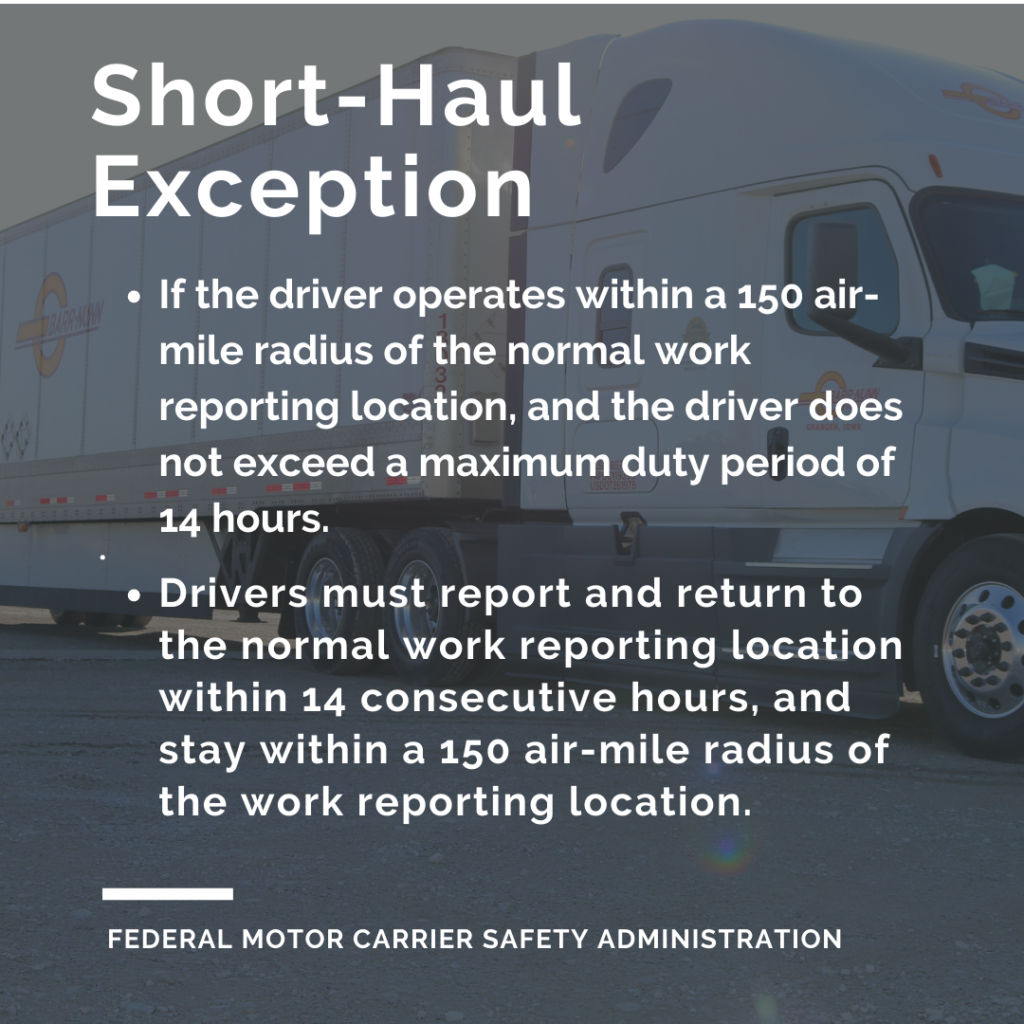
Previously, truck drivers using the short-haul exception were not allowed on-duty for more than 12 hours or able drive beyond a 100 air-mile radius, or 115 miles. If those limits were exceeded, the exception would end, and drivers were required to complete a record of duty status (RODS) and take a 30-minute break. Additionally, if a driver exceeded short-haul exception limits for more than eight days in any consecutive 30-day period, an electronic logging device (ELD) is required.

The new rule extends truck driver workdays from 12 to 14 hours and increases the distance restriction from 100 air miles to 150 air miles. The updated Short-Haul Exemption is intended to add flexibility and allow more drivers to fall under the short-haul exception.

Adverse Driving Conditions

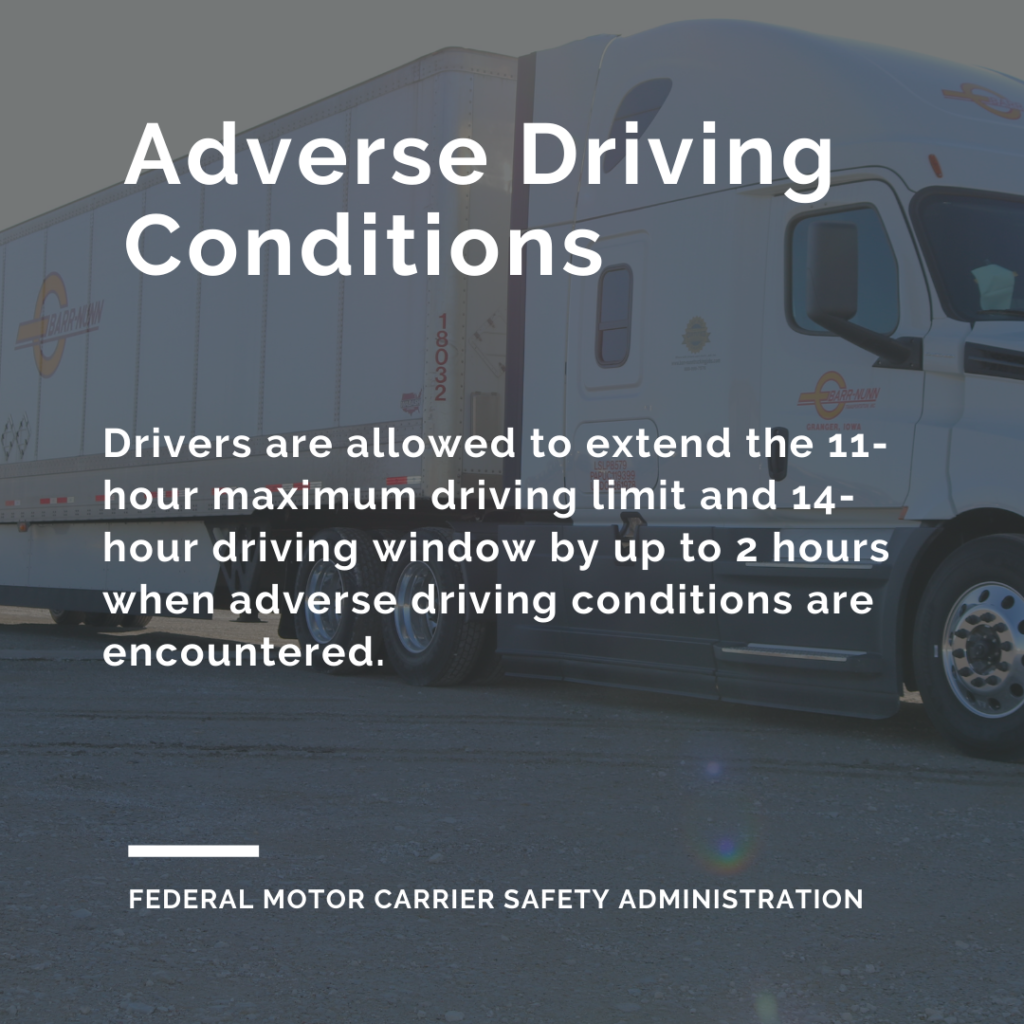
Under the old provision, drivers could activate the adverse driving conditions provision to extend their drive time for up to two hours but couldn’t extend on-duty time. Because the adverse driving conditions provision needed to be known by the dispatcher before a run started, it was hard to use and not widely adopted.

The new rule addresses adverse driving conditions not known to the dispatcher or driver before a required break. The driving window is extended for up to two hours. The update is intended to provide drivers with the ability to wait out weather-related conditions and not drive through them. FMCSA advises drivers to indicate the adverse driving conditions on approved electronic logging devices.

30-Minute Rest Break

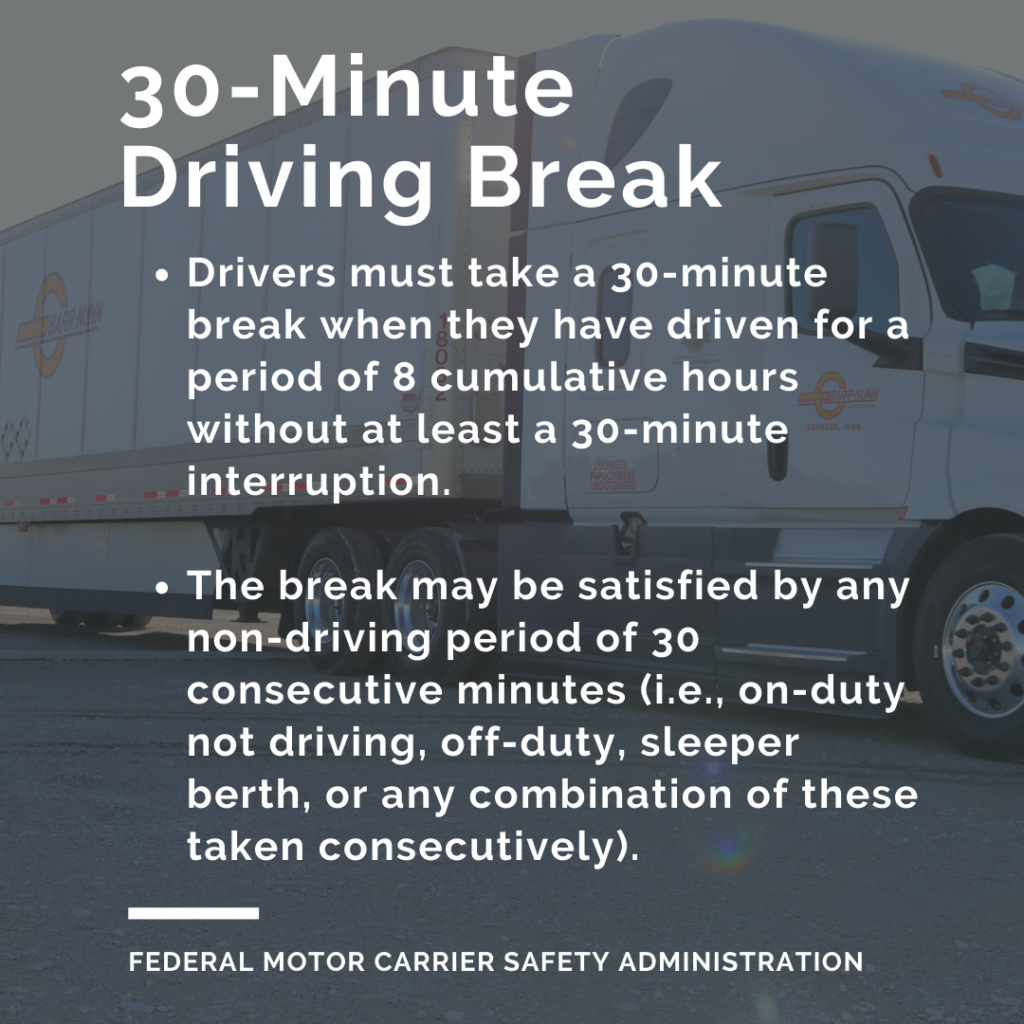
The old 30-minute break rule required drivers to take a break of 30 consecutive minutes after driving for 8 hours.

The new rule allows the rest break to be fulfilled through 30 minutes of on-duty and nondriving time. A trucker can take the break while completing tasks like getting fuel or securing a load.

Sleeper Berth Provision

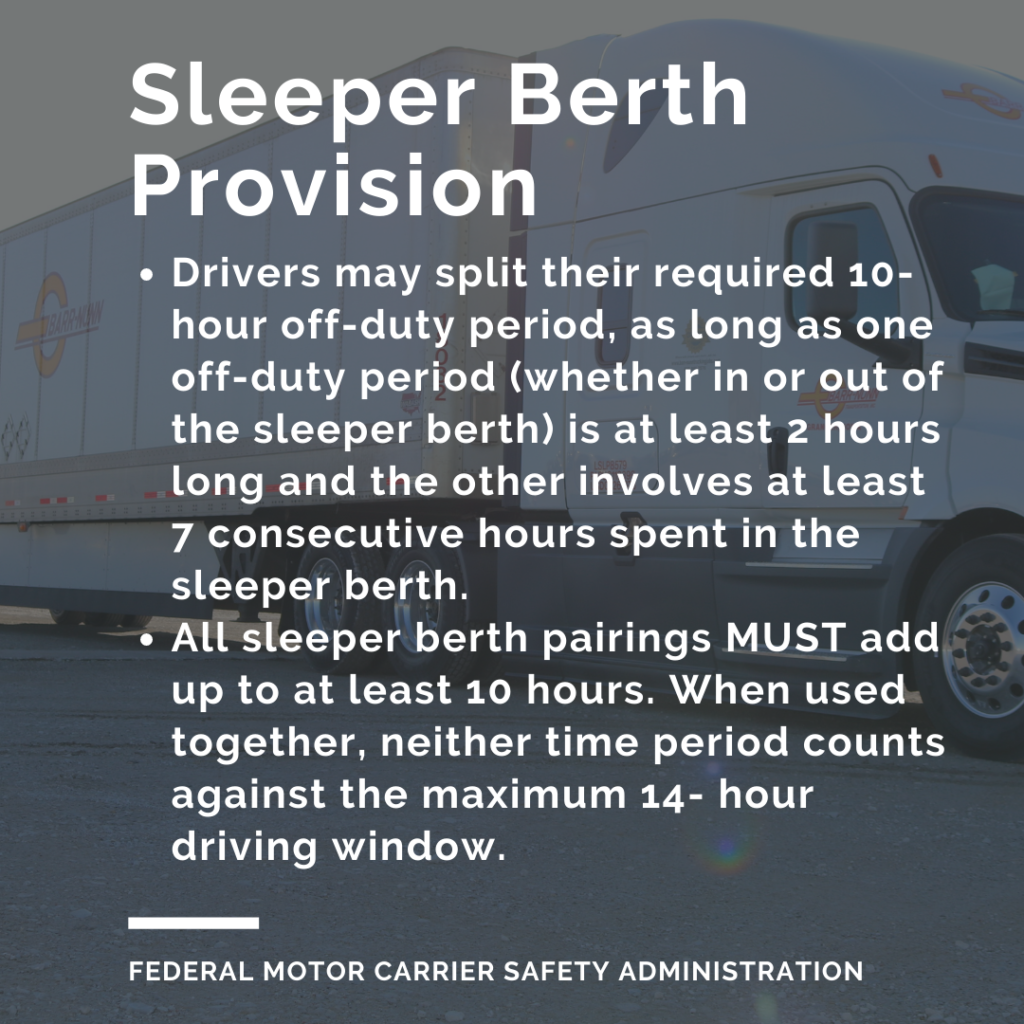
The previous rules allowed an 8/2 split, with the two hours counting against a driver’s 14-hour limit.

The new rule modifies the sleeper berth exception allowing drivers to take the 10 hours off-duty in two periods, granted one off-duty period (in or out of the sleeper berth) is at least two hours long, and the off-duty period includes at least seven consecutive hours spent in the sleeper berth. Neither off-duty period will count against the maximum 14-hour driving window.

What Service Hours Changes Mean for Truck Drivers

Depending on the company you work for and the types of truck driving you do, the Hours of Service changes will affect you differently. Some truck drivers welcome the new changes, while others are skeptical the changes will make much of an impact. Either way, as a truck driver, it’s your responsibility to adhere to the new regulations or face penalties. We’ve found the biggest impact for our truck drivers is the 30-minute rest break changes. Drivers seem to feel it allows for more flexibility in fulfilling the requirement.

What Truck Drivers Should Do Now

For additional information about Hour of Service changes that took effect on Sept. 29. 2020 visit the Federal Motor Carrier Safety Administration website or contact your company’s compliance department.

For more about driving for Barr-Nunn Transportation, read our FAQ.

Interested in driving for Barr-Nunn Transportation? Search Truck Driving Positions or Apply Now!

You may also enjoy: Dashcams For Truckers: What You Need to Know