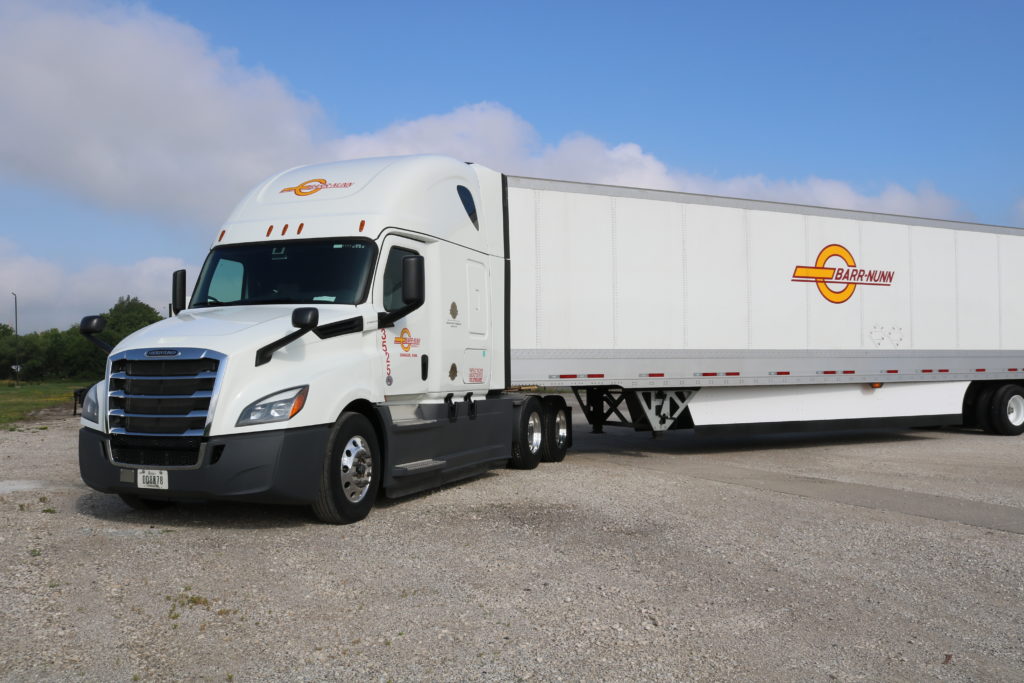

Truck Driver Referral Program Delivers Big Money

The Barr-Nunn Transportation Truck Driver Referral Program is another reason our trucking company has a reputation as a top-pay carrier. Our philosophy on driver referrals is straightforward; pay our drivers a ton of money plus additional PTO (vacation) to refer other professional drivers to our company. Our drivers are thrilled that they helped the company and earned a lot more money. The Driver Referral Program at Barr-Nunn Transportation is unique in the types of rewards and the number of times bonuses payout.

Benefits of Referring a Driver to Barr-Nunn Transportation

  • It pays! The bottom line is drivers can earn impressive amounts of additional income referring drivers.
  • It feels good to help others! Helping a friend, peer, or family member increase pay, increase hometime, or increase employment stability is very rewarding.
  • Increases the quality of people driving for Barr-Nunn Transportation! Experienced and safe drivers hang out with other professional and safe truck drivers. Bringing more drivers who share our dedication to doing the job the right way helps us all.
  • It’s already part of the brotherhood of truck drivers! Driving a truck for a living makes us part of a small fraternity, and referring drivers to work for high-quality carriers is a part of the trucker code.

How the Barr-Nunn Transportation Truck Driver Referral Program Works

Barr-Nunn Transportation drivers referring new drivers who gain employment receive an extra CSA Safety Bonus and On-Road Safety Bonus when eligible over the next 12 months.

90-Day eligible CSA Safety Bonuses

Solo Drivers

  • $875 + Paid Time Off (with Hazmat Endorsement)
  • $700 + Paid Time Off (without Hazmat Endorsement)

Team Drivers

  • $1,025 each + Paid Time Off (with Hazmat Endorsement)
  • $825 each + Paid Time Off (without Hazmat Endorsement)

90-Day On-Road Safety Bonus

  • $425

Referral Program Payout Example

Joe refers Jim to Barr-Nunn. Jim gets hired at Barr-Nunn. The next time Joe earns his CSA Safety Bonus, On-Road Bonus, and PTO award, he will receive an extra one of each because he referred Jim.

So, Joe will earn $2600 and 2 days of PTO instead of $1300 and 1 day of PTO.

And for the subsequent 3 periods (9 months), Joe will earn additional bonuses and PTO when he earns his regularly scheduled bonuses every 90 days.

Joe will have earned a total of $5200 and 4 days of PTO (vacation) for referring Jim to Barr-Nunn.

With Barr-Nunn’s referral program, I have made tens of thousands of dollars over the last two years by referring drivers to Barr-Nunn. I have also increased Paid Time Off (vacation day) with each of my hired referrals. This has allowed me to enjoy my home time even more! Our driver referral program helps me work smarter, not harder!

Barr-Nunn Transportation Driver Denise

Tips for Referring Drivers to Barr-Nunn Transportation

  • Keep being social! Life on the road means interacting with a wide variety of people. Remain friendly and conversational at truck stops, diners, parking lots, and customer locations.
  • Keep your radar up! Stay alert to those drivers who show the same passion, dedication, skills, and attitude as you.
  • Give honest feedback about driving for Barr-Nunn Transportation! Your honesty and straightforward conversations about driving for the company show you are transparent and without a hidden agenda.
  • Connect with a Barr-Nunn Transportation Recruiter! Building a relationship with a company recruiter and giving them a heads-up to a referral is a simple way to ensure proper credit.

4 Easy Ways to Submit a Truck Driver Referral

  • Referral Card available at all terminals
  • Truck Satellite System using Macro 61
  • Website submission at barr-nunn.com
  • Call 888-999-7576

Final Thoughts on Barr-Nunn Transportation Truck Driver Referral Program

Our high-paying driver referral program is just one of the ways to earn more at Barr-Nunn Transportation. Unmatched CSA Safety Bonuses and On-Road Safety Bonuses, Paid Time Off, Shift Load Pay, and excellent benefits keep Barr-Nunn Transportation a 16-year Top Pay Certified Carrier. For more information, call Truck Driver Services & Recruiting at 888-999-7576.

You may also enjoy 4 Ways Barr-Nunn Truck Drivers Earn Paid Time Off.

Interested in driving for Barr-Nunn Transportation? Search Driving Positions or Apply Now!

4 Ways Barr-Nunn Truck Drivers Earn Paid Time Off

After pay and benefits, the most asked question our new drivers have is, "What's the vacation policy?" Many are shocked to learn how many ways Barr-Nunn Transportation truck drivers earn paid time off (PTO). Most carriers offer one way for drivers to PTO, while Barr-Nunn Transportation offers up to four methods.

Typical Carrier/Industry PTO

Most carriers offer two weeks of PTO per year or allow days to accrue for weeks a certain number of weeks on the road. Some companies add weeks for drivers who hit work anniversaries like five, ten, fifteen, or twenty years. Because miles vary for a lot of truck drivers, hitting these types of milestones or meeting PTO requirements can be frustrating. Limited time off the road is stressful for drives and their families.

How Barr-Nunn Transportation PTO Is Different

Barr-Nunn Transportation believes trucker's downtime is precious. Birthdays, anniversaries, school plays, sports games, and other once-in-a-lifetime events are too special to miss. Sharing experiences with family members is what life is all about.

That’s why we’ve developed a PTO policy that rewards our drivers for more than miles. If you drive for Barr-Nunn Transportation, the amount of PTO you enjoy is in your hands, literally. We outline four ways for our drivers to achieve more PTO each year.

“We are proud to offer so much paid time off to our company drivers.  Our goal is to make sure they earn a superior paycheck week in and week out and that they can afford to spend quality vacation time with their families and not have their paycheck suffer when they do.”

– Jeff Blank, Director of Recruiting

4 Ways Barr-Nunn Drivers Achieve More PTO

1. New Company Drivers Can Earn PTO Immediately

It starts at the beginning of your employment with Barr-Nunn Transportation. We believe your safe driving record should follow you, not get reset when you start. Our new drivers who have a qualifying safety record earn one day of PTO on their first check the week after orientation, and reach one day after 30 and 60 days of employment. From the very start of your employment, you can earn additional PTO.

2. 60,000 Paid Miles Earns PTO

The second way to earn more PTO is through miles driven. Solo drivers earn 3-9 days of Paid Time Off (Vacation) every 60,000 paid miles. The value of each Paid Time Off day for new solo mileage paid drivers is either $280 or $296 per day.

“I earn 6 days off PTO for every 60,000 miles I run. I also earn 1 day of PTO each time I get my CSA bonus. This adds up quickly and I value the fact that I can take my PTO whenever I desire. BN is good at giving me time off when I ask for it.”

- Jim P. (Regional North Fleet)

Team drivers earn 3-9 days of Paid Time Off (Vacation) every 109,000 paid miles.The value of each Paid Time Off day for new mileage paid team drivers is either $312 or $336 per day.

“Barr Nunn’s PTO is the best in the business! As a Million Mile Team driver, my partner and I each earn 9 days of PTO every 109,000 paid miles. Depending on your pay rate that's worth approximately $3000 each before taxes.  As a team, we get PTO every 4 and a half months.  Add it up you won't get that anywhere else!  The earned time off at Barr-Nunn is also phenomenal.”

-Michele P.

3. Compliance, Safety, Accountability (CSA) Safety Scores Earns PTO

The Federal Motor Carrier Safety Administration’ (FMCSA) data-driven safety compliance and enforcement program scoring is the third way Barr-Nunn Transportation driver can earn more PTO. The Safety Measurement System (SMS) identifies on-road performance and compliance.

Both solo and team drivers earn one day of PTO with each CSA Safety Bonus they earn, eligible for every 90 days. 95% of Barr-Nunn drivers earn this bonus.

4. Safety and Elite Driver Awards

Barr-Nunn Transportation recognizes safe drivers with awards. Drivers who reach certain safety milestones or earn Elite Safe driver awards receive extra PTO.

Final Thoughts on Barr-Nunn Transportation Paid Time Off

“Our business depends on the ability to perform at the highest levels of safety and service. Our excellence depends on our drivers and our drivers depend on both industry-leading pay and the opportunity to enjoy home-time.  What better way to demonstrate our commitment to the professional men and women who make Barr-Nunn work, than with not only the high number of paid days off that can be earned, but the strong compensation level that goes with it.”

- Rene Beacom (Barr-Nunn Transportation President)

You may also enjoy How Safe Truck Drivers Earn More at Barr-Nunn Transportation.

Interested in driving for Barr-Nunn Transportation? Apply Now

Top 10 Most Stressful Roads for Truck Drivers

Truck drivers deserve every penny while delivering goods around the country. Crammed roads feature construction, distracted drivers, aggressive drivers, and other hazards – on a good day. Some U.S. roads take driving a semi-truck to the next level.

Here are the top 10 most stressful roads for truck drivers

1. I-95 in Miami, Florida

The Sun Sentinal reports I-95 in South Florida is the deadliest highway in the state. Florida Transportation Department notes that segments of I-95, especially those in Southeast Florida, have as many as 12 lanes. According to state transportation data, some 312,000 vehicles a day whiz through that area, traffic records show — 89,300 more than it should. Many blame low starting salaries for troopers and insufficient law enforcement to vehicle ratio for increases in accidents.

2. I-85 in Atlanta, Georgia

I-85 covers 180 miles, running northeast to southeast, and goes right through the heart of Atlanta. Completed in 1960, I-85 remains a link between Montgomery, Alabama, and Richmond, VA. According to Spaulding Injury Law, fatal crashes average about one every two weeks.

3. I-285 in Atlanta, Georgia

Completed in 1962, I-285 circles Atlanta, GA, and crosses I-85 and I-75 twice. I-285 covers sixty-three miles, and as many as 13,000 semi-truck accidents have been reported in one year. More than two million drivers use I-285 daily. In 2013, 29 accident-related fatalities involving motorcycle accidents and truck accidents happened on Atlanta’s most populated interstate. Many complain sharp turns, frequent exits, lack of lighting, and poor signage contribute to why I-285 is so dangerous.

4. I-75 in Atlanta, Georgia

Rounding out Atlanta’s most dangerous roads is I-75. As the only significant connection from Florida to the mid-America, I-75 intersects I-85 in the downtown area and intersects I-285 twice. National Highway Traffic Safety Administration’s Fatality Analysis Reporting System claims Georgia’s deadliest highway is I-75, with 111 deaths during the summer months. Many blame speeding as a major cause of accidents between cars and semi-trucks.

5. I-10 in Los Angeles, California

In addition to connecting the west to Jacksonville and Florida, the I-10 freeway connects east to west in southern California and runs through Los Angeles, Santa Monica, and San Bernardino. Fatalities on I-10 are due to the high volume of traffic, distracted driving, driver fatigue, and alcohol consumption. Los Angeles County is among the country’s most productive and populated areas forcing thousands of semi-trucks to travel with cars each day.

6. I-10 in Phoenix, Arizona

I-10 runs for 329 miles in Arizona and right through downtown Phoenix, the sixth-largest city in America. Research by ValuePenguin claims I-10 ranks as the second darkest highway in the country and the fourth in the drunk driver category. The report states about 20 percent of fatal accidents occurred in Arizona, making the Grand Canyon State the second-deadliest state along the I-10.

7. US-99 in Northern California

Twisting roads, elevation changes, steep inclines, and quickly turning weather make the US-99 in Northern California dangerous. Google Maps shows 6% grade changes and 20 mph 90-degree turns. Some threads on trucker sites advise avoiding the area if possible and warn that US-99 is only for the most experienced drivers. On top of difficult driving conditions, truckers have to deal with navigating the same roadway.

8. Highway 2 in Montana

The wide-open spaces of Montana make Highway 2 unpredictable. High winds, blowing snow, black ice, and remote locations to emergency services can stress experienced truck drivers. Long straightaways lead drivers to speed in addition to not wearing seatbelts. If anything should happen, help may take 80 minutes or more to arrive.

9. Highway 550 in Colorado

Highway 550, also known as The Million Dollar Highway, runs through Colorado and New Mexico. Much of the road winds in and around the mountains and elevates way above sea level. Changing temperatures, steep drop-offs, little or no shoulders, and guardrails make The Million Dollar Highway seem less glamorous and more dangerous.

10. I-17 (Flagstaff to Phoenix AZ)

I-17 cuts a path through a 5,000-foot elevation change between Flagstaff and Phoenix, AZ. With just two lanes, this stretch of I-17 features steep inclines that turn into steep declines. Cars travel well above the speed limits as trucks reduce speed during the climb – creating a dangerous mix of slow and fast vehicles. For parts of the year, snow and ice accumulate on I-17, increasing the chance of something going wrong. Like Highway 550 in Colorado, emergency vehicles have a tough time getting to the scene when an accident happens.

Conclusion

Today’s truck drivers deserve a lot of credit for what it takes to deliver goods safely and on time. Most car drivers can choose not to take a trip or wait until the weather clears. Truckers do not have that luxury. So the next time you see a truck driver in traffic or harsh weather, give him or her a nod of gratitude.

Do you know of other stressful roads for truck drivers? Leave a comment.

You may also enjoy Truck Driving Tips from Experienced Truckers at Barr-Nunn Transportation.

Interested in driving for Barr-Nunn Transportation? Apply Now

How Safe Truck Drivers Earn More at Barr-Nunn Transportation

Barr-Nunn Transportation is approaching its 40th year and remains a trucking industry leader in pay for safe truck drivers. Superior financial performance combined with a culture committed to driver career success keeps Barr-Nunn Transportation a certified top pay carrier, now sixteen years in a row. The trucking company forged a reputation as a carrier with the fastest pay raises in the trucking industry. Many truckers looking to make more money are curious as to how our truck drivers consistently earn more. The answer is a unique and innovative approach to pay for safe driving.

Safe Truck Driving Bonuses

Safety for our drivers and our customers is our highest priority. We want drivers who put safety first. Truck drivers with verified safe records get rewarded with higher practical mile pay and higher bonuses. 95% of Barr-Nunn Transportation drivers earn the following bonuses every 90 days:

  • Mileage Paid Solo Drivers earn ½ cent per practical mile pay raises based on safe paid miles of either 20,000 on regional fleets or 40,000 on OTR fleets.
  • All company drivers earn the following bonuses for safety every 90 days:
    • Solo Driver – CSA Safety Bonus = $700 or $875 plus 1 day of PTO (Vacation)
    • Solo Driver – On-Road Bonus = $425
    • Team CSA Safety Bonus = $825 or $1,025 each plus one day of PTO (Vacation)
    • Team – On-Road Bonus = $425 each

Safe Driving Comes with Perks

Truck drivers accomplishing One Million Safe Miles earn cash, extra PTO (Vacation), a leather jacket, a plaque, and more. Drivers obtaining Barr-Nunn Transportations Elite Fleet Safety Award receive a plaque and cash. Additional awards trigger with every 125,000 safe paid miles.

Barr-Nunn Truck Driver Qualifications

Safe and service-oriented truck drivers have similar qualities. If you are an experienced truck driver or team truck driver looking to earn more and get paid for safe driving and meet these qualifications, Barr-Nunn Transportation wants you to complete an application.

  • A valid and current Class A CDL
  • 23 years old
  • 14 months of recent, verifiable tractor-trailer experience
  • No DWIs in the past seven years
  • No more than three moving violations in the past three years
  • Successfully pass a pre-employment DOT physical, drug screen, and Human Performance Evaluation (company truck drivers only for HPE)
  • No preventable DOT reportable accidents in the past three years
  • No drug test refusal or failure

New Company Drivers Earn More Money

Unlike many trucking companies today, Barr-Nunn Transportation allows new truck drivers to earn more quickly. CSA bonuses and On-Road Bonuses with PTO are issued on a driver’s first check and after 30 and 60 days of employment. Additionally, Barr-Nunn Transportation is giving truck drivers pandemic pay premiums, sign-on bonuses, and transition pay.

Earn Better Benefits with Safe Driving

Barr-Nunn Transportation displays more respect, more support, and more benefits to truck drivers than other carriers. We strive to offer the highest quality employee benefits for safe truck drivers and their families.

  • Blue Cross Blue Shield Health & Dental Insurance
  • Excellent Matching 401(k) Program
  • Superior Home Time Options
  • Well-Equipped, Late-Model Tractors
  • ElitePass Transponder for Tolls & Scales
  • 100% No Touch Freight (Mostly Drop & Hook)
  • No NYC or Canada Lanes
  • Free Rider Program from Day One
  • Trailers equipped with Tracking and Cargo Sensors

Conclusion

Whether you are a safe solo truck driver, a safe team truck driver, or a safe owner-operator, Barr-Nunn Transportation is ready to reward you with industry-leading pay. If you are looking for a carrier delivering on mileage, pay, and home time, Barr-Nunn Transportation lives up to all three. Many of our truck drivers wish they came over sooner. Now it’s your turn to earn the pay, respect, and home you deserve.

You may also enjoy the 6 Advantages of OTR Truck Driving for Barr-Nunn Transportation.

For more about driving for Barr-Nunn Transportation, read our FAQ.

Interested in driving for Barr-Nunn Transportation? Search Truck Driving Positions or Apply Now!

Valuable Truck Driving Tips from Experienced Truckers

Experienced truck drivers from Barr-Nunn Transportation, a company known for its driver benefits and competitive pay, share their hard-earned knowledge in this article. Packed with practical tips for both new and seasoned drivers, the article offers guidance on staying safe and maximizing efficiency on the road. The most essential truck driving tips include prioritizing safety over speed by planning routes effectively and understanding how to calculate rates efficiently. Developing a positive attitude and strong work ethic is also crucial to navigate the trucking industry’s ups and downs, so drivers can be prepared for anything from long stretches of highway to unexpected delays.

Over the last thirty-eight years, Barr-Nunn Transportation has forged a culture committed to driver financial stability and career success, which is why our truck drivers are some of the most experienced truckers in the industry today. Not only do our drivers pride themselves on delivering hauls safely, on time, and with quality customer service — our drivers enjoy passing on what they have learned to others.

Top Tips from Barr-Nunn Truck Drivers

Here are truck driving tips from experienced Barr-Nunn Transportation truckers:

Jim P.

Truck Driver Tips

  1. Avoid a “miles” mindset. It’s about money, not miles.
  2. Understand effective rate per mile with band pay, special load pay, etc.
  3. Understand there are good days and bad days, good weeks, and bad weeks.
  4. Accept waiting time in between loads.

Reasons to Work at Barr-Nunn Transportation

  • Good equipment.
  • Good pay.
  • Being treated with respect and as a person.
  • Can always ask dispatch which direction to go if not preplanned when headed to a receiver.
  • Very seldom pulled into for a DOT inspection.
  • Inspection bonuses are great.

Scott B.

Truck Driver Tips

  1. Attitude is key.  
  2. A strong work ethic is a big help.
  3. Not every day in trucking is a good day.  
  4. Must be prepared for the worst sometimes.
  5. Need to run at night and may have to flip your clock.  

Reasons to Work at Barr-Nunn Transportation

  • Strong company communication 
  • The staff always tell the truth.
  • Late-model equipment with great specs.
  • Liberal time off.

Susan & Frank B.

Truck Driver Tips

  1. Run loads efficiently.
  2. Always keep track of your hours to know what you can and can’t do. 
  3. Adapt to different schedules. 
  4. You must be flexible.

Reasons to Work at Barr-Nunn Transportation:

  • Excellent pay and bonuses.
  • The staff is always helpful.

Paul G.

Truck Driver Tips

  1. Drivers need to be good at time management.
  2. Focus on the big picture rather than day-to-day load mileage. 
  3. (New drivers) Avoid unrealistic expectations and manage time wisely.

Reasons to Work at Barr-Nunn Transportation

  • The pay and compensation are the best. After all, we’re not here to donate our time and do volunteer work; it’s all about the bottom dollar.

Ken C.

Truck Driver Tips

  1. Drivers need to be able to flip the clock from day to night.

Reasons to Work at Barr-Nunn Transportation

  • Hardly ever get pulled into a DOT scale except in FL.
  • Preferential treatment at outside shops and OEM dealers.
  • Excellent home time, vacation, and great equipment.
  • Great communication on the night shift.

Gerald C.

Truck Driver Tips

  1. Make use of the technology. It makes the job 100% easier. 
  2. Communicate early and often with dispatch regarding customers, pickup and delivery times, delays, etc.  
  3. Don’t focus on the daily or even weekly miles.
  4. Understand you can make an excellent annual income.

Reasons to Work at Barr-Nunn Transportation

  • The technology that’s available to company drivers.
  • Having the correct information for pick-ups and deliveries. Our customers appreciate the fact we are always prepared. 
  • Very rarely having to deal with maintenance issues while on the road. 
  • The company safety record.
  • The excellent compensation package.
  • The staff at Barr-Nunn is always helpful.

Monti P.

Truck Driver Tips

  1. Ask company drivers the real amount of home time.
  2. Try to take alternate routes when possible.
  3. Ask company drivers about team leaders and how they treat others.

Reasons to Work at Barr-Nunn Transportation

  • The best thing I like about the company is being able to trust the people you work for.
  • The trucks are maintained very well. 
  • Calling the shop when there is a problem and getting assistance immediately.

Summary of Trucking Tips

The trucking industry is as challenging as it is rewarding, and the insights shared by seasoned drivers from Barr-Nunn Transportation are invaluable for anyone looking to thrive on the road. Whether you are a rookie or an experienced driver, these tips highlight the importance of balancing safety, time management, and a proactive mindset. Prioritizing financial goals over sheer mileage, understanding the need for flexibility in schedules, and maintaining open communication with dispatch are core strategies recommended by drivers. The common thread among these professionals is an emphasis on staying adaptable, leveraging available technology, and cultivating a strong work ethic to handle the varied demands of long-haul trucking.

FAQs

What are some essential safety tips for truck drivers?

Safety is a top priority for truckers, as highlighted by experienced drivers from Barr-Nunn Transportation. Essential tips include effective route planning to avoid congestion and unsafe areas, adhering to rest periods to prevent fatigue, and maintaining proper communication with dispatch for any unexpected delays or issues. Additionally, making use of technology such as GPS and fleet management tools helps drivers stay updated and avoid potentially hazardous situations.

Why is time management important for truck drivers?

Time management is crucial because it helps drivers meet delivery schedules without compromising on safety. Paul G., one of the experienced drivers at Barr-Nunn, stresses the importance of focusing on the bigger picture rather than daily mileage. This means tracking available driving hours, planning breaks strategically, and avoiding unnecessary rushes that could lead to accidents or violations of hours-of-service regulations.

What mindset should new truck drivers adopt for success?

New truck drivers should cultivate a mindset that embraces both the highs and lows of the job. As Jim P. shares, it’s important to understand that there are both good and bad days, weeks, and even months in trucking. Scott B. emphasizes that a strong work ethic and a positive attitude go a long way in helping drivers adapt to changing conditions and schedules, including the need to switch between day and night shifts.

How can technology improve a truck driver’s experience?

Technology is a game-changer for truck drivers, simplifying route navigation, time tracking, and communication. Gerald C. points out that utilizing the tools available makes the job 100% easier. From electronic logging devices (ELDs) to communication apps that streamline dispatch updates and customer interactions, embracing technology can enhance efficiency and reduce stress on the road.

What should drivers know about pay and compensation at Barr-Nunn Transportation?

Barr-Nunn Transportation is known for its excellent compensation packages and transparent pay structures. As Paul G. succinctly puts it, drivers need to remember that the job is not just about the miles but the money made per mile, including bonuses for special loads and other incentives. This focus on fair pay and competitive benefits makes the company an attractive employer for professional drivers.

Why do drivers appreciate the company culture at Barr-Nunn Transportation?

The company culture at Barr-Nunn is built around respect, open communication, and support. Drivers like Monti P. note that trusting the people you work with is key, and the company ensures drivers feel valued through helpful staff, late-model equipment, and responsive maintenance teams. This supportive environment makes it easier for drivers to perform well and enjoy their time on the job.

Conclusion

Experienced truckers know the transportation industry can be a rewarding and lucrative career. Because truck driving demands as much physical skill as it does mental agility and communication skills, our truck drivers know how to use their experience to manage hours on the road to maximize income. Implement the truck driving tips from experienced truckers at Barr-Nunn Transportation, and you’ll be on your way to a successful career.

You may also enjoy: 7 Money-Saving Tips for Truck Drivers

Interested in driving for Barr-Nunn Transportation? Apply Now

7 Money-Saving Tips for Truck Drivers

Life on the road for professional truck drivers can be rewarding. Life on the road can also get expensive fast. Budgets bust without proper planning for impulse purchases, unforeseen expenses, and overpaying for convenient supplies. Seasoned truckers know how to manage money on and off the road.


Here are 7 Top Money-Saving Tips for Professional Truck Drivers.

  1. Make a Budget
  2. Limit Spending on Fast Food
  3. Avoid Buying Supplies on The Road
  4. Take Advantage of Reward/Points Programs
  5. Search for CDL Discounts
  6. Avoid Getting Tickets
  7. Use Wi-Fi Whenever Possible

Read below for more information on how truckers can save money.


1. Make a Budget

The best move for any professional truck driver is to make a budget and stick to it. A simple what to drill down to how much money is available to spend daily, weekly, or monthly, is to total your paychecks and then subtract your expenses (rent, mortgage, car loan payment, the power bill, etc.). From there, decide how much money you want to put into saving. The remainder is your budget while on the road.

Even if your carrier provides a per diem or daily allowance for food or other items, you should know how much of your money you must spend daily, weekly, or monthly. Furthermore, you should consult your accountant on which expenses and how much of those expenses are tax write-offs. You want to avoid thinking you can go over your per diem and only pay the difference between the total amount and what you can write off. For example, if your per diem is $50 per day and you spend $60 per day. You may be on the hook for more than $10 if you can only write off 85% of your per diem total.

Landing on a budget and sticking to it is the way to ensure your expenses on the road are not eating into your savings or more essential items.

2. Limit Spending on Fast Food

The biggest budget buster on the road is food. Unfortunately, every truck driver’s lifestyle brings them into the world of fast food or convenience store grub. Grabbing food on the go up to three times a day or more eats through a driver’s budget faster than heating a four-dollar burrito in a truck stop microwave oven.

Most truck drivers have plug-in coolers or refrigerators on board. Stocking a food cooler or small fridge is smart unless you’re filling it with sugary soft drinks, caffeine-infused energy drinks, or oversized candy bars. Keeping healthier snacks like fruit, veggies, and low-sugar meal bars is a much better option. On average, fruits and veggie snacks cost much less and go much further than other processed options. And they’re healthier too.

Professional truck drivers who maintain a budget, plan out meals and cook their food. Portable stoves, Crock Pots, electric skillets, and blenders are affordable and easily stored for when it’s mealtime. Prepping meals should be a high priority for a healthier and less expensive trucker lifestyle. Simple and delicious meal recipes are easily accessible with a quick Google search. 

3. Avoid Buying Supplies on The Road

The next biggest budget buster is buying over-priced supplies on the road. From toiletries to tire pressure gauges, everything is more expensive on the road. A quick supply check before a trip and routine equipment once-overs will help you avoid overspending at truck stop convenience stores or equipment supply chain stores.

Many truckers buy in bulk for frequently used supplies. Generally, the cost per item or price per use is lower when purchasing in bulk than purchasing each time separately. If you add up the cost of supplies per trip and multiply that by the total amount of trips per year, you may be surprised at how expensive small items can be.

4. Take Advantage of Reward/Points Programs

One of the benefits of being a professional truck driver is the available rewards programs. Truckstop outlets like AMBEST, Love’s, Pilot, Speedway, Petro, and TA (TravelCenters of America) offer cards and points programs. Generally, the purchase of fuel, food, drinks, and merchandise adds to discounts and offers like free showers or other amenities. Use caution when using rewards programs as purchases add up quickly and can ruin your established budget.

5. Search for CDL Discounts

Truckstop locations are not the only places to find discounts. Some hotels, restaurants, insurance companies, phone companies, car rental companies, airlines, and truck repair and truck parts store off CDL discounts. Most CDL discounts are available because truckers, due to carrier requirements, have perfect or near-perfect driving records. Some truck drivers work for transportation companies that offer these types of discounts.

6. Avoid Getting Tickets

A clean driving record is a golden ticket for professional truckers. Speeding tickets and accidents can lead to fewer driving opportunities or cause a carrier to dismiss drivers. Either way, driving less or fighting to get back on a trucking company’s roster costs money. Experienced truck drivers know safety comes first because everything else about the job depends on it.

7. Use Wi-Fi Whenever Possible

If you’re not on an unlimited data plan, your minutes can get used up quickly on the road. The good thing is most truck stops, restaurants, hotels, and stores like Walmart have Wi-Fi available. Tapping into local Wi-Fi can save big bucks on your phone bills. The only watch out is Wi-Fi isn’t always safe from scammers looking to steal your information. Use secure Wi-Fi for things like logging into your bank account or other sensitive sites.

Conclusion

Today’s trucker has an incredible array of opportunities to spend money on the road. Smartphones make purchasing convenient items quick and painless. Unfortunately, today’s access to bank accounts also means it’s easy to go through more money than you want. Use our 7 money-saving tips for professional truck drivers, and you’ll be on your way to enjoying life on the road without breaking the bank.

For more about driving for Barr-Nunn Transportation, read our FAQ.

Interested in driving for Barr-Nunn Transportation? Search Truck Driving Positions or Apply Now!

You may also enjoy 10 Things Experienced Truck Drivers Know That Rookies Don’t

4 Important Winter Driving Tips for Truck Drivers

Winter is the most dangerous time for America’s truck drivers. Snow, ice, wind, and rapidly changing temperatures make life on the road stressful during the winter months. Although truckers can’t control every aspect of what winter brings to the job, they can take steps to make hauls safe for everyone.

Here are 4 tips for truck drivers during the winter season:

  1. Inspect your truck (tires, battery, windshield wipers, fluids, lights, food and water, blankets and clothes, tools)
  2. Slow down and create extra space
  3. Always keep a winter prep kit
  4. Monitor weather conditions

Read more about these winter truck driving tips.

1. Inspect Your Truck

Regular truck inspections are an essential part of truck safety year-round. Thorough truck inspections before, during, and after hauls in winter are vital. Even the smallest overlooked details can create unsafe driving conditions -even for the most experienced truckers.

– Tires

Tires are literally where the rubber meets the road. Maintaining recommended tire pressure should be first on your truck inspection list. Close attention should be paid to tire wear and tread depth. Uneven tire wear and low tread depth can cause blowouts or affect tire grip. A truck driver should also check the record of the last tire balance service.

– Battery

Regularly checking for sufficient battery power ensures your rig is less likely to have you stranded between truck stops or in a remote location. Experienced truckers carry a battery charging system for the off chance the battery goes. Keeping a set of jumper cables on board is also a good idea.

– Wipers

Most truck drivers are safe drivers. Keeping an eye on other vehicles is hard enough without dirty and streaky windows. Clean and glare-free windows start with fresh and effective windshield wipers.

*EXTRA WINTER TRUCK DRIVING TIPS: 1) Stash a new set of wipers on board, so you never have to move around trying to get a better view of what’s in front of your truck. 2) Be sure to check how well your defrosters are working.

– Fluids

One way to keep your truck running smoothly is to top off fluids regularly. It’s good practice to keep your trip breakdown-free and important for keeping your truck running longer. Oil, power steering, transmission, brake antifreeze-coolant, and windshield wiper fluid need constant attention. Experienced truckers check them at least every 2,000 miles.

– Lights

Visually inspecting all rig lights for issues is one of the best ways to stay safe on the open road. Fully functioning turning signals and other indicators mean you are communicating with other vehicles. It’s always safer when cars and trucks know what your next move will be.

– Food and Water

Experienced truckers know there’s a chance weather conditions, or an accident can shut down a section of the road. On the odd chance of getting stranded for hours on a major highway, a well-stocked stash of food and water takes the stress out of waiting it out. Put together some healthy snacks and water bottles, just in case.

– Blankets and Clothes

Keeping enough blankets and warm clothes handy can keep a stranded situation from going from bad to worse. Frostbite is a major concern for those times heaters, batteries, or the need to walk long distances come up. Warm socks, hats, gloves, and a sleeping bag are recommended.

– Tools

Most truckers are skilled at fixing things, which means having a solid set of tools for every job is essential. Truck drivers should keep at least the following onboard: rags, duct tape, flashlight, WD40, lighter, zip ties, adjustable wrench, screwdrivers, knife, vice grips, hammer, fuses, gloves, and safety glasses.  Many truck drivers will carry additional items like tire and tread depth gauges, belts and hoses, and wire cutters.

2. Slow Down and Create Extra Space

One of the safest actions any truck driver can take in the winter is slowing down. Reducing speeds is generally considered the biggest factor in reducing accidents. By increasing reaction times, trucks and other vehicles can take evasive action.  Most people operating cars are unaware of how time and space are needed for trucks to stop. Creating more space between vehicles significantly decreases the chance of an accident.

3. Always Keep a Winter Prep Kit

Every rig should have a well-stocked prep kit. All seasons call for an emergency kit, and winter requires a few more items. In addition to a first aid kit, a winter prep kit should include the following: de-icer, shovel, bags of sand or ice, hand warmers, batteries, flares, and jumper cables. Some truck drivers also carry extra medication (within expiration dates).

4. Monitor Weather Conditions

Thankfully, keeping track of changing weather patterns is easier than ever. Every truck driver needs a weather app on their smartphone. The Weather Channel, Intellicast HD, Storm Shield, Weather Underground, or AccuWeather will provide up-to-the-minute weather conditions.

Weather conditions threatening truck driver safety the most are fog, heavy rain (in bursts), high winds, icy bridges, and black ice. Use your weather app and your CB radio to monitor what may affect your trip.

People Also Ask

Is trucking hard in winter?

Yes, trucking can be challenging in winter due to hazardous road conditions such as snow, ice, and reduced visibility. Winter weather can make driving more difficult and dangerous, requiring truck drivers to be extra cautious, adjust their driving speed, and be prepared for unexpected situations. Winter driving also demands greater skill and experience to handle potential issues like skidding, jackknifing, or getting stuck in snow.

How do truckers sleep in their truck in winter?

Truckers typically sleep in the sleeper cab of their truck during winter. To stay warm, they may use specialized equipment such as bunk heaters, which run off the truck’s fuel and provide heat without idling the engine. Many also use heavy-duty sleeping bags, thermal blankets, or extra layers of clothing to stay warm. Some trucks are equipped with auxiliary power units (APUs) that can provide heat and power without running the main engine, helping to keep the sleeper cab comfortable in cold weather.

What do truck drivers do when it snows?

When it snows, truck drivers take several precautions to ensure their safety and the safety of others on the road:

  • Drive cautiously: They reduce their speed, increase following distance, and drive with extra caution to avoid accidents.
  • Monitor weather and road conditions: Truckers frequently check weather reports and road conditions to plan their routes and avoid the worst areas.
  • Chain up: In some regions, particularly in mountainous areas, truck drivers are required to use tire chains to improve traction on snow-covered roads.
  • Take breaks or stop if necessary: If conditions become too dangerous, truck drivers may pull over at a rest stop or safe location and wait until the weather improves. Safety is a top priority, and sometimes waiting out a storm is the best option.

Conclusion

Above all else, safety is the biggest responsibility for today’s truck drivers. It’s both easier and harder to maintain safety on the open road. Distracted and impatient drivers can make for stressful hauls. So, it’s on every trucker to ensure the equipment and systems on their truck are working properly. Use these winter truck driving tips, find some of your own hacks, and be safe out there.

For more about driving for Barr-Nunn Transportation, read our FAQ.

Interested in driving for Barr-Nunn Transportation? Search Truck Driving Positions or Apply Now!

You may also enjoy: 7 Qualities of Successful Truck Drivers

7 Qualities of Great Truck Drivers

Truck driver leaning out the driver’s side window.

There’s a reason the demand for truck drivers is at an all-time high. To be successful today, a trucker needs the right combination of driving skills, experience, and personality traits. The expectations of the transportation industry are reaching new levels. So too, are the expectations of what carriers are looking for in truck drivers. Here are the 7 qualities of great truck drivers today:

1. Safety First

Safety is the ultimate priority of every truck driver, regardless of which carrier employs them. The job demands a watchful eye on preventing potentially dangerous situations. Successful truck drivers know how to keep themselves, the truck, loads, and other vehicles safe.

Safety all starts with the truck driver and how he or she takes care of themselves. The road demands truckers get the required amount of rest combined with a healthy diet. Obeying speed limits, wearing a seat belt, and maintaining proper distance between vehicles are actions successful truck drivers do every run. Because road conditions are major safety factors, staying on top of changing weather conditions with weather apps is paramount. Successful truckers know where the rig’s blind spots are and avoid cell phone use.

2. Committed to Communication

Like most jobs, communication is the key to success. A truck driver’s ability to keep the team members up to date on what’s happening on the road separates the professionals from the rest. If a load is not picked up or delivered on time, a professional truck driver communicates immediately. Keeping dispatchers in the loop is vital to a successful career in the transportation industry. Truck drivers also interact with customers, clients, lot security officers, and a host of people when delivering loads. Great drivers understand how a driver who communicates with those around them reflects on the carrier.

Good truck drivers also realize it’s important to communicate with family and friends. Life on the road is a wonderful career choice. Staying in touch with loved ones is an important factor in a truck driver’s quality of life.

3. Does the Right Thing

One of the big draws to life on the road, is truckers are often left alone to do the job. Professional truck drivers do the right thing when no one is looking. Honesty is a key component to a successful truck driving career. Always be truthful.  It’s easy to say you’re safe on the road. It’s another thing to make sure safety checks are complete before the truck is moving again. Doing the right thing also includes displaying courtesy. Great truck drivers help other drivers or motorists in need, even if that means a delay in load delivery time.

4. Comfortable with Change

The one thing constant in the transportation industry is change. All aspects of the job change regularly. The area changing the most is technology and equipment. From smartphone apps for traffic, weather, and rest areas – to the introduction of Electronic Logging Devices (ELDs), truckers are being asked to roll with the changes faster than ever before. Add new laws and DOT regulations, new company procedures, the successful professional truck drivers, accept and adapt to the transportation industry changes.

5. Respectful

Truck drivers operating on the highest level, respect the industry that pays them. Pros understanding everyone in transportation has a job to do to keep the machine turning. Established truckers have a desire to work together to complete on-time and safe deliveries. Respecting the industry includes treating everyone in the system with kindness and appreciation. Although truckers are often alone, it takes a team for them to receive a paycheck. Dispatchers, Maintenance Techs, HR/Payroll, Lumpers, Receivers, and Terminal Managers play important roles in becoming a great truck driver.

6. Positive Attitude

Driving a truck for a living is often challenging. Every day isn’t the greatest day to be a trucker. Bad weather, equipment issues, a slow off-load, or something happening at home can all affect a truck driver’s mood. The best truck drivers spread positivity, even when it’s easier to be grumpy, mean, or mean-spirited. Maintain optimism about situations and interactions on the road for long-term success.

7. Details Focused

In many ways, a truck driving career is part art and part science. One of the most sought-after traits of today’s truckers is understanding job requirements and procedures at a high level. Being a truck driver is a lot like being an air traffic controller. A million little things need to go right to deliver a load on time and safely.

Among other things, great truck drivers must navigate DOT Hours of service, satellite communications from load acceptance to delivery, accident reporting and procedures, on-time pick-up or delivery delay communication, equipment knowledge, and troubleshooting – not to mention dealing with traffic situations on America’s busiest roads. Truckers who have mastered the details are operating at the highest level.

Conclusion

Truck drivers looking for a career in the transportation industry know the wheel time delivers the skills and experience. It’s the intangible qualities and emotional intelligence that are the keys to long-term success as a trucker. If you have the 7 qualities of a great truck driver, Barr-Nunn Transportation is interested in talking to you about open driver positions.

Search Truck Driving Positions or Apply Now!

You may also enjoy: 6 Advantages of OTR Truck Driving for Barr-Nunn Transportation

2020 Service Hours Changes: What Truck Drivers Need to Know

For the first time in nearly 15 years, the Federal Motor Carrier Safety Administration (FMCSA) updated rules regulating truck driver hours of service. FMCSA stated its goal is to provide truck drivers will more flexibility in managing time on duty. The government agency calls the latest shift to modernize regulations while attempting to keep America’s roadways safe. 3.5 million truck drivers (census.com) are involved in approx. 500,000 truck driving-related accidents each year (mcaleerlaw.com). The federal government is trying to balance the efficient distribution of products to stores and saving lives. There are four service hour changes impacting truck drivers that went into effect on September 29, 2020.

Short-Haul Exception

Previously, truck drivers using the short-haul exception were not allowed on-duty for more than 12 hours or able drive beyond a 100 air-mile radius, or 115 miles. If those limits were exceeded, the exception would end, and drivers were required to complete a record of duty status (RODS) and take a 30-minute break. Additionally, if a driver exceeded short-haul exception limits for more than eight days in any consecutive 30-day period, an electronic logging device (ELD) is required.

The new rule extends truck driver workdays from 12 to 14 hours and increases the distance restriction from 100 air miles to 150 air miles. The updated Short-Haul Exemption is intended to add flexibility and allow more drivers to fall under the short-haul exception.

Adverse Driving Conditions

Under the old provision, drivers could activate the adverse driving conditions provision to extend their drive time for up to two hours but couldn’t extend on-duty time. Because the adverse driving conditions provision needed to be known by the dispatcher before a run started, it was hard to use and not widely adopted.

The new rule addresses adverse driving conditions not known to the dispatcher or driver before a required break. The driving window is extended for up to two hours. The update is intended to provide drivers with the ability to wait out weather-related conditions and not drive through them. FMCSA advises drivers to indicate the adverse driving conditions on approved electronic logging devices.

30-Minute Rest Break

The old 30-minute break rule required drivers to take a break of 30 consecutive minutes after driving for 8 hours.

The new rule allows the rest break to be fulfilled through 30 minutes of on-duty and nondriving time. A trucker can take the break while completing tasks like getting fuel or securing a load.

Sleeper Berth Provision

The previous rules allowed an 8/2 split, with the two hours counting against a driver’s 14-hour limit.

The new rule modifies the sleeper berth exception allowing drivers to take the 10 hours off-duty in two periods, granted one off-duty period (in or out of the sleeper berth) is at least two hours long, and the off-duty period includes at least seven consecutive hours spent in the sleeper berth. Neither off-duty period will count against the maximum 14-hour driving window.

What Service Hours Changes Mean for Truck Drivers

Depending on the company you work for and the types of truck driving you do, the Hours of Service changes will affect you differently. Some truck drivers welcome the new changes, while others are skeptical the changes will make much of an impact. Either way, as a truck driver, it’s your responsibility to adhere to the new regulations or face penalties. We’ve found the biggest impact for our truck drivers is the 30-minute rest break changes. Drivers seem to feel it allows for more flexibility in fulfilling the requirement.

What Truck Drivers Should Do Now

For additional information about Hour of Service changes that took effect on Sept. 29. 2020 visit the Federal Motor Carrier Safety Administration website or contact your company’s compliance department.

For more about driving for Barr-Nunn Transportation, read our FAQ.

Interested in driving for Barr-Nunn Transportation? Search Truck Driving Positions or Apply Now!

You may also enjoy: Dashcams For Truckers: What You Need to Know

6 Advantages of OTR Truck Driving for Barr-Nunn Transportation

There is an excellent chance you have discovered all trucking companies are not created equal. Large carriers can make you feel like just another truck driver. Small carriers can make you feel as if one contract goes away, so will the company. Barr-Nunn Transportation’s not-too-big and not-too-small footprint separates it from the rest. Our size provides Over the Road (OTR) truck drivers with the respect they deserve, and enough staff to anticipate and meet trucker needs. As a 37-year industry leader in driver pay, benefits packages, and financial performance, Barr-Nunn Transportation Inc. has a reputation as one of the country’s best-managed truckload carriers. Our company culture promotes financial stability and career success for Solo, Team, and Owner Operator Teams truck drivers. Here are 6 Advantages of OTR Truck Driving for Barr-Nunn Transportation:

Certified Top Pay Carrier

At one time or another, every OTR truck driver will say, “I don’t make enough money.” At Barr-Nunn Transportation, our industry-leading pay is recognized by The National Transportation Institute for the last 15 years. To receive Top Pay Carrier designation, a trucking company must qualify in three categories: driver pay, health and retirement benefits, and carrier stability. Pay at one, three, five, and ten-year levels, including bonuses, are evaluated. Reviews of health and retirement plans and third-party carrier stability are considered. Barr-Nunn Transportation is in a select group of carriers offering OTR truck drivers exceptional pay, the highest quality benefit and retirement plans, and long-term carrier stability.

For more on our top-tier pay read What It Means to Be a Certified Top Pay Trucking Carrier.

Perfect Operating Area

Barr-Nunn Transportation operates in three of the five U.S. Regions.  Our truck drivers run in under 30 states in the Northeast, Southeast, and Midwest. Barr-Nunn Transportation truck drivers do not run out West, in New York City, in Canada, or in Mexico. Managing a three-region OTR truck driving operating area allows us to provide industry-leading truck driver compensation while keeping the average length of haul down. Our perfect operating area helps in maintaining a focus on driver safety, providing top-notch customer service, and remaining open and honest communication with truck drivers.

Average Length of Hall

For experienced OTR truck drivers, calculating the average length of haul is vital to understanding the relationship between pay and home time. Many carriers push for truck drivers to hit 2,500 miles a week or 500 miles a day, which means longer time out per run and longer time away from home.

The average length of haul at Barr-Nunn Transportation is under 500 miles for Solo Truck Drivers and under 800 miles for Team Truck Drivers. For loads under 550 miles, Barr-Nunn Transportation OTR drivers are paid extra per mile per complete load, which goes all the way up to 97 cents per mile – allowing truck drivers to earn an industry-leading paycheck without having to run 3,000 miles per week.

“New equipment is just one of the advantages of OTR truck driving for Barr-Nunn Transportation. The people and the pay keep me coming back year after year. I’m going to retire here.”

– Jim P., Barr-Nunn Transportation Driver

Quality Home Time

More than one truck driver has said, “I’m not satisfied with my home time.” Quality home time is vital to maintaining a healthy road-life, home-life balance. Most OTR truck drivers at Barr-Nunn Transportation are home either every other weekend or every 18 days. Many of our OTR truck drivers are home for either 3 or 4 full days when off the road. In some cases, OTR truck drivers who live outside our operating area who are required to stay out 30 days, receive the option of up to 15 days off.

Drop and Hook Only

Being a truck driver is a demanding job. For truck drivers who load and unload freight, the job is more demanding. Years of live loading or live unloading can do physical damage to even the most reliable OTR truck driver. Truck driver careers can be cut short by back and joint pain from years of loading and unloading trailers.

Barr-Nunn Transportation freight is essentially drop-and-hook (85% D&H for solo drivers and 90-95% D&H for team drivers). Not only does drop-and-hook only shipment allow for faster-moving freight, but no-touch also avoids detaining truck drivers longer than necessary and wasting time during runs.

Equipment & Technology

For many OTR truck drivers, equipment or maintenance issues can be a constant source of frustration. Barr-Nunn Transportation minimizes problem keeping truck drivers from on-time deliveries with well-equipped, late-model tractors. We maintain Freightliner Cascadia and International ProStar tractors and Wabash and Great Dane trailers. Our fleet includes dual tires, dual air ride seats, and bunk heaters. Most tractors have automatic transmissions, XM-ready/Bluetooth radios, and air release fifth wheels. Most trailers include tracking systems with cargo sensors from SkyBitz. Truck drivers receive a Prepass Plus Transponder for Tolls/Scales.

For a full equipment rundown, visit our equipment page.

People Also Ask

What are the benefits of OTR truck driving with Barr-Nunn Transportation?

Barr-Nunn Transportation offers OTR drivers competitive pay, modern equipment, and a supportive company culture. Drivers benefit from consistent freight, safety bonuses, and opportunities for career advancement.

How does Barr-Nunn Transportation ensure driver safety and comfort?

The company provides late-model tractors equipped with advanced safety features and amenities such as refrigerators and inverters. Regular maintenance and a focus on driver well-being contribute to a safe and comfortable driving experience.

What kind of home time can OTR drivers expect at Barr-Nunn Transportation?

OTR drivers at Barr-Nunn typically have scheduled home time every 18 days for five days, allowing for a balance between work and personal life.

Does Barr-Nunn Transportation offer bonuses or incentives for OTR drivers?

Yes, the company provides various bonuses, including safety bonuses every 90 days, anniversary bonuses, and a lucrative referral program, enhancing overall compensation for drivers.

What is the average haul length for OTR drivers at Barr-Nunn Transportation?

Barr-Nunn maintains an average length of haul that allows drivers to maximize their earnings while ensuring timely deliveries and efficient operations.

Conclusion

The advantages of OTR Truck Driving for Barr-Nunn Transportation are clear. Over nearly 40 years, Barr-Nunn Transportation has established a reputation as an OTR truck driver-friendly carrier. We did it by creating a trucking company focused on top-tier OTR truck driver pay, maintaining a perfect operating area, keeping the average length of haul down, delivering quality home time, supporting drop-and-hook only shipping, and investing in up-to-day equipment and technology. Combine that with CSA Safety Bonuses, practical mileage pay, and the fastest pay raises in the industry, Barr-Nunn Transportation delivers on the promise of being the carrier choice of professional OTR truck drivers and owner-operators.

For more about driving for Barr-Nunn Transportation, read our FAQ.

Interested in driving for Barr-Nunn Transportation? Search Truck Driving Positions or Apply Now!